
Reviewed · COMMUNIST HISTORY TOURS
Communist Budapest Walking Tour
This Communist Budapest Walking Tour is interesting because it turns big political ideas into real street corners and daily routines. You’ll follow how Hungary traded obedience for small freedoms, from the 1956 revolution to the later decades when the system felt routine, not explosive. It’s less about slogans and more about how the city looked, worked, and behaved under pressure.
I love the way the tour is built around a historian guide, not just a slideshow. You also get a practical sense of place, from a coffeehouse interior that kept its 1960s look to the drab but meaningful apartment blocks of the 1970s. The strongest part for me is how you can actually connect the story to what you see.
One possible drawback is that the pacing and framing start from a baseline. If you already know the postwar period in Hungary well, you may want to ask extra questions, because the tour format focuses on clarity and context over deep academic debate.
Key Highlights You’ll Want to Know Before You Go
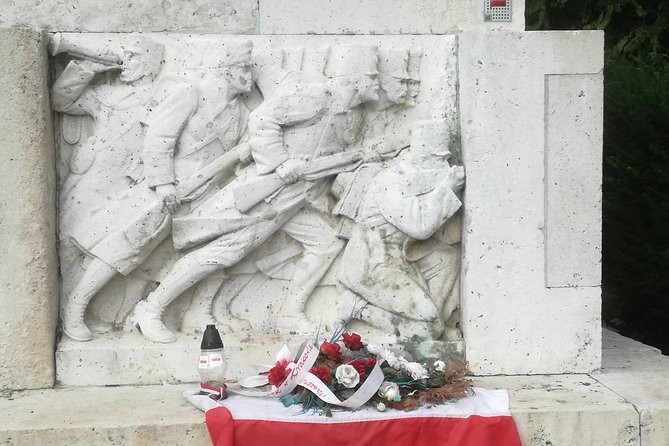
- Bem József Square to kick off the 1956 story with the first large demonstration of the uprising
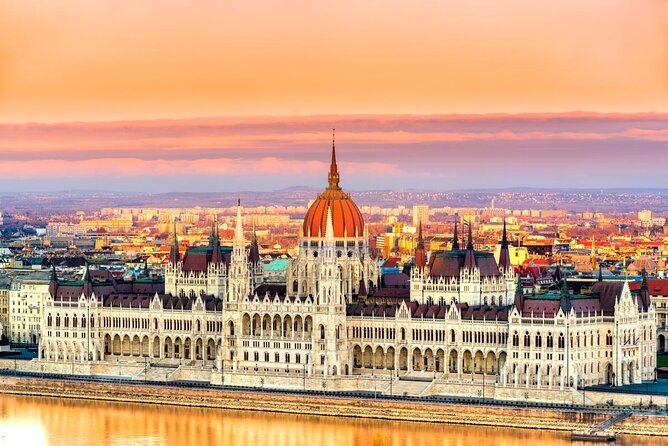
- Kossuth Square and 1956 monuments in front of Parliament, where politics turns physical
- Freedom Square Cold War symbols including the U.S. embassy, Soviet memorial, Ronald Reagan statue, and an atomic shelter entrance
- 1970s housing estates on the city’s edge showing how “modern” life changed expectations
- Puskás Stadium and Social Realist sculpture pointing toward the idea of a bright future
- House of Terror and the Berlin Wall slab for the darkest end of the timeline
Why Goulash Communism Plays Differently on Budapest Streets
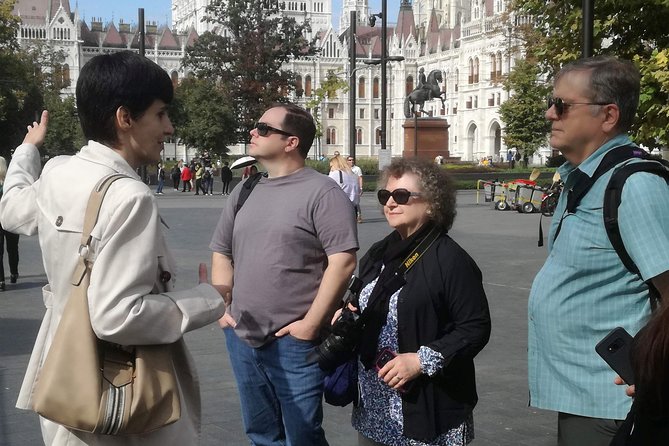
Communist Hungary was not one single mode of oppression every day. The longer you travel the city, the more you realize power here was designed to manage people, not only punish them. This tour uses that idea well. It links major events with the spaces where ordinary life happened, so you understand why control could feel distant one day and unavoidable the next.
I like that you’re not just staring at monuments. You’re learning what those places meant, like why a square matters, why a stadium’s art style matters, and why housing blocks could create genuine relief for young families. It’s city reading, not lecture reading.
Budapest is a gorgeous tourist machine, but it also hides its 20th-century scars in plain sight. This tour helps you notice them, without turning everything into doom. You leave with a sharper sense of how the system shaped choices, habits, and what counted as safe talk.
More communist-era history tours in Budapest:
- Budapest: Communist History Tour with House of Terror Option
★ 4.8 · 182 reviews - Budapest: 3-Hour Walking Tour About Communism (Small Group)
★ 4.7 · 70 reviews - Communism in Hungary with a Historian
★ 5.0 · 70 reviews
Meeting at Bambi Eszpresszó, Then the 3-Hour Flow
The meeting point is Bambi Eszpresszó, Frankel Leó út 2/4, 1027 Budapest. Plan to arrive a few minutes early so you can get oriented and settled. The tour runs 3 hours, and you’ll do a mix of walking and metro time, plus a short ride later on.
What makes this easier than it sounds is the structure. You’re moving between clusters of meaning. Each stop is close enough to feel connected, and the pace is relaxed enough that you’re not sprinting across Budapest while trying to absorb political history.
Also, remember the practical part: metro and tram tickets aren’t included. You’ll want a transit plan for the ride segments. If you prefer to keep things simple, just assume you’ll pay for whatever public transport you use during the tour.
Bem József Square: Where 1956 Starts to Feel Real
You begin at Bem József Square, a place tied to the first large demonstration of the 1956 uprising. That detail matters because it anchors the story in a specific moment, not a vague “revolution happened” idea. Standing there, you get a clearer sense of how fast events gathered steam and how quickly the city became a stage.
From there, the tour connects history to everyday space. You’ll see a coffeehouse that kept its original interior from the 1960s. I like this kind of stop because it breaks the pattern of only looking at “important buildings.” A coffeehouse interior from that era gives you a feel for normal life continuing inside a political system, with its own routines and conversations.
One thing to keep in mind: since you’re starting with a dramatic turning point, it’s a good moment to pay attention. Even if you know the headlines, watching how the guide frames the beginning helps you understand why later locations carry the weight they do.
Kossuth Square and Freedom Square: Parliament, Revolution, and Cold War Symbols
Next you take the metro to Kossuth Square, and the tour places you in front of Parliament to look at the monuments connected to 1956. These aren’t neutral decorations. They record the political and armed conflicts that unfolded during the uprising, so your job is to read them like documents.
If you’ve ever walked past a statue and wondered what you’re missing, this part helps. You’ll learn what each element is meant to communicate, and how public art can function like a memory tool. In a city like Budapest, those messages are layered, because the meaning of the same structure can shift as regimes change.
Then you take a short walk to Freedom Square, where Cold War tensions get reduced to four stone structures. You’ll see the U.S. embassy, a monument to the Soviet army, a statue of President Ronald Reagan, and the entrance to a secret atomic shelter. It’s one of the tour’s most visual moments because it shows competing powers in the same frame.
If you like history that you can point to, this is the section. You’ll have a map in your head afterward, because the place list is clear and the symbols are specific.
More walking tours in Budapest:
- Budapest: Buda Castle Walk with Saint Stephen’s Hall
★ 4.5 · 3,012 reviews - Big Bus Budapest Hop-On Hop-Off Bus and Walking Tour
★ 3.5 · 2,206 reviews - Budapest: Buda Castle District Walking Tour
★ 4.6 · 2,108 reviews - Budapest City Landmarks Walking Tour in 2 Hours
★ 5.0 · 2,048 reviews
1970s Housing Estates: Drab Today, Huge in the Moment
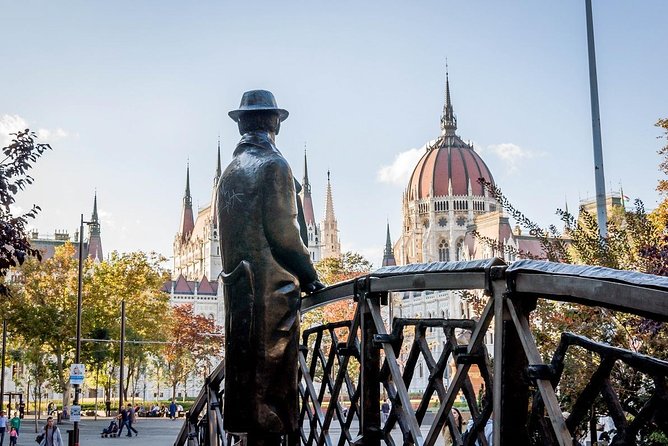
After Kossuth and Freedom Square, the tour shifts from national drama to city life. You’ll take the metro to the edge of the city center to reach one of the 1970s housing estates. When you see the blocks today, you might call them grey or plain. That reaction is normal.
But the tour gives you the key context: at the time, young Hungarian families were overjoyed to be awarded apartments there. Elevators and conveniences that were unknown in older buildings suddenly meant less daily friction and more comfort. That’s a different angle on communism than you might expect. It’s not just fear and control. It’s also material improvements that helped the regime look like it was delivering progress.
This is one of the stops that makes the tour feel grounded. It answers a question you might not even be thinking yet: how could people accept a system that constrained them? One reason was that life could improve in concrete, measurable ways, even if freedom did not.
Puskás Soccer Stadium and Social Realist Statues of the Bright Future
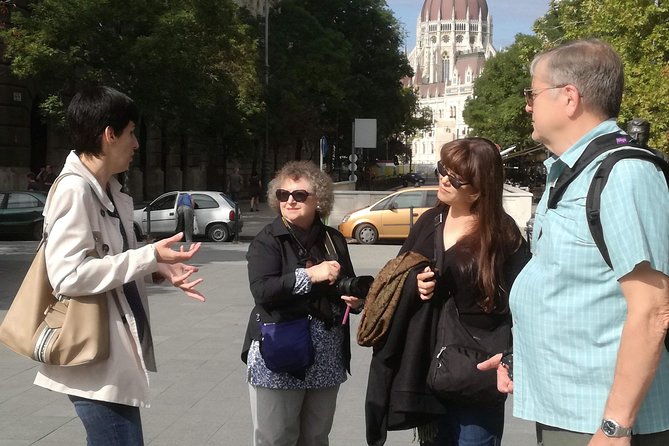
Then comes a fun but meaningful pivot. The former People’s Stadium is now Puskás Soccer Stadium, and it’s one of the few places where you can spot typical Social Realist statues. These figures tend to show heroic workers, soldiers, and intellectuals, all pointing toward a promised future.
Don’t treat this as pure art appreciation. Treat it as messaging. In communist-era visual culture, the message mattered as much as the aesthetics. These statues are meant to train your eye and shape your expectations about who leads, who earns, and what the future is supposed to look like.
I like this stop because it’s a rare mix of political symbolism inside a place that later became part of mainstream sports culture. You can walk around and still appreciate that you’re standing in the middle of an ideological design.
Dozsa György Street and the Stalin Trolley Bus Time Warp
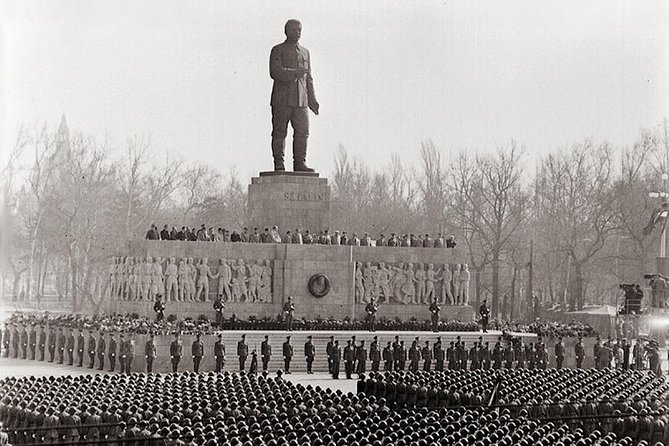
Next, you’ll take a short ride on one of Stalin’s trolley buses to Dozsa György Street. The guide uses this transit moment for more than movement. This boulevard was used for May Day parades, which means it was built for spectacle and mass demonstration.
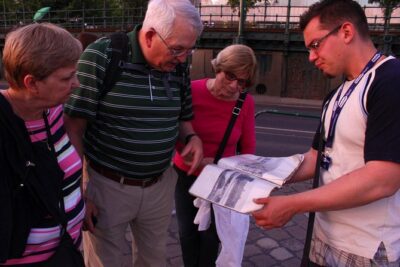
Now add the human layer: your guide will use an iPad and old photos to show contrast between the present city and how it looked during Stalin’s era. That technique works because it keeps you anchored in the same spot while the past overlays on top. You can compare scale, street use, and the vibe of the public space.
A small practical tip here: expect a bit of visual focus during the photo moments. If you drift into phone-scrolling mode, you’ll miss the point of the exercise. This is one of the sections where your attention pays off quickly.
House of Terror: The Former Secret Services and a Slab of Berlin Wall
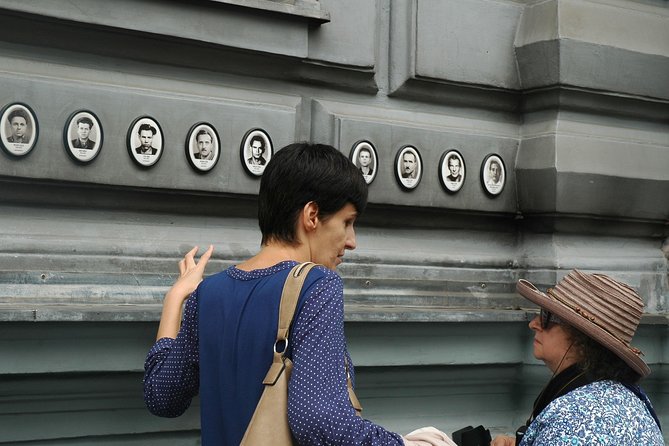
Around the corner is the House of Terror, a museum in the former headquarters of Hungary’s secret services. The tour frames it as a place to understand the crimes of communism, especially during the Stalinist years. You’re not being asked to accept any of it as abstract theory. You’re looking at how power operated through repression.
What makes this stop hit harder is what’s physically right outside. In front of the building, there’s a slab of the Berlin Wall. It connects Budapest’s experience to the larger Cold War machinery, and it puts a stark object in your line of sight.
If you want one “anchor moment” from the tour, it’s likely here. It’s the part that pulls the story from public symbolism into personal consequences, from monuments into methods. The emotional tone changes, so let your brain switch gears. You’ll get more out of it if you slow down mentally, not just physically.
Price and Value: Is $123 for 3 Hours Worth It?
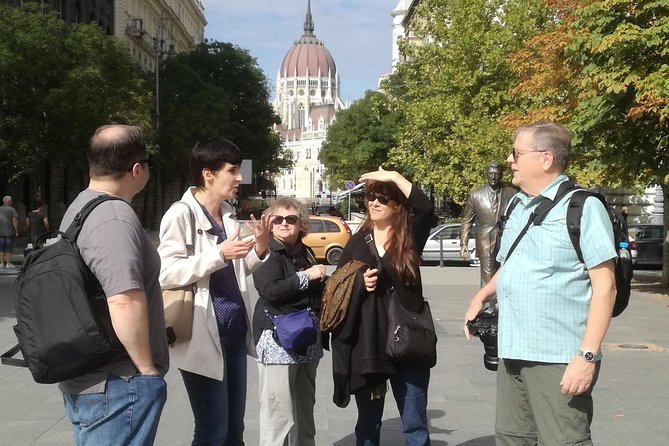
The price is $123 per person for a 3-hour English-language tour. That is not a budget deal, but you are paying for something specific: a structured walk plus a historian guide. The included guidance matters because this kind of subject has lots of symbols, dates, and cause-effect relationships that are hard to connect on your own.
You’re also not stuck with a single viewpoint. The guide pool includes professors, doctoral students, historians, journalists, art critics, and published authors, so you can expect interpretive skill, not just recitation. When the guide adapts to what you already know, the tour becomes more than a checklist.
There is one clear “cost add-on”: metro and tram tickets are not included. If you plan to use public transit anyway, this is easy to manage. If you hate calculating transit costs, you may find the end-to-end cost slightly higher than the headline price.
The value sweet spot is when you want someone to connect the dots. If you’re the kind of traveler who likes reading plaques and then moving on, you might still enjoy it. But if you want the context that makes the symbols meaningful, the guide fee is the point.
Who Should Book This Communist Budapest Walking Tour?
Book this tour if you want a practical, street-level understanding of how communism shaped Budapest, from 1956 to later everyday life. It works especially well if you’re curious about the contrast between public monuments and private routines, and you want a guide to translate that into clear takeaways.
It also fits well if you like tours that use smart comparison tools, like the old photos and iPad contrast, and if you’re comfortable walking and using a few transit segments. The mix of squares, housing estates, stadium art, and the House of Terror gives you a full spectrum, not just the darkest stop or just the prettiest buildings.
Consider another option if you already know the period deeply. The format is built for clarity and context, so very advanced history buffs may want a more specialized class-style experience. In that case, you’ll still see the sites, but you may not feel the same “new connection” at each stop.
If you want a guide who can adapt to your background, this tour can feel personal in a good way. I’d treat it as one of your best investments for turning Budapest’s communist leftovers from background noise into a story you can retell.
FAQ
How long is the Communist Budapest Walking Tour?
The tour lasts 3 hours.
Where does the tour meet?
The meeting point is Bambi Eszpresszó, Frankel Leó út 2/4, 1027 Budapest, Hungary.
What language is the tour guide?
The tour is English.
Is the tour group private or small groups?
Yes. Private or small groups are available.
Do I need metro or tram tickets?
Tram and metro tickets are not included.
What major stops will we visit?
You’ll visit places including Bem József Square, Kossuth Square, Freedom Square, a 1970s housing estate, the former People’s Stadium (now Puskás Soccer Stadium), and the House of Terror.
Who are the guides for this tour?
Guides are professors, doctoral students, historians, journalists, art critics, and published authors, and the tour uses a historian guide.
Is there free cancellation?
Yes. You can cancel up to 24 hours in advance for a full refund.
Can I reserve now and pay later?
Yes. The tour offers reserve now & pay later, with no payment due today.
If you tell me your history comfort level and whether you prefer walking-heavy tours or more time inside museums, I can also suggest how to pair this with the rest of your Budapest plan.
Recently reviewed around Budapest
- Panoramic hike around Budapest★ 5.0 · 14 reviews
- PRIVATE (7 hours) Budapest and Szentendre city tour with lunch and winetasting★ 5.0 · 4 reviews
- Original Budapest Walking Tour★ 4.0 · 39 reviews
- Budapest Highlights Self guided scavenger hunt and Walking Tour★ 5.0 · 5 reviews
- Original Budapest Alternative Street Art & Jewish Tour★ 4.5 · 14 reviews
- Hungarian Gastro Cellar: Assisted Tasting Options★ 4.5 · 5 reviews
- Bratislava, one day private trip from Budapest with guide!★ 5.0 · 4 reviews
- One hour Hen or Stag private party boat Budapest with unlimited beer and wine★ 3.5 · 6 reviews
Communist History Tours, compared.
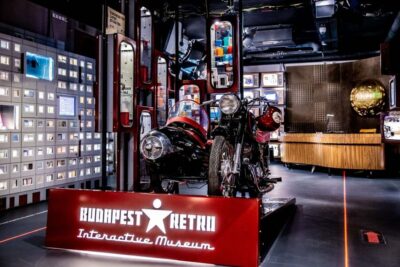
Communist History Tour with House of Terror Option
Read our review →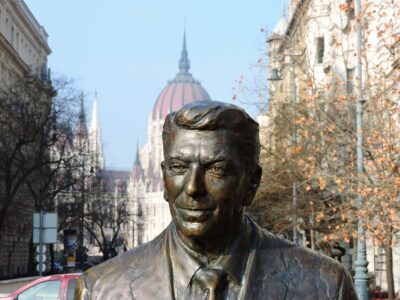
3-Hour Walking Tour About Communism (Small Group)
Read our review →
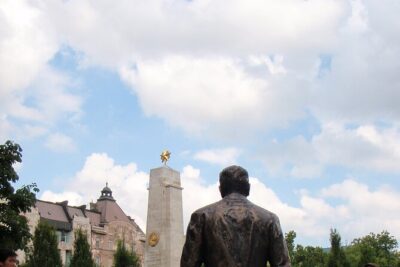
Lives of Hungarians Under Communist and Capitalist system
Read our review →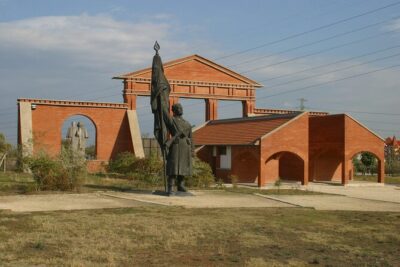
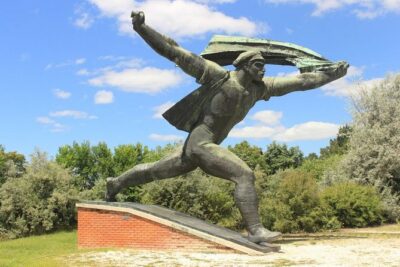
Memento Park Visit with Private Trabant Transfer
Read our review →Browse the lists this tour appears in