
Reviewed · WALKING TOURS
Budapest City Landmarks Walking Tour in 2 Hours
Budapest is one of those cities where the photos look like a postcard, but the real win is learning how it all fits together. This 2-hour City Landmarks walk gives you a clear overview of Pest and key viewpoints toward Buda, all while your guide stitches in history, architecture, food, and even basic Hungarian language.
I especially like the short, focused format: you get the big hits and the backstreet context, then the rest of your day stays free to wander. I also like the human side of the storytelling, including a moving stop at the Shoes on the Danube Bank. One drawback to plan around: the route is outdoors and it depends on good weather, plus you cover a fair amount of ground in a compact time window.
Key Highlights to Know Before You Go

- Licensed guide, easy start point: meet near the Budapest Eye on Elisabeth Square, with your guide carrying a small blue flag
- Two hours with a full day payoff: you finish at Hungary’s Parliament area and can keep exploring with local recommendations
- Big landmarks, plus practical context: why places matter, what to see next, and what to avoid
- Language and food tips built into the route: you’ll pick up simple Hungarian phrases and guidance on what to eat
- Clear storytelling in a group: many guides use a speaker so you can hear comfortably
- One stop that hits hard: Shoes on the Danube Bank connects WWII history to real, personal remembrance
A 2-hour Budapest overview that connects Pest, Buda, and the Danube
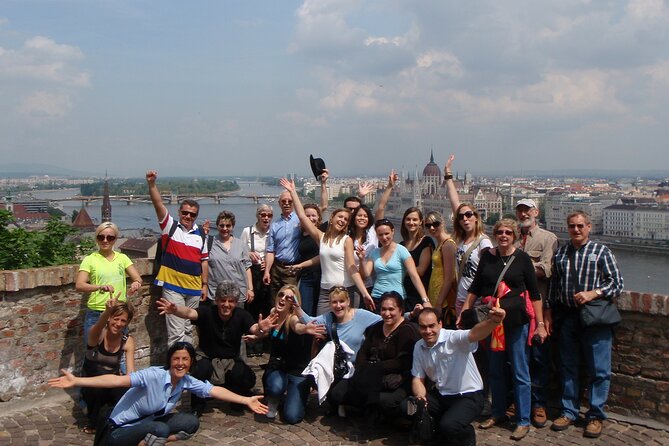
Think of this tour as your Budapest “map in motion.” In a short time, you connect major landmarks with the stories behind them, so you can later recognize what you’re seeing and understand why it looks the way it does. Instead of collecting random sights, you leave with a mental outline of how Pest grew, how Buda sits above the river, and why the Danube matters.
The best part is the balance. You’ll get the obvious icons, like the chain bridge area and the Parliament, but you’ll also get side clues that help you travel better afterward. Many people take this early in their trip because it turns the rest of Budapest into a choose-your-own-adventure, not a scatter of missed chances.
More walking tours in Budapest:
- Budapest: Buda Castle Walk with Saint Stephen’s Hall
★ 4.5 · 3,012 reviews - Big Bus Budapest Hop-On Hop-Off Bus and Walking Tour
★ 3.5 · 2,206 reviews - Budapest: Buda Castle District Walking Tour
★ 4.6 · 2,108 reviews
Price and what you really get for it
The price listed is very low at $3.63 per person, and that’s the first thing people notice. The second thing you should notice is how the experience is funded. Your booking includes a booking fee, and that fee is directed to administration and does not contribute to the guide’s earnings. Guides depend on your donations at the end of the tour, and the amount is up to you.
So here’s the value math I’d use: you’re paying mainly for the route planning and the guide organization, while the guide’s work is supported through your donation. If you want a fun, high-impact introduction at minimal cost, this is a smart deal. If you hate donation-based models, you may want to budget a tip right away so you’re not stuck deciding at the end.
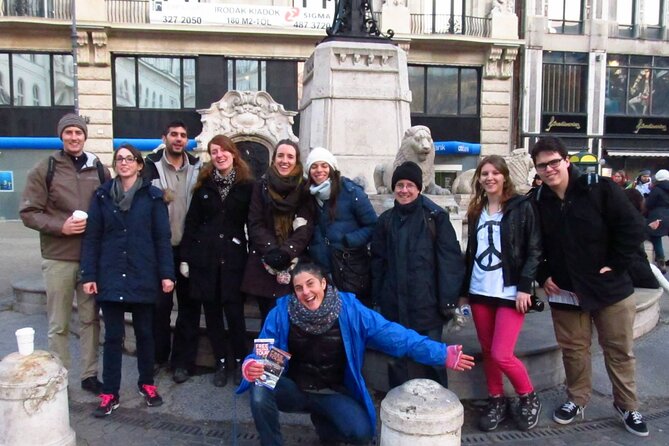
Meeting at Elisabeth Square near the Budapest Eye, with a small blue flag
The tour starts at Erzsébet tér at the Ferris Wheel of Budapest, and your meeting point is about 20 meters from the Budapest Eye on Elisabeth Square. You’ll meet a licensed local guide who holds a small blue flag.
This matters because the tour is time-tight. You’re not joining a leisurely stroll where late arrivals catch up easily. When you show up, scan for the blue flag and the group right away. A detailed reminder is sent after booking, and you’ll also get an info kit by email, so don’t rely on memory alone. If your goal is to avoid lost minutes, arrive a few minutes early and confirm you’re at the correct spot.
Erzsébet tér to St. Stephen’s Basilica: the quick story of Budapest’s shape
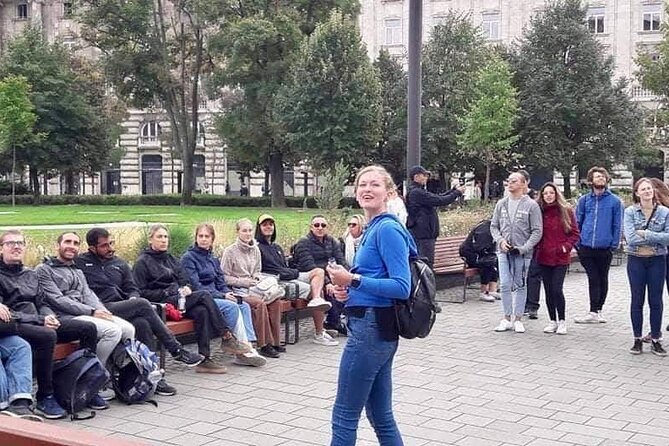
Stop one sets the tone. On Elisabeth Square, the guide combines history, architecture, public art, society, food, and basic Hungarian language, then explains what Hungarians are actually like. You’ll also get a map and a list of iconic landmarks plus quieter backstreet routes that are scheduled later in the walk.
This is where you learn the tour’s real theme: Budapest isn’t just beautiful, it’s layered. That comes out again right after, at Szent István Bazilika (St. Stephen’s Basilica).
At the Basilica area, you get the big numbers and the big idea. You’ll learn it’s the largest church in Budapest, with seating for about 8,500 people. You’ll also hear how its architecture reflects different periods of splendor. Practical note: this tour does not enter the Basilica, so you’re seeing it and absorbing context, not standing inside for long lines.
If you want an easy first day, this sequence works well. You start with orientation, then hit a landmark that helps you anchor the rest of the trip.
A few more Budapest tours worth comparing
- Buda Hills 2-Hour Segway Live-Guided Tour
★ 5.0 · 218 reviews - Budapest: 2-Hour Private TukTuk Tour
★ 4.9 · 103 reviews - Budapest 2-Hour Night Segway Experience
★ 5.0 · 35 reviews - 2-Hour Private Night Tour of Budapest
★ 5.0 · 17 reviews
St. Stephen’s Square: fat policemen, plus what to eat and how to avoid traps
At St. Stephen’s Square, you’ll see public art featuring the famous fat policemen with shiny bellies. It’s a quick stop, but it’s not just for photos. Your guide uses the area to talk about Hungarian culinary art and the history of cooking, then gets practical about what to eat in Budapest and how to avoid tourist traps.
That food-and-history combo is one of the most praised parts of the experience. The “how to eat well” angle makes the tour feel useful, not just scenic. Even if you love museums, this stop helps you in the real world once you’re hungry and deciding where to go.
Jozsef Nador Ter: Habsburg stories and hand-painted porcelain
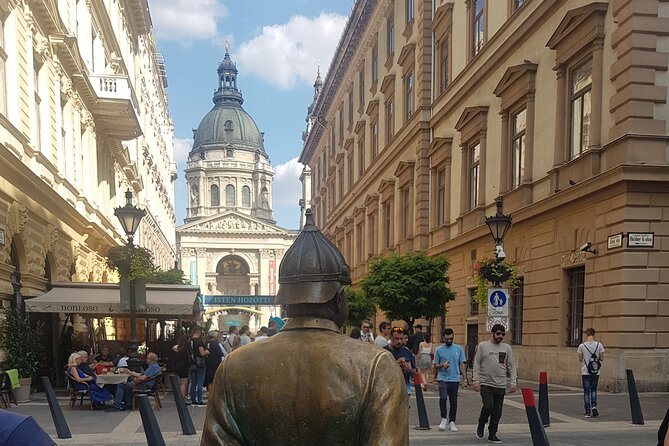
Next is József Nádor tér, where you learn about the most Hungarian Habsburg. You’ll also see references to luxury decorative culture you might otherwise miss.
Two named brands come up here:
- Herendi hand-painted porcelains
- Zsolnay colorful ceramic masterpieces, known for glazed detail
This is a great example of how the tour goes beyond the checklist. Instead of only saying this building is pretty, the guide connects style to people, power, and taste. If you’re into design, decorative arts, or just want to understand why certain places look the way they do, this stop is a nice payoff.
Vorosmarty Square and Vaci útca: people-watching, the café you’ll remember, and Christmas vibes
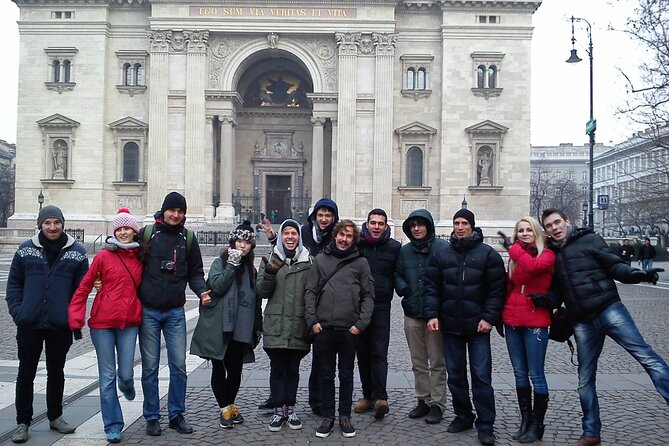
At Vorosmarty Square (Vorosmarty tér) you’re at the end of Vaci útca, the famous pedestrian street. It’s built for watching people go by, with a park feel that makes it easier to pause and reset your feet.
Your guide also points out a major transit quirk: the second oldest underground in the world has one of its terminals here. The stop also includes neo-classical style buildings and the presence of Gerbeaud café, often associated with classic Budapest sweets. You’ll also learn about Christmas markets and traditions in Budapest, which is useful even if you’re not traveling in winter, because you’ll know what locals mean when they talk about seasonal markets.
This is a good spot for a quick drink break if you need it. One review advice that fits here is simple: bring water. Your pace is manageable, but you do want a calm moment to cool down.
Danube views from the Korzo embankment: tramline panoramas and UNESCO-scale sights
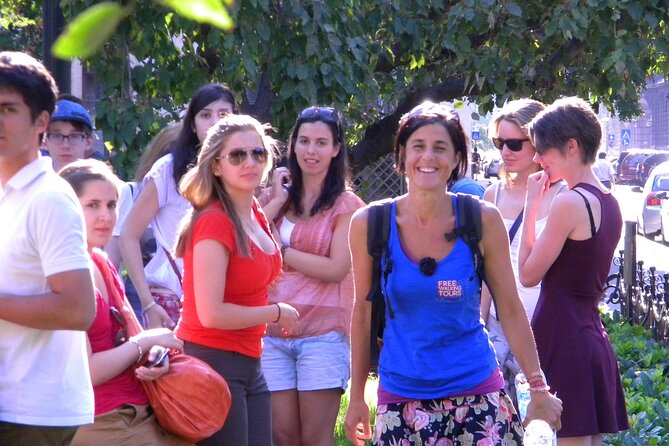
You’ll then reach Korzo to the Danube embankment (Dunakorzó), and this is where the big views start making sense. Your guide shows:
- the first non-Communist statue in Budapest
- the most panoramic tramline in Central Europe
- the main riverside buildings
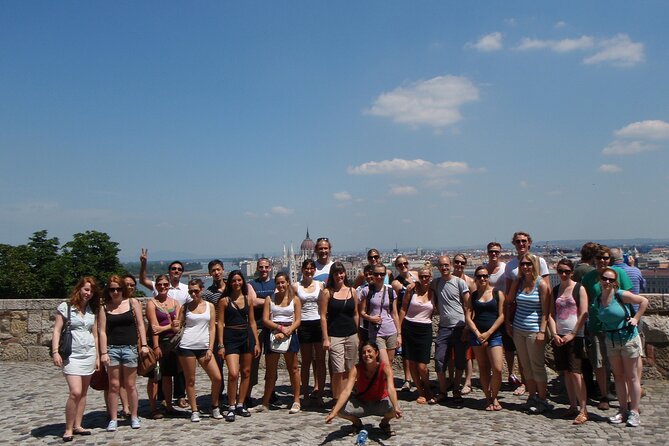
- and a standout view across toward Castle Hill and Buda landmarks
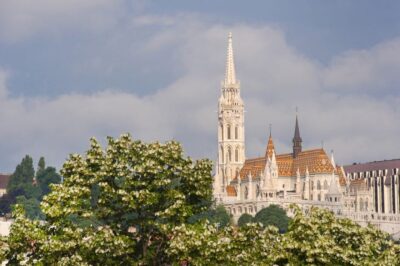
From here, you’ll see the Castle Hill lineup in your head: Matthias Church, Fisherman’s Bastion, Buda Castle, and Gellért Hill with the Citadel in the picture.
A note worth keeping in mind: a lot of these sights are tied to UNESCO World Heritage status. Even if UNESCO isn’t the reason you’re traveling, it helps explain why certain areas look preserved and why the skyline stays such a draw.
Little Princess Statue: a tiny tradition with a fun reset
You’ll make a short stop at the Little Princess Statue. The ritual is simple and silly in the best way: you make a secret wish while touching the statue’s shiny knees. It’s fast, but it’s also a useful reset in the middle of a long walk, especially if you’ve been standing still in view points and want something light.
Vigadó Square: Franz Joseph, Sisi, and the music connection
At Vigadó Square (Vigadó tér), the guide connects Budapest to European court culture and music history. You’ll hear that this is where Franz Joseph’s and Sisi coronation banquet was held in the 19th century. Then you get the Central European music thread, including Franz Liszt, Debussy, and Brahms.
Even if classical music isn’t your thing, this stop is about how Budapest absorbed different European influences, not just Hungarian ones. It also helps you understand why so many grand buildings and institutions in the city have names tied to major cultural figures.
Széchenyi Chain Bridge: Pest and Buda told through the first permanent bridge
You’ll cross into the story of the river itself with a short stop at Széchenyi Lánchíd (Chain Bridge). The guide uses it to explain the history of Pest and Buda through the bridge’s impact, and it highlights that it was the first permanent bridge built in the city.
This is another “anchor” stop. Later, when you walk along the river on your own, you’ll recognize that this isn’t just a bridge, it’s a turning point. It helps make the city feel like one connected place instead of two halves you have to figure out separately.
Gresham Palace and the Hungarian Art Nouveau look
At Gresham Palace, you learn how secessionist architecture and Budapest’s golden age shaped the city. The building is tied to the turn-of-the-century Art Nouveau style, and you’ll hear about the history and major ornaments.
If you’ve ever seen the phrase Art Nouveau and wondered what makes it different, this stop gives you a real example in a real street scene. Even if you don’t memorize every detail, you’ll start to notice decorative motifs when you pass them later.
Hungarian Academy of Sciences: words to impress and Nobel context per capita
Next up is the Hungarian Academy of Sciences. This part is fun because it adds practical language learning and pop-level science trivia your brain can actually keep.
You’ll learn some Hungarian words and phrases, meant to impress friends later. You’ll also hear why Hungary has the largest Nobel Prize awards per capita, plus examples of famous people of Hungarian origin and Hungarian inventions you might miss in everyday life.
This is one of those tour moments that can feel like a bonus package. It’s not just monuments and photos. It’s also a chance to leave with usable cultural bits.
Shoes on the Danube Bank: history, deportations, and remembrance at eye level
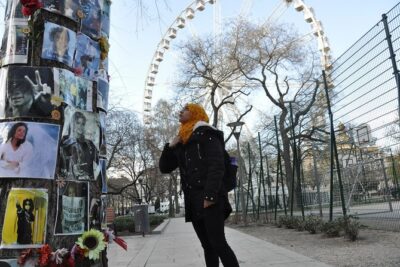
Then comes one of the most serious stops on the walk, Shoes on the Danube Bank. You’ll see 60 pairs of shoes placed on the riverside to commemorate the 60th anniversary of the Holocaust.
Your guide explains WWII history, the deportations, and the recent history of Hungarian Jewish people. They also ask the group to close eyes and imagine the individuals who died here, ranging from synagogue-goers to assimilated Jewish people, from grandparents to children, and from factory workers to factory owners.
This stop is emotionally heavy, so pace yourself. It helps to go in with a calm mindset. If you’re traveling with teens, it’s still appropriate, but be ready for the conversation to feel real.
Hungarian Parliament Building: neo-Gothic architecture and your final orientation
The final stop is the Hungarian Parliament Building. The guide covers recent history and elections, then talks about the neo-Gothic architecture that makes the building feel harmonically beautiful.
It’s also your wrap-up moment. You’ll get useful recommendations about restaurants and nightlife, plus ideas for what to do on your next days, and a final orientation so you know where to head after the tour ends.
This ending works because it’s not just a finish line. It’s the start of your self-guided day. If you take this on day one, you’ll know which neighborhoods you already understand and which areas you still need to explore.
Practical tips to make the walk feel easy
A tour like this lives or dies on comfort. Here’s how I’d set you up for success based on what the experience emphasizes and what people highlight in their feedback.
- Wear comfortable walking shoes. Two hours is short, but the stops add up.
- Bring water or a drink. You’ll be outside and moving, and it’s easier to stay pleasant when you’re not thirsty.
- Watch for the guide’s small blue flag at the start, near Budapest Eye. If you’re unsure, ask staff nearby where the guide is gathering instead of wandering around guessing.
- Expect a group up to 30. In larger groups, your guide may use a speaker so everyone can hear clearly, which helps a lot.
- Bring a curious mindset. The tour is designed to give you a big picture, not a test of dates and names.
Should you book this Budapest City Landmarks walk?
Book it if you want an economical, first-day orientation that mixes famous monuments with practical food and language tips, and you’re happy to learn through real street stories instead of a museum lecture. The route is also a smart way to understand why Buda and Pest feel so different.
Skip it or choose a different option if you need a fully seated or indoor experience, or if you’re traveling when weather looks rough. Also, if you hate donation-based tips, you may find the end-of-tour donation expectation annoying, even if the base price is low.
If your goal is to leave Budapest on your own terms, this walk gives you the map in your head. Then you can spend the rest of your day doing what Budapest does best, slow wandering with better context.
Recently reviewed around Budapest
- Panoramic hike around Budapest★ 5.0 · 14 reviews
- PRIVATE (7 hours) Budapest and Szentendre city tour with lunch and winetasting★ 5.0 · 4 reviews
- Original Budapest Walking Tour★ 4.0 · 39 reviews
- Budapest Highlights Self guided scavenger hunt and Walking Tour★ 5.0 · 5 reviews
- Hungarian Gastro Cellar: Assisted Tasting Options★ 4.5 · 5 reviews
- Original Budapest Alternative Street Art & Jewish Tour★ 4.5 · 14 reviews
- Bratislava, one day private trip from Budapest with guide!★ 5.0 · 4 reviews
- One hour Hen or Stag private party boat Budapest with unlimited beer and wine★ 3.5 · 6 reviews
Walking Tours, compared.

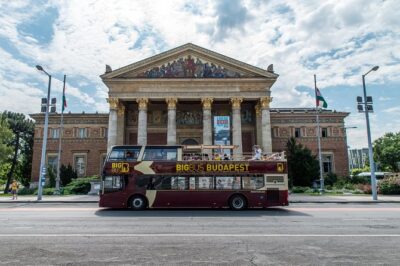
Big Bus Budapest Hop-On Hop-Off Bus and Walking Tour
Read our review →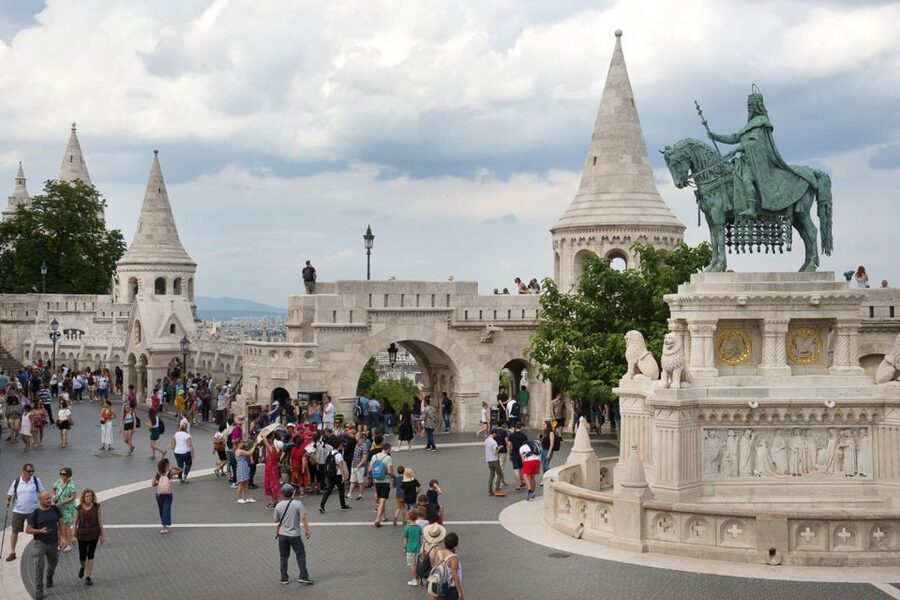
3-Hour Orientation Walking Tour of Buda and Pest
Read our review →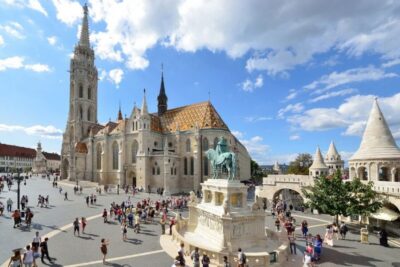
Budapest Historical Sightseeing – Free Walking Tour
Read our review →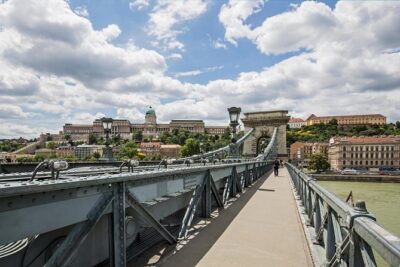
Budapest All in One Small Group Walking Tour with Strudel Stop
Read our review →
Buda Castle District Walking Tour with a Historian
Read our review →Browse the lists this tour appears in