
Reviewed · COMMUNIST HISTORY TOURS
Communist Budapest Walking Tour
Communist Budapest sounds like a niche topic, but the city makes it very real, fast. You’ll move between landmarks tied to the 1956 revolution, Soviet influence, Cold War propaganda, and the uneasy relationship Budapest had with both sides of the Iron Curtain. I especially like the small-group size and the fact that you’re walking with a historian who keeps the story connected, not just recited.
Two things I love: the route hits major sites you can actually picture in your head later, like Freedom Square’s Soviet War Memorial and the Bem József Square area where the uprising took off. One possible drawback: this is not a pure sightseeing loop, so if you want only pretty views and photo stops, you may feel a little tug-of-war between history and roaming.
Key highlights you should know before you go
- Historian-led, 3 hours long: a focused timeline of communism and the Cold War in Budapest
- Small groups: limited to a tight group size (listed as up to six, with a cap of eight) for real conversation
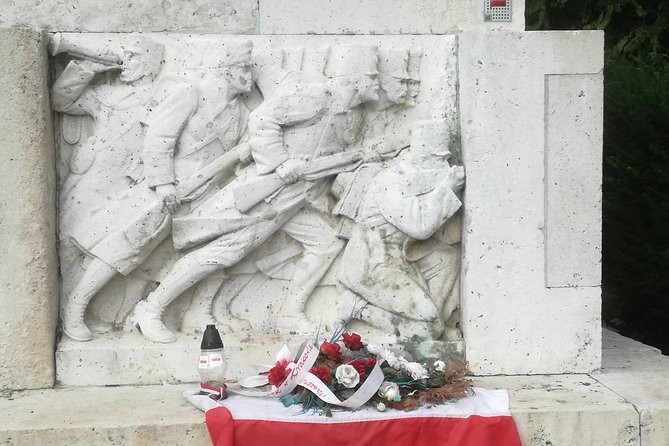
- Major Cold War landmarks outdoors: including Liberty Square features and Soviet-themed statuary
- People’s Stadium to Puskas Soccer Stadium: you’ll see socialist realist propaganda still present
- House of Terror as the perfect follow-up: you end outside it, but the interior is not part of the guided stops
Communist Budapest On Foot, Plus One Easy Subway Transfer
This tour is built for people who want context, not just coordinates. You cover a compact stretch of Budapest where the story of Soviet pressure, Hungarian resistance, and Cold War messaging shows up in stone, plazas, and even the wording of public space.
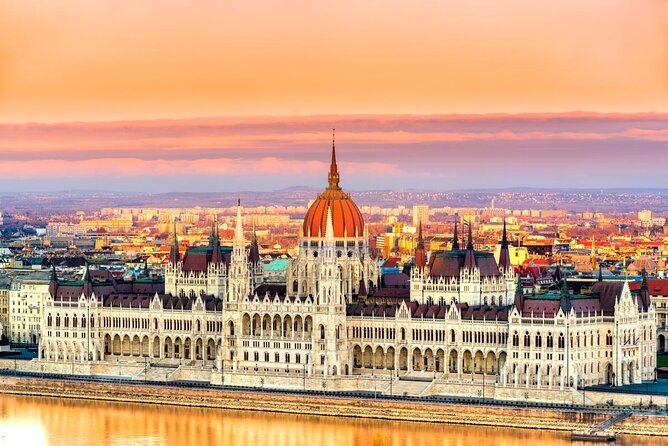
What makes it work is the pacing. It’s about 3 hours, and you’re not stuck in one lecture spot. You’ll start near the Hungarian Parliament Building area and then keep moving, with a subway segment that helps you cover ground without turning it into a long slog. The goal is simple, you should get your bearings fast while learning why these places matter.
Also, you get a choice of departure time, morning or afternoon. That’s handy if you like mornings for walking, or if you want your history hit later and still have time for the rest of the city.
More communist-era history tours in Budapest:
- Budapest: Communist History Tour with House of Terror Option
★ 4.8 · 182 reviews - Communism in Hungary with a Historian
★ 5.0 · 70 reviews - Budapest: 3-Hour Walking Tour About Communism (Small Group)
★ 4.7 · 70 reviews
Price and what you actually get for $126.50
At $126.50 per person, the ticket isn’t a budget impulse buy. But when you look at what’s included, it starts to feel reasonable, especially in a small-group format.
You get:
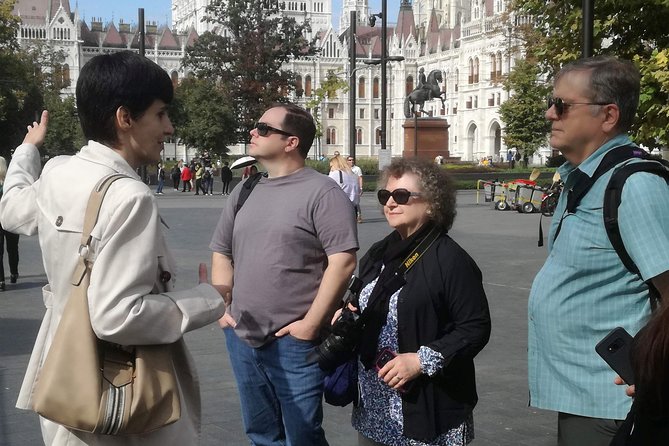
- a 3-hour guided walk with a historian
- a tour that is built around multiple meaningful stops, not just one or two photo points
- help with tram and metro tickets if you don’t already have a visitor pass
Entry-wise, most of what you stop at is open-air or free at the moment of viewing. The Parliament area is free, the People’s Stadium area is free, and the Reagan statue stop is free. The one clear exception is the House of Terror Museum interior, which is not included.
So the real value question is this: will you use the guide? If you want answers and you like discussion, the historian component is where your money goes. If you just want to wander and read little plaques on your own, you’ll feel the cost more.
The Route: how the story unfolds from Revolution to Cold War
This is a guided walk with a few transportation links, designed as a timeline you can experience in sequence.
Stop 1: Hungarian Parliament Building and the 1956 monuments in motion
You start at Frankel Leó út 2-4 and head toward the Parliament area by subway to Kossuth Square in front of Parliament. From there, you explore monuments tied to the 1956 revolution, then continue toward Liberty Square where Cold War themes come to the surface.
This is where the tour does a smart thing. It doesn’t treat the communist era as a single block. It shows how Hungary’s political story connects to public buildings, national symbols, and monuments that still shape the way people read the city today.
Expect discussion around:
- how 1956 fits into what came after
- how Budapest dealt with the Cold War in everyday public space
- Liberty Square landmarks tied to foreign influence and strategic fear
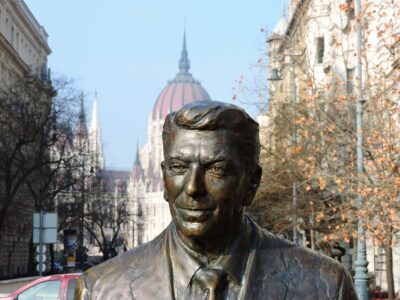
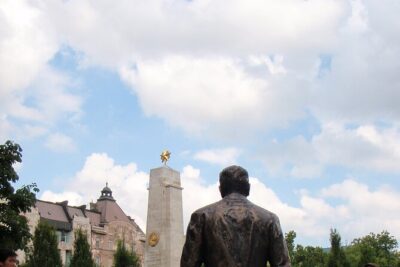
The stop includes several specific sights you’ll be pointed to in the outdoor space, such as the US Embassy area and the monument to the Soviet Army. You’ll also see the statue of Ronald Reagan and an atomic shelter mention tied to the era’s anxieties.
Practical note: this portion is outdoors and around monuments, so wear shoes you can do repeated stops in. If you’re sensitive to crowds near major government buildings, pick your pace and plan to stand when your guide asks you to look for details.
More walking tours in Budapest:
- Budapest: Buda Castle Walk with Saint Stephen’s Hall
★ 4.5 · 3,012 reviews - Big Bus Budapest Hop-On Hop-Off Bus and Walking Tour
★ 3.5 · 2,206 reviews - Budapest: Buda Castle District Walking Tour
★ 4.6 · 2,108 reviews - Budapest City Landmarks Walking Tour in 2 Hours
★ 5.0 · 2,048 reviews
Stop 2: House of Terror outside, with a clear “if you want more” finish
Next, you end up at the House of Terror Museum area. The guide concludes outside the museum, which is housed in the former headquarters of the communist secret services. There’s also a slab of the Berlin Wall placed out front.
Two important details:
- The exhibit inside is not included as part of this tour.
- Ending outside is intentional. If the topic has grabbed you, you can continue on your own.
This stop changes the tone. Up to this point, you’ve been learning how the city broadcast messages through monuments and propaganda. Now you see a location tied to fear and political repression. Even if you don’t go inside, standing outside helps you understand why this museum is so central to understanding modern Hungarian interpretations of the communist era.
If you do want to step in, just know you’ll be paying that separate admission on your own time.
Stop 3: Stade Puskas Ferenc, the former People’s Stadium and socialist realism
Then you move to the area of the old People’s Stadium, now Puskas Soccer Stadium. This part is designed for the “look closely” brain.
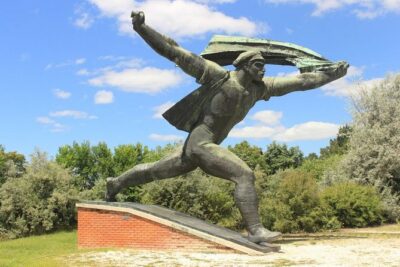
You’ll find classic socialist realist statues still standing, the kind of heavy-handed propaganda that communicates power by making it impossible to ignore. It’s one thing to read about ideology. It’s another to see it turned into public form, placed in a setting where sports and masses overlap with political messaging.
This stop is 20 minutes, and it feels like the tour’s visual peak for people who like to connect history to what they can photograph and remember.
Stop 4: The Ronald Reagan statue and Hungary’s complicated gratitude
After that comes a smaller but memorable segment: the Ronald Reagan statue. The tour frames it around the Hungarian sense of obligation to Reagan for efforts that helped bring down the Iron Curtain.
Even if you don’t know much about US-Hungarian Cold War relationships, a statue like this forces you to ask a simple question: why is this person honored here, and what does the city want you to think about?
This is 10 minutes, but it lands because it shifts from architecture and propaganda to symbolism and memory.
Stop 5: Kossuth Lajos Square and Bem József Square, where the uprising started
Your last stop area is Kossuth Lajos Square, including Bem József Square. This is where the tour ties history to action. You’ll learn that this is where the first major demonstration of the 1956 uprising began.
There’s also a coffeehouse on the square that has kept its original interior from the 1960s. That little detail matters. It reminds you that ideology isn’t only in monuments and slogans. It also shows up in ordinary spaces where people kept living and gathering.
You get about 25 minutes here, which is enough time to absorb the square, look around, and decide if you want to linger after the tour or move on.
The historian guides are the engine, and you will feel it
The best praise for this tour is not about buildings or free-entry math. It’s about the guides.
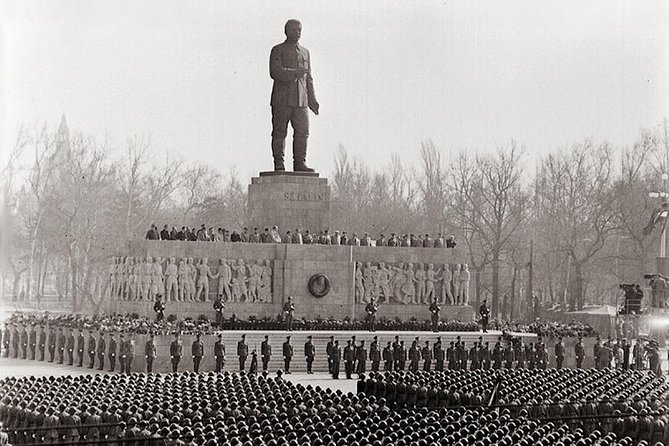
In the reviews, I saw clear patterns. People highlighted guides who lead with real depth, answer questions with specificity, and keep the tour lively through discussion. Two guide names stood out: András and Kata. Both are repeatedly described as the kind of hosts who make history feel connected to how people actually experienced communist life.
That matters because communist history can be abstract. If you don’t know the timeline, it turns into dates and slogans. A good guide turns it into cause and effect. You can start to feel why one monument appears where it does, why certain symbols were used, and why certain places became loaded with meaning.
Also, the tour notes that you’ll be with expert local historians and enthusiastic hosts who love helping visitors discover Budapest from multiple angles. That enthusiasm shows most when you ask questions and your guide doesn’t just answer, they explain.
Getting around: the subway link and tram/metro help
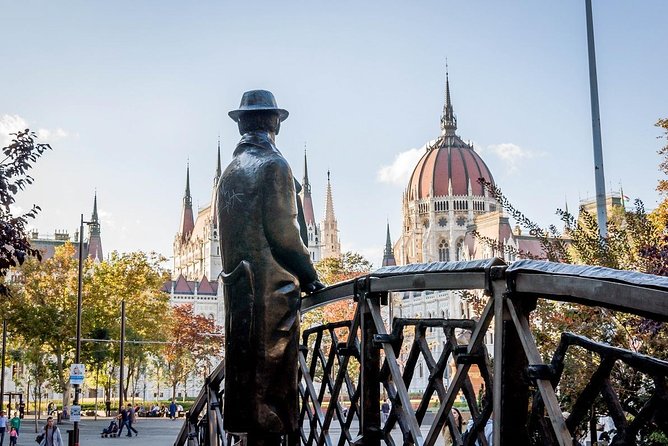
Budapest is easy once you know the basics, and this tour respects that reality.
- The tour includes a subway transfer from the Parliament area to Kossuth Square.
- If you do not already have a visitor pass, the guide will help you purchase Budapest tram and metro tickets.
This removes a common travel pain point. You spend less time figuring out transport rules, more time learning the places you came to see.
One more practical point. The tour is near public transportation, which helps if you want to arrive early or if you need to adjust your day plan. Keep your schedule flexible around the departure time so you’re not rushing into the group.
What to wear and bring for a 3-hour walk
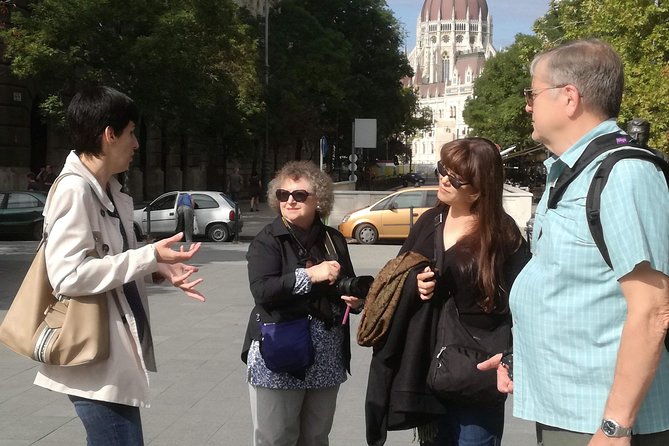
This route is a walking tour with outdoor stops, so treat it like a city stroll with a history assignment.
Bring:
- good walking shoes
- water, especially if you’re touring during warmer months
- a light layer if the weather turns breezy around open squares
And mentally, go in ready to stop often. This isn’t a “walk fast, take photos, done” model. It’s more like, walk to the next place and then really look at it.
Who this tour is best for
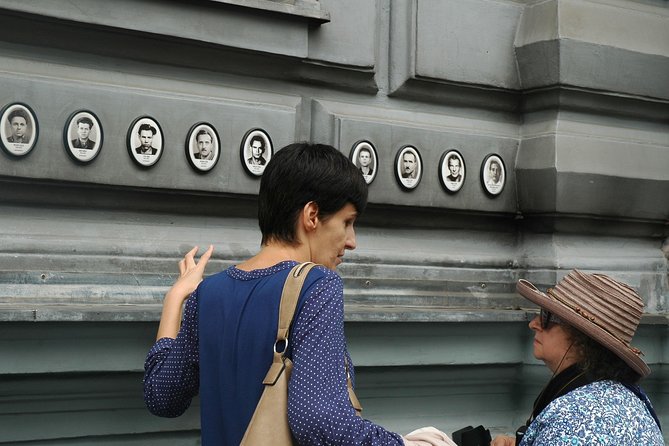
This experience fits best if you:
- want a guided, timeline-based introduction to communist Budapest
- enjoy understanding the Cold War through real landmarks
- like asking questions and getting direct answers from a local historian
- want a small-group format where conversation is possible
It may not fit if you want only general sightseeing or you dislike history topics. One theme that came through in praise is that the tour works even if you’re not a self-described history person, but the underlying format is still history-forward.
House of Terror follow-up: how to plan your next step
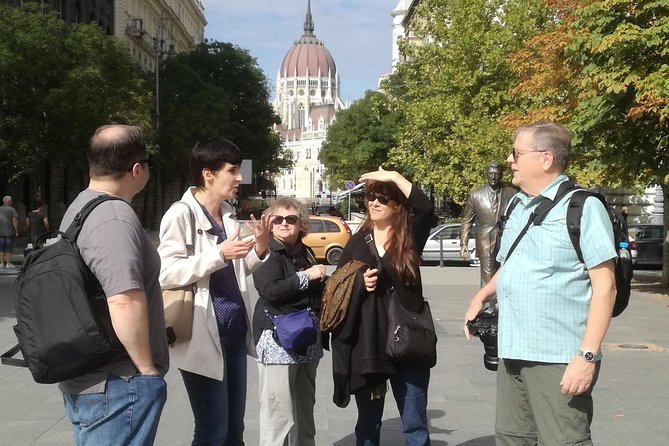
Even though the museum interior is not included, the way the tour ends outside House of Terror makes planning simple.
If you’re curious, you can:
- keep your momentum and visit the museum right away after the tour
- or use the museum as a later “second night” activity once you’ve had time to process the outdoor symbolism you just saw
Either way, finishing here gives you a natural bridge. The tour sets up why the building matters, and the museum lets you go deeper.
A balanced take: what might not feel perfect
For full value, the main things to consider are:
- It’s history focused. If your ideal Budapest day is mostly cafes, river views, and casual wandering, this may feel heavier than you want.
- You’ll do a lot of looking. That’s a feature, not a flaw, but it’s not a rapid photo sprint.
- You may need to decide about House of Terror. Since the interior isn’t included, you’ll pay separately if you want to go in.
If you’re comfortable with those trade-offs, this tour tends to land very well.
Should you book Communist Budapest Walking Tour?
Book it if you want a fast, structured way to understand how communism and the Cold War played out in Budapest’s public space. The small-group format, the historian-led storytelling, and the specific landmarks like Freedom Square’s Soviet memorial area and the old People’s Stadium propaganda make it a practical introduction rather than a vague lecture.
Don’t book it if you’re only chasing scenic highlights and you’d rather skip political context. Also, plan on adding House of Terror separately if the topic hooks you, because ending outside is only half the experience.
If you’re the type who likes to walk with a guide and come away with clearer answers, this is a strong pick for a half of a day in Budapest.
Recently reviewed around Budapest
- Panoramic hike around Budapest★ 5.0 · 14 reviews
- PRIVATE (7 hours) Budapest and Szentendre city tour with lunch and winetasting★ 5.0 · 4 reviews
- Original Budapest Walking Tour★ 4.0 · 39 reviews
- Budapest Highlights Self guided scavenger hunt and Walking Tour★ 5.0 · 5 reviews
- Hungarian Gastro Cellar: Assisted Tasting Options★ 4.5 · 5 reviews
- Original Budapest Alternative Street Art & Jewish Tour★ 4.5 · 14 reviews
- One hour Hen or Stag private party boat Budapest with unlimited beer and wine★ 3.5 · 6 reviews
- Bratislava, one day private trip from Budapest with guide!★ 5.0 · 4 reviews
Communist History Tours, compared.
Communist History Tour with House of Terror Option
Read our review →
3-Hour Walking Tour About Communism (Small Group)
Read our review →
Lives of Hungarians Under Communist and Capitalist system
Read our review →
Memento Park Visit with Private Trabant Transfer
Read our review →Browse the lists this tour appears in