
Reviewed · JEWISH HERITAGE TOURS
Budapest City Walk in Jewish Quarter
A walking tour in Budapest’s Jewish Quarter is interesting because the area is compact, so you get a concentrated story in just a few hours, from synagogues to the Danube. I like the hotel pickup and drop-off since it cuts down travel hassle and lets you start exploring straight from your lobby.
I also really like the personal way the guide explains what you’re seeing, not just dates and names. Many groups get a guide like Timea Tarjani, and the feel can be more like an engaging conversation than a lecture, with chances to ask questions and get real context.
One consideration: synagogue entrance fees are not included, and the tour notes a maximum additional cost (up to €46 per person), plus you can be limited to visiting one synagogue depending on the ticket option. Also, it’s a moderate walk, so comfy shoes matter.
Key things I’d circle before you book
• WWII checkpoints you can actually stand on, including a remaining stretch of the ghetto wall and the Shoes Monument by the river
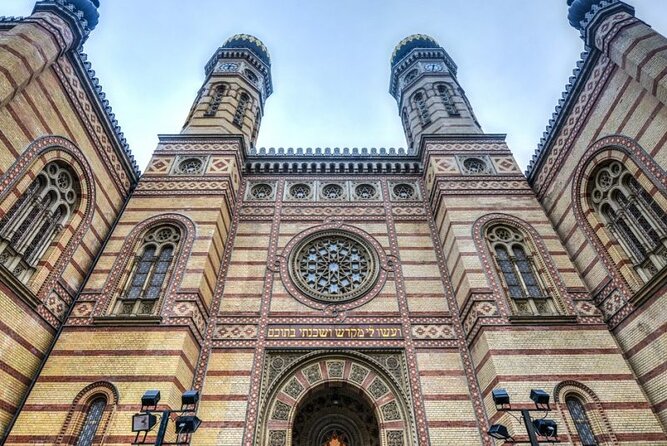
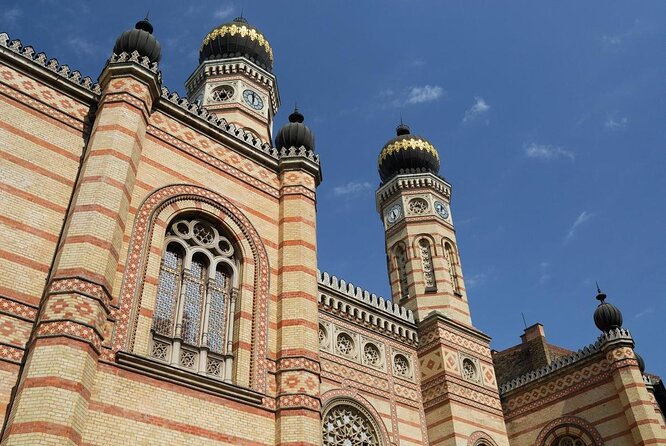
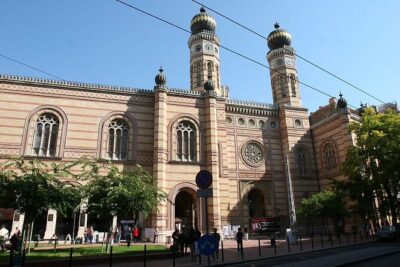
• The synagogue triangle route, with major stops like Kazinczy, Rumbach, and Dohány Street Synagogue
• Memorials tied to real rescuers, including the Raoul Wallenberg Memorial Garden with the Emmanuel tree and the Carl Lutz Memorial
• Small-group attention with a cap of up to 10 people, plus flexibility to slow down or skip
• Local-life stops like Gozsdu Courtyard and ruin bars such as Szimpla, so it’s not only solemn sites
• A licensed local guide plus hotel logistics, including pickup and drop-off to make the day easier
A compact neighborhood, a smart 4 hour route

This tour is designed for a simple reason: Budapest’s Jewish Quarter (in District VII, on the Pest side) is packed with important places close together. Walking is the point. You do not just cross off a list of famous sights. You move through streets where history happened, then you turn the corner and see another layer, like residential courtyards and everyday shops beside memorials.
The format also supports a more relaxed pace. You should expect a moderate amount of walking, and the tour description makes it clear you can ask for breaks. There is also a built-in flexibility, meaning your guide can adjust the route. If something catches your interest, you can usually spend more time on it and skip something else, so the tour does not feel like you are herded through like luggage.
Group size is kept small, with a maximum of 10 travelers, and the tour is priced per group (up to 6). That matters in a district full of meaning. With fewer people, you get more time for questions, and you are more likely to notice the small details your guide points out.
More Jewish heritage and synagogue tours in Budapest:
- Budapest Jewish Heritage Memorial Walking Tour & Synagogue Entry
★ 5.0 · 568 reviews - Budapest: Jewish Heritage Guided Tour with Synagogue Ticket
★ 4.8 · 533 reviews - Walking Tour Budapest incl. the Shoes on the Danube Bank
★ 5.0 · 387 reviews
Hotel pickup and drop-off that keeps the day from shrinking
Budapest can eat time fast if you keep hopping across town. That’s why the pickup system is a big practical win here. You are met in the lobby of your hotel or right in front of your accommodation (including rented flats). Then you return the same way at the end.
This is especially helpful if you’re pairing the Jewish Quarter with other plans around District VII or the wider center of Pest. Instead of trying to meet at a distant point and then stress about transit timing, the tour handles the start and finish.
You also get a mobile ticket, and the tour confirmation is sent at booking. In practical terms, it means less waiting around and fewer last-minute problems. It is a small detail, but those are the details that make walking tours feel smoother.
The synagogue triangle: Kazinczy, Rumbach, and Dohány Street
One of the most compelling parts is the so-called synagogue triangle. You see a range of synagogues in a relatively small area, which gives you a better sense of how Jewish religious life and community identity worked in Budapest, not just at the biggest headline site.
Here’s what you should expect from the major names in that triangle:
Kazinczy Street Synagogue area
This is one place your guide is likely to connect with the mikveh in Kazinczy Street. A mikveh is a ritual bath, and your guide can explain why it mattered historically and why it still exists today. The tour description also notes Kazinczy as the second largest non-Orthodox synagogue in the world, which helps frame its scale and importance.
Rumbach Synagogue
Rumbach is part of the triangle for a reason: it’s not only about architecture. Your guide should connect the building to the community that used it, and to the way Jewish life adapted as Budapest changed.
Dohány Street Synagogue
This is the iconic one, the stop many people recognize even if they have not visited it before. Expect a strong focus on history, especially around World War II, and on how the city’s Jewish community endured.
One practical note: the tour says entrance fees are not included, and travelers can choose visiting one synagogue only. There’s also mention of discounted prices for categories such as family and seniors. So if synagogues are high on your list, plan for that extra cost, and choose wisely based on what you want to see most.
Dress code: scarf and cap, even if you think you will skip it
Synagogues often require head covering. The tour advises you to be prepared with your own hat or cap and scarf if you would rather not wear the pieces provided by the synagogues. That is a quick thing to handle before you start the walk. It saves time and keeps you from feeling stuck mid-tour.
Also, bring layers. Budapest mornings and afternoons can shift temperature quickly, and you will spend time outdoors walking between stops.
More walking tours in Budapest:
- Budapest: Buda Castle Walk with Saint Stephen’s Hall
★ 4.5 · 3,012 reviews - Big Bus Budapest Hop-On Hop-Off Bus and Walking Tour
★ 3.5 · 2,206 reviews - Budapest: Buda Castle District Walking Tour
★ 4.6 · 2,108 reviews - Budapest City Landmarks Walking Tour in 2 Hours
★ 5.0 · 2,048 reviews
WWII memorial stops: Wallenberg, ghetto wall, and Shoes by the Danube
If you only saw synagogues, you would still come away with a meaningful tour. But what really makes this experience hit is the way it threads Jewish history through World War II events and their aftermath.
Several memorial and documentation stops are part of the walk:
Raoul Wallenberg Memorial Garden and the Emmanuel tree
This garden is described as a touching stop, anchored by the Emmanuel tree. Your guide’s job here is to connect the symbolism to the human stories, not only the name on a plaque.
Carl Lutz Memorial
Carl Lutz is another key figure your guide will bring up. Again, the value is in the context. You will not just see a memorial object. You should come away understanding why these names matter to Hungary’s Jewish story.
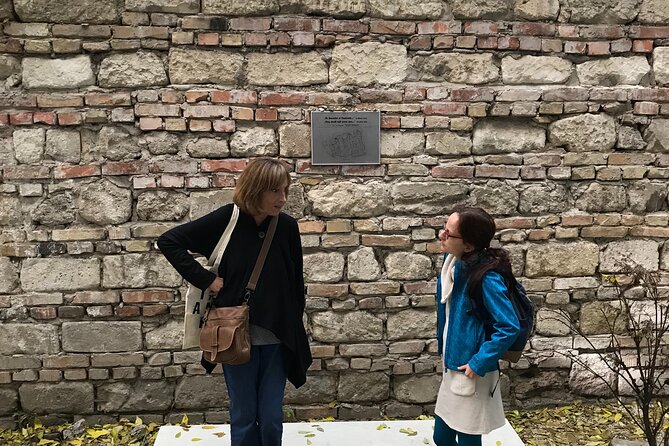
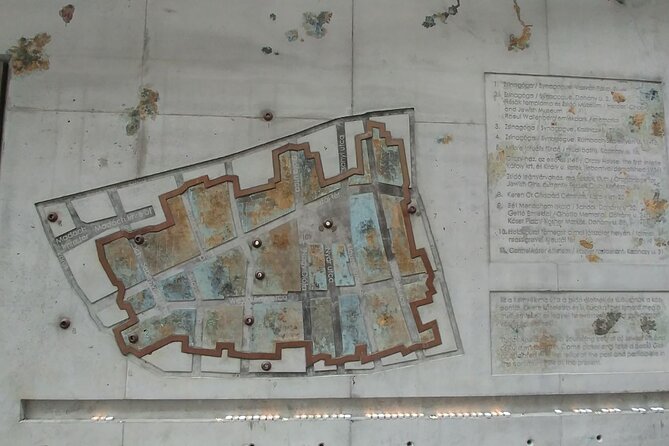
The last remaining part of the WWII ghetto wall
Seeing a remaining stretch of the wall changes the scale of what you’ve learned in books. The tour description calls out the last remaining part of the ghetto wall, and one review also mentioned access to locked, private areas through the guide’s keys. That is exactly the kind of detail that makes a guided walk feel more than just scenic.
Stumbling stones
The tour mentions stumbling stones placed in the streets of the quarter. These are the small memorial markers you can’t help noticing because you end up passing them step by step. Your guide should explain what they represent so you do not just treat them like an art installation.
Shoes Monument on the riverbank
This is the one many people recognize from photos: Shoes Monument by the Danube. It’s an iconic and specific memorial. The power here comes from the juxtaposition: you’re in a lively city setting, and then the monument forces you to confront what happened.
A good Jewish Quarter guide helps you hold both realities at once. Budapest is beautiful. The history is brutal. This tour aims to keep the balance, using stories to make sense of why these places look the way they do today.
Budapest Jewish Museum and Jewish Archives: the context behind the signs
Memorials give you emotion. The museums give you the why.
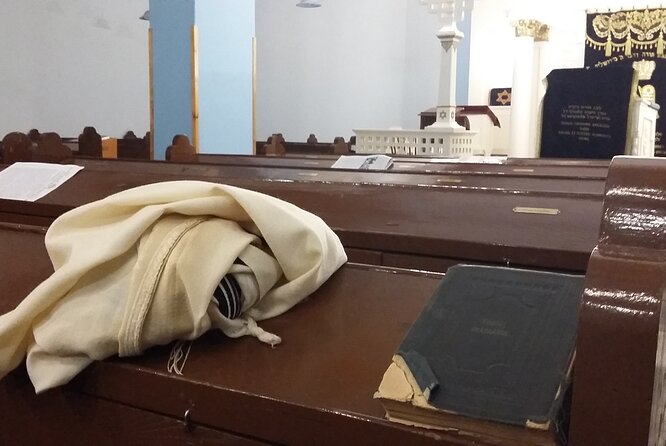
The tour includes a stop at the Budapest Jewish Museum and references exhibitions tied to the Jewish Archives. This is the part that can feel less dramatic at the start, but it is often the part that makes the rest of the walk click.
Because the area is so compact, you can understand the neighborhood as a living system. You can link what you see outside to the records and testimony inside. Even if you only skim the key parts, the guide should tie it back to the street level story you just walked through.
If you like history that connects religion, community, and politics, this museum-and-archives block is one of the best reasons to choose a guided tour instead of wandering alone.
Local life in the courtyards, shops, cafés, and ruin bars
Here’s where the tour goes beyond the heavy stuff. You also get to see places used by locals, including spots that help you picture Jewish life continuing after the worst chapters.
The tour description specifically calls out places like:
Gozsdu Courtyard
Courtyards like this help you understand how everyday life and culture share space with history. You might notice storefront rhythm, seating, and the flow of people moving in and out.
Little shops and eateries, confectioneries, and cafés
This is practical, not fluffy. A city neighborhood is not only monuments. It is food, errands, and social life.
Art galleries and festival scenes
Even if you visit on a quiet day, your guide should help you see what these spaces are for, and how the quarter’s cultural life works.
Ruin bars, including Szimpla
The tour references ruin bars, with Szimpla highlighted as iconic. This is one of those stops that can make the tour feel human again. It’s not pretending the past was fine. It’s showing how the neighborhood became a place people choose to spend time.
One reason I like this approach: it prevents the experience from turning into a single-note museum after dark. Instead, you leave with a fuller picture of what the quarter is like now.
Price and logistics: what you really pay for
The price is $356.90 per group, up to 6, for about 4 hours. That sounds like a lot until you break it down in your head. Split across a full group, you’re looking at roughly $60 per person before any extra entrance fees. If you’re traveling with family or friends, that can be strong value because the tour includes a licensed local guide and hotel pickup and drop-off.
It also reduces hassle. For a neighborhood like this, fewer transit gaps and fewer meeting-point headaches can be worth real money.
What is included is not just storytelling:
• a professional licensed local guide
• hotel pickup and drop-off (or restaurant drop-off for lunch timing)
• help recommending and booking a table at a local restaurant on your tour day or later
• arranging kosher meals or snacks if required
What is not included:
• food and drinks
• synagogue entrance fees, with a stated maximum additional cost of €46 per person (and the option that you can choose visiting one synagogue only, with discounted prices if eligible)
So the “value” equation depends on you. If you care about synagogues enough to pay tickets, you’re still likely getting your money’s worth because the guide connects those paid-entry buildings to the WWII and community context. If you only want to walk outside and see memorials, you may spend less on entrances, but you’ll want to plan what you choose to enter.
One more practical point: this tour tends to be booked well ahead, with an average booking lead time of 77 days. If you have fixed travel dates, don’t wait until the last moment.
What to bring, and how to handle the walking pace
The tour is not an exhausting hike, but it is not a sit-down show either. You should have a moderate physical fitness level. The good news is the guide can call for breaks if you need them.
Practical packing tips based on the tour notes:
• Wear shoes you can walk in for a few hours on city sidewalks
• If you do not want to use synagogue-provided coverings, bring a hat or cap and a scarf
• If you prefer, service animals are allowed
• Plan to use nearby public transportation as needed, since the meeting area is close to transit
Also, because the tour includes pickup and drop-off, it’s smart to be ready on time in the lobby. That keeps the whole group moving smoothly.
Should you book the Budapest Jewish Quarter City Walk?
Book it if you want a guided, street-level understanding of Budapest’s Jewish Quarter that includes both solemn sites and everyday local life. The combination of synagogues, WWII memorials like Wallenberg and Shoes, plus museums and archives, is a strong mix for anyone who likes context, not just landmarks.
I’d especially recommend it if:
• you care about WWII history but do not want it reduced to names and dates
• you like small groups and want time for questions
• you want more than the typical tourist circuit, with stops locals actually use, like courtyards and ruin bars such as Szimpla
Skip it or adjust expectations if:
• you strongly prefer minimal walking
• you are not interested in synagogue entrances and extra ticket costs
• you want a fully museum-based day, since this is built around a walking flow in a compact area
If you’re on the fence, here’s the simplest way to decide: if the idea of connecting Kazinczy, Rumbach, and Dohány Street Synagogue to the ghetto wall and Danube memorials sounds like your kind of travel, this is one of the best ways to do it with a guide who can make the neighborhood feel understandable, not just old.
FAQ
How long is the Budapest City Walk in the Jewish Quarter?
It lasts about 4 hours (approx.).
What does the tour cost and how big is the group?
The price is $356.90 per group, up to 6. The tour also lists a maximum of 10 travelers.
Does the tour include hotel pickup and drop-off?
Yes. Pickup and drop-off are offered, with pickup in your hotel lobby or in front of your accommodation.
Is the tour offered in English?
Yes, it is offered in English.
Are entrance fees included for synagogues?
No. Entrance fees are not included, and the tour states a maximum additional cost of €46.00 per person. It also notes travelers can choose visiting one synagogue only, with discounted prices available for certain categories.
How much walking is involved?
There is a moderate amount of walking. You can ask for a break if you need one.
Can the tour arrange kosher meals or snacks?
Yes. Kosher meals or snacks can be arranged if required.
What is the cancellation policy?
You can cancel for a full refund if you cancel at least 24 hours in advance of the experience start time. Free cancellation is available up to 24 hours before.
Recently reviewed around Budapest
- Panoramic hike around Budapest★ 5.0 · 14 reviews
- PRIVATE (7 hours) Budapest and Szentendre city tour with lunch and winetasting★ 5.0 · 4 reviews
- Original Budapest Walking Tour★ 4.0 · 39 reviews
- Budapest Highlights Self guided scavenger hunt and Walking Tour★ 5.0 · 5 reviews
- Hungarian Gastro Cellar: Assisted Tasting Options★ 4.5 · 5 reviews
- Original Budapest Alternative Street Art & Jewish Tour★ 4.5 · 14 reviews
- Bratislava, one day private trip from Budapest with guide!★ 5.0 · 4 reviews
- One hour Hen or Stag private party boat Budapest with unlimited beer and wine★ 3.5 · 6 reviews
Jewish Heritage Tours, compared.
Budapest Jewish Heritage Memorial Walking Tour & Synagogue Entry
Read our review →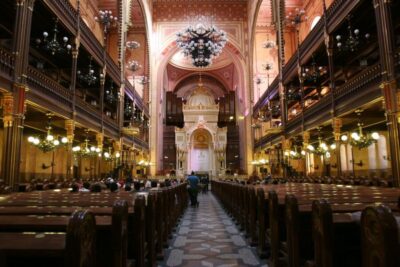
Jewish Heritage Guided Tour with Synagogue Ticket
Read our review →
Walking Tour Budapest incl. the Shoes on the Danube Bank
Read our review →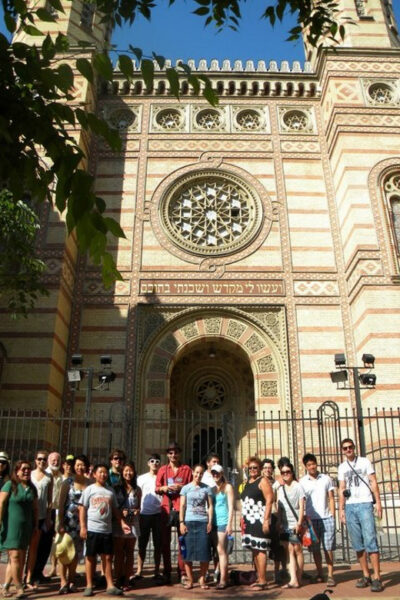
Past and Present of Budapest Jewish District Tour
Read our review →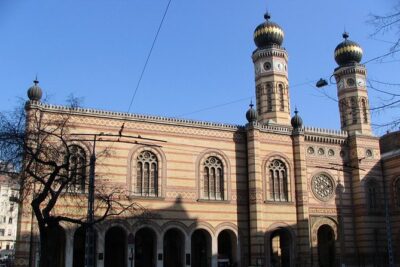
Budapest Dohany Synagogue & Hungarian Jewish Museum & free extras
Read our review →
Jewish History Guided Walking Tour with Historian
Read our review →Browse the lists this tour appears in