
Reviewed · JEWISH HERITAGE TOURS
Past and Present of Budapest Jewish District Tour
Budapest has plenty of postcard sights, but this walk is different because it connects buildings you can see today to the eras that shaped the Jewish Quarter. You’ll move through District VII with a clear story arc, from the late 1800s and the Golden Age toward the catastrophe of the 1940s.
I love the way the guide uses major landmarks as waypoints, then adds context so you understand why each place matters. I also love that the route feels structured, with outside views of the area’s most important synagogues and memorial sites instead of rushing inside. One drawback to plan for: this is not an all-access synagogue tour, so you’ll mostly see courtyards, memorial spaces, murals, and street level history rather than going in.
Key highlights to look for on this Jewish Quarter walk
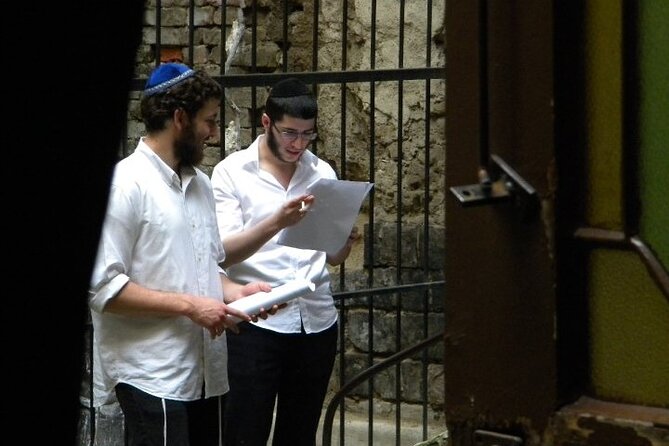
- A strong “past to present” storyline tied to real street corners in District VII
- Great / Central Synagogue outside views, plus context on Neolog and Orthodox traditions
- Memorial Courtyard and cemetery viewpoints where you can slow down and reflect
- Medieval city wall ruins explained as a reason people were restricted on where to live and trade
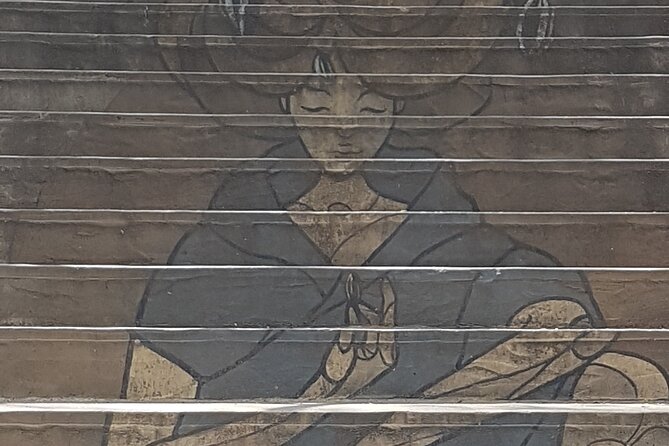
- Murals, restored facades, and urban art, especially around Rumbach Street and along the way
- Ending in Szimpla Kert, a good place to regroup and keep exploring independently
A 90-minute-plus walk that links Belle Epoque and wartime reality
This tour is built for people who want a fast, meaningful orientation to Budapest’s Jewish District without turning it into a checklist. In about 1 hour 45 minutes, you cover a tight stretch of District VII, moving from Erzsébet tér near the famous waterfront side of the city toward the lively ruin bar zone around Kazinczy Street.
The best part is the pacing of the story. Instead of just naming synagogues, the guide frames what you see with big shifts in Hungarian Jewish life: prosperity and community growth in the Belle Epoque period, then the tightening restrictions, and finally the destruction brought by Nazi occupation and its aftermath. It’s history you can actually track on foot because each stop corresponds to a physical place.
Just know what you’re signing up for: this is a standing-and-walking tour with heavy themes. You’ll be listening for long stretches, and the experience is more serious than, say, a simple sightseeing ramble.
More Jewish heritage and synagogue tours in Budapest:
- Budapest Jewish Heritage Memorial Walking Tour & Synagogue Entry
★ 5.0 · 568 reviews - Budapest: Jewish Heritage Guided Tour with Synagogue Ticket
★ 4.8 · 533 reviews - Walking Tour Budapest incl. the Shoes on the Danube Bank
★ 5.0 · 387 reviews
Meet at the Ferris Wheel, then get a roadmap on Erzsébet tér
The tour starts at the Ferris Wheel of Budapest on Erzsébet tér (Erzsébet tér, 1051). Your guide meets you at the square, does a quick “here’s where we’re going” sketch of the route, and sets expectations about the main sights.
Stop 1 is short, but it does an important job. You’ll get a broad introduction to the Jews of Hungary and the transformation of the Jewish community over time. The guide also points out the major sights you’ll see next, so when you reach the synagogue area, it feels less like arriving at random buildings and more like continuing a timeline.
Practical tip: if you like taking photos, this is a good moment to do it. Later, several stops focus on memorial spaces or murals where you’ll want a steady pace and time to absorb what you’re seeing.
Deák Ferenc Square: Gaudiopolis and the city wall that restricted Jews
At Deák Ferenc Square, the tone shifts from general background to specifics you can picture. The guide brings up Gaudiopolis, a Latin nickname meaning City of Joy, and uses it as a contrast point. It helps you understand why the later darkness felt so much more brutal, because the story begins with community life that was full, structured, and rooted.
You’ll also hear about Schutzpass, a document associated with efforts to save Jewish lives during the Holocaust years. That matters because it’s not just about dates. It shows how survival sometimes depended on fragile paperwork, risky networks, and changing policies.
Then comes something you can literally look at: former medieval city wall ruins that excluded Jewish people from trading in certain parts of the city. This is one of those details that makes history feel less abstract. You see stone remnants, then the guide connects them to daily limits on where people could work and live.
Great / Central Synagogue: Neolog, Orthodox, and Zionism from the outside
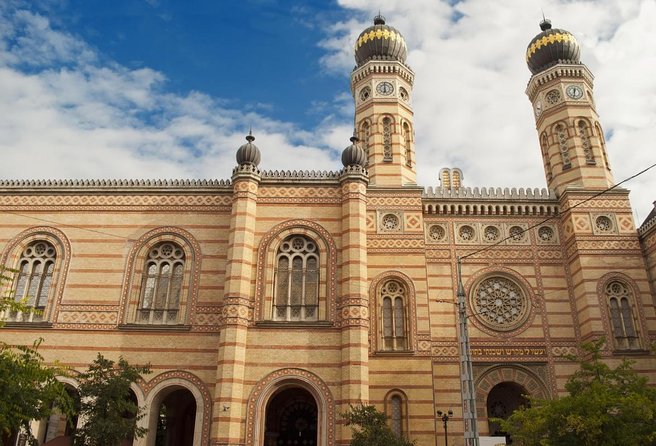
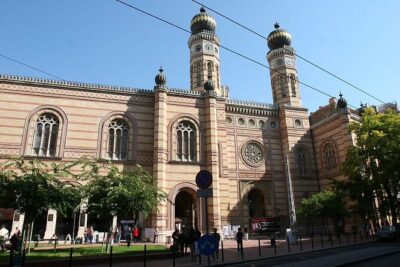
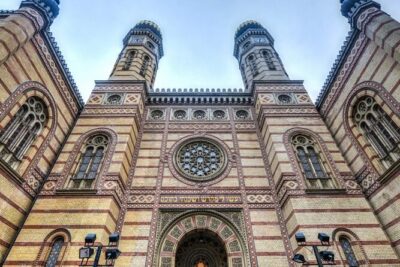
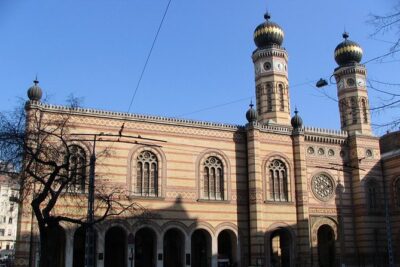
The centerpiece stop is the Great / Central Synagogue (Nagy Zsinagóga). This is the largest synagogue in Europe, and the exterior alone is impressive. More importantly, the guide uses this building to explain the splits within Hungarian Jewish life, including the Neologue and Orthodox movements.
You’ll also cover Zionism, so the synagogue isn’t treated only as a religious site. It’s presented as a community hub connected to broader political and cultural currents.
Even better, you won’t just do a quick photo and move on. You’ll be directed toward the Memorial Courtyard and cemetery viewpoints from outside. That outside access is a key part of how this tour handles the most painful chapters. You get a moment to pause without turning the memorial space into a time rush.
One planning note: the tour does not enter the synagogue. If you’re hoping for an interior visit, you’ll need to add a separate timed entry or another tour that includes interior access.
A different way to spend a day in Budapest:
- Budapest: City Highlights Cruise with Welcome Drink
★ 4.6 · 35,610 reviews - Budapest: Unlimited Prosecco, Beer and Aperol Spritz Cruise
★ 4.8 · 25,310 reviews - Budapest: Széchenyi Spa Day Ticket with Optional Upgrades
★ 4.3 · 23,911 reviews - Budapest: Nighttime or Daytime Sightseeing Cruise
★ 4.2 · 21,062 reviews
Rumbach Street Synagogue: restored facades and street art you can read
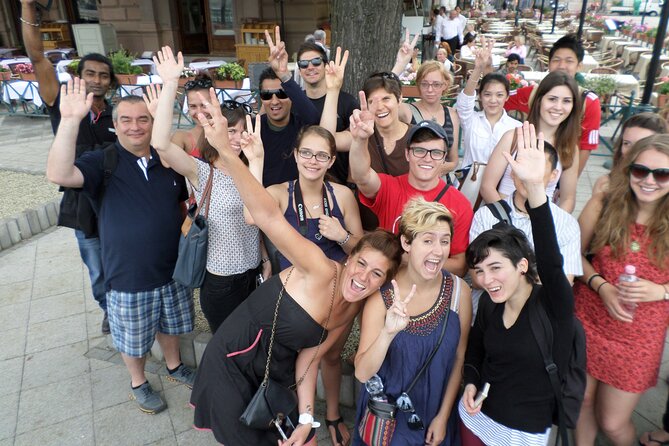
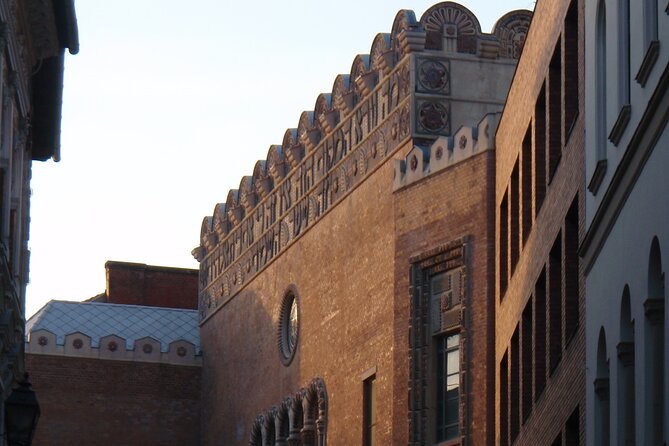
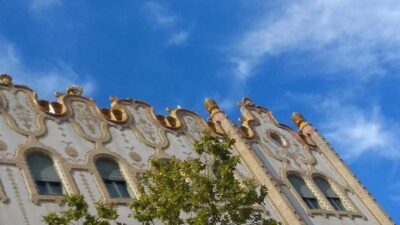
Next you’ll walk past the Rumbach Street Synagogue area. This stop is built around what restoration does to a neighborhood’s identity. You’ll learn about the beautifully restored synagogue and the way the surrounding streets show layers of artistic life.
A big theme here is visuals. The murals and urban street art are not treated like filler. The guide connects them to the neighborhood’s past and the way District VII communicates identity today.
Also note the format again: you won’t enter the synagogue. Instead, you’ll look at the exterior details and learn how to see what you’re standing in front of. If you enjoy architecture and street-level cues, this stop tends to feel especially satisfying because it’s not just lecture, it’s observation.
Gozsdu Udvar and the last ghetto wall piece

At Gozsdu Udvar, you’ll pass the Gozsdu Passage and get the story of the space, past and present. This area today is known for entertainment, gastronomy, and culture, and the guide helps you understand how a place transforms over time without erasing what happened there.
Then you’ll see the last piece of the ghetto wall. That’s the kind of moment that makes the walk feel grounded. The wall fragment is small compared to what it represented, but it forces you to connect the scale of historical violence with the reality of the streets you’re standing on.
If you like “then and now” comparisons, this is one of the best stops. It’s where you see how the city keeps living while still carrying evidence of what came before.
Kazinczy Street Synagogue: Orthodox life, kosher, and ritual baths
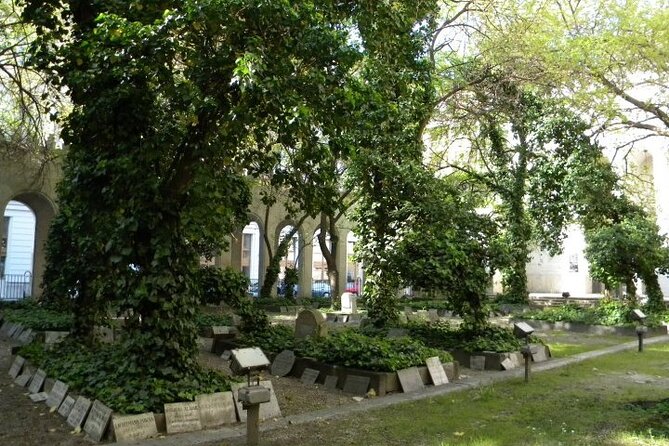
The walk continues to a point outside the Kazinczy Street Synagogue, associated with the Orthodox community. The guide explains it as a smaller community footprint, tied to roughly 50 to 60 families, which helps you grasp the difference between major institutional presence and tighter, family-based communal life.
This stop also gets practical in a useful way. You’ll hear about kosher food and Jewish ritual bath traditions, and you’ll get additional context on how religious practice shaped everyday routines.
Again, no synagogue interior visit here. You’re learning through placement, what’s near what, and what the neighborhood’s physical layout says about communal life.
If you’re the type who likes taking questions with you, this is a good place to ask. The topics are concrete enough that a guide can answer without going abstract.
Finish in Szimpla Kert: murals, pop-up culture, and a good meetup spot
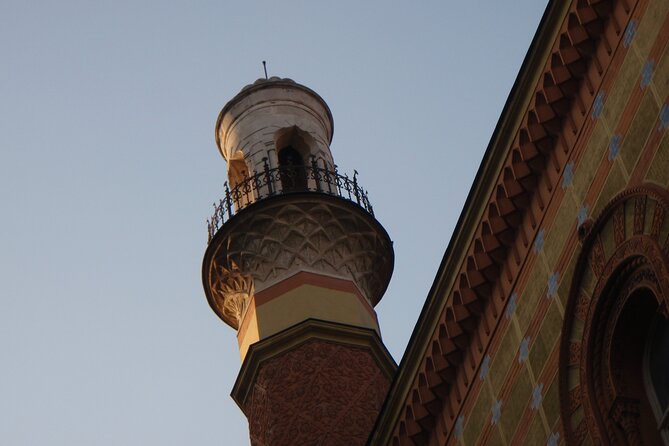
The tour ends at Szimpla Kert in the ruin bar zone (Kazinczy u. 14, 1075). This is an easy, friendly landing point because it’s a lively public space with lots of visuals and corners to sit down.
You’ll get final orientation on the area, along with additional murals and urban street art you can keep noticing after the tour. Then the guide brings you to Szimpla Ruin Bar, where pop-up exhibitions can show up, depending on what’s running at the time.
There’s no entry fee to this ruin bar, so it’s more of a place to regroup than a paid attraction. After 1 hour 45 minutes of walking and listening, this matters. You can decompress without committing to a long add-on plan.
Price and donation culture: how $3.63 fits the value equation
The price is listed as $3.63 per person, which is low for a guided walk that spends time on multiple major landmarks and a serious historical narrative. Here’s how to think about the value: you’re paying for the guide service and the structured route, while the culture of the tour also expects an end-of-tour donation.
Your booking includes a booking fee that supports administration and does not go to guide earnings. That means the guide’s work is financially supported mainly through what you choose to donate at the end.
So if you’re watching budgets, don’t treat this like a no-cost walking tour where the guide is an afterthought. The low listed price is only half the picture. Plan a bit for a tip or donation if you feel the guide earned it, especially because the subject is sensitive and the best guides tend to be the ones who answer questions clearly.
Also, with a maximum group size of 25 and a consistent 4.9 rating from 264 reviews, this format seems to work well for getting questions answered without feeling like you’re stuck in a crowd-control line.
What to expect from the guides, and why names keep showing up
One theme pops up again and again: guides who are friendly, organized, and ready to answer questions. Different names are credited with delivering that experience, including Ester (Eszter), Dora, Gary, Edith, Edi, Judith, and David. People mention clear structure, professionalism, and a willingness to help you understand both the joyful parts of community life and the cruelty of the Holocaust years.
If you care about listening quality, keep one practical note in mind: because this is an English-speaking tour, communication depends on the guide’s clarity and your ability to follow. Some comments highlight difficulty when an accent was heavy for non-native English speakers, so if that’s ever been a problem for you on tours, arrive ready to focus, and give yourself a little extra time to acclimate.
Pacing also varies by guide style. The tour is designed to be manageable, but it involves steady walking and standing stops. Comfortable shoes are not optional here, even if the route is short.
Who should book this Jewish District tour, and who should think twice
This tour is a great fit if you want:
- A high-impact orientation to District VII in about 1 hour 45 minutes
- A walk that connects major synagogue exteriors with the broader story of Hungarian Jewish life
- A guide who can connect architecture, memorial spaces, and street-level history into one timeline
It may be less ideal if you specifically want:
- Interior synagogue access. This tour does not enter synagogues, so you’ll miss the chance to see the interiors directly.
- A purely light and casual vibe. The subject includes tragedy and wartime realities, and some people find it heavier than other city walks.
If you fall into the second group, don’t ignore this tour entirely. Instead, pair it with an add-on that includes synagogue interior visits on a separate day, or after you’ve built context here.
Booking advice so you get the best version of this experience
- Pick a time you can focus. This walk is information heavy, so choose a moment when you’re not rushing to another reservation.
- Come with one or two questions about what you care about most, like how communities split into Neolog and Orthodox, or how survival documents like Schutzpass fit into the story.
- Wear shoes you can stand in. Several stops are built around listening and looking, not quick pass-throughs.
- Plan your next step at the end. Since you finish at Szimpla Kert, treat it as a springboard for a drink, a snack, or a self-guided wander nearby.
If you enjoy being able to ask questions and get backstories instead of just facts, this is the kind of tour that tends to feel worth it fast.
Should you book?
Yes, book it if you want a compact, well-structured introduction to Budapest’s Jewish Quarter that connects what you see today to the full arc of history. The value is strong because you get a guided timeline across major landmarks, with memorial-focused outside access and clear context, all in a group small enough to still feel human.
Skip it or plan an add-on if interior synagogue time is your top priority, because this walk is designed around outside views and street-level evidence. If you’re okay with that trade-off, you’ll leave with a much better sense of why District VII looks the way it does, and why the streets hold memories beyond the buildings.
FAQ
Does this tour include entrance into the synagogues?
No. The tour does not enter the synagogues. You’ll view memorial areas and courtyards from outside and learn about the buildings and communities.
Where does the tour start and end?
It starts at the Ferris Wheel of Budapest on Erzsébet tér, and it ends at Szimpla Kert on Kazinczy u. 14.
How long is the tour?
The duration is about 1 hour 45 minutes.
How much does it cost?
The price is $3.63 per person.
What language is the tour offered in?
The tour is offered in English.
How large are the groups?
The tour has a maximum of 25 travelers.
Are tips included?
Tips are not included. Guides depend on donations at the end of the tour, and the amount is at your choice.
Is free cancellation available?
Yes. You can cancel up to 24 hours in advance for a full refund. Canceling later than that is not refundable.
Recently reviewed around Budapest
- Panoramic hike around Budapest★ 5.0 · 14 reviews
- PRIVATE (7 hours) Budapest and Szentendre city tour with lunch and winetasting★ 5.0 · 4 reviews
- Original Budapest Walking Tour★ 4.0 · 39 reviews
- Budapest Highlights Self guided scavenger hunt and Walking Tour★ 5.0 · 5 reviews
- Hungarian Gastro Cellar: Assisted Tasting Options★ 4.5 · 5 reviews
- Original Budapest Alternative Street Art & Jewish Tour★ 4.5 · 14 reviews
- Bratislava, one day private trip from Budapest with guide!★ 5.0 · 4 reviews
- One hour Hen or Stag private party boat Budapest with unlimited beer and wine★ 3.5 · 6 reviews
Jewish Heritage Tours, compared.
Budapest Jewish Heritage Memorial Walking Tour & Synagogue Entry
Read our review →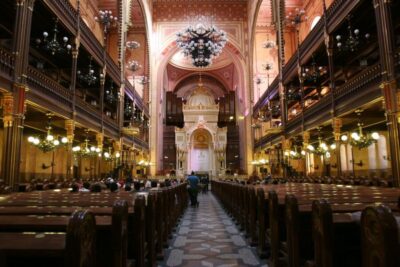
Jewish Heritage Guided Tour with Synagogue Ticket
Read our review →
Walking Tour Budapest incl. the Shoes on the Danube Bank
Read our review →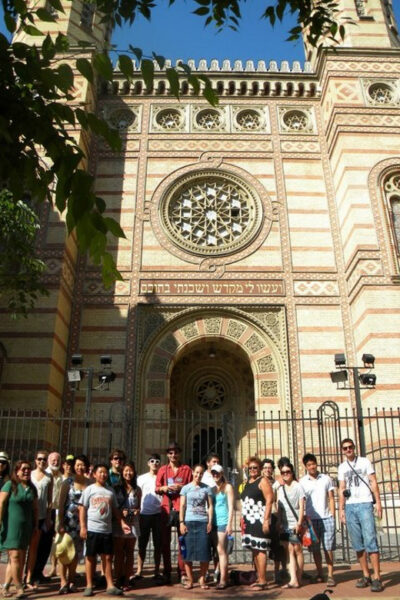
Budapest Dohany Synagogue & Hungarian Jewish Museum & free extras
Read our review →
Jewish History Guided Walking Tour with Historian
Read our review →Browse the lists this tour appears in