
Reviewed · JEWISH HERITAGE TOURS
A Journey through Jewish Budapest – Walking Tour
This tour works because it strings together Jewish life, architecture, and hard history in a way you can actually walk through. You start with one of Europe’s biggest synagogues, then move section by section through the old Jewish quarter in Budapest, ending at the Shoes on the Danube Bank memorial. It’s a clear route, with a strong story line.
I especially like that the tour is led by a historian guide, not just a generic walk-and-talk. In the guides’ names you’ll see mentioned, Orsolya, Agi, and Endre all got real praise for turning details into something you can picture, not just memorize. I also like the mix of places, from the large Great Synagogue complex to the smaller Kazinczy and Rumbach synagogues, which helps you see the community as more than one landmark.
One thing to consider is that synagogue visits require tickets and dress rules. Admission for Dohány, Kazinczy, and Rumbach is not included, and you’ll need shoulders and knees covered at the Dohány and Kazinczy sites. If you forget clothing that fits, you might spend time sorting it out on the spot.
Key things to know before you go
- Small-group feel with a maximum of 8 people, so it doesn’t turn into a noisy pack
- Historian-led with a Jewish Studies Scholar supporting the Great Synagogue complex visit
- Three synagogues in one route, plus the Jewish Museum and Memorial Park at the Dohány complex
- Ghetto-era reminders including a Ghetto Wall Memorial erected in 2014 near Kazinczy Street
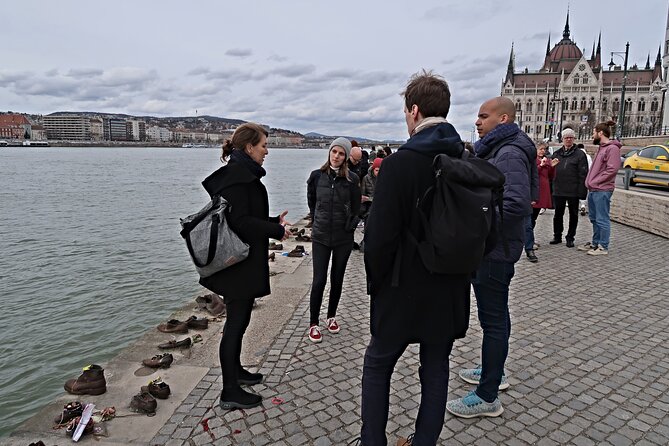
- WWII memorial stop at the Shoes on the Danube Bank, which is free to visit
- Motion-friendly route with a start at Kamara Café, right by the Great Synagogue area
Jewish Budapest in Three Hours: a walk that explains what you’re seeing
Budapest can feel like one great blur of stone and views, but Jewish Budapest is easier to understand when someone gives you a route and a timeline. This 3-hour walking tour focuses on the old Jewish districts on both sides of the city, with stops in the VII and VIII districts and a finish along the Danube. You’ll see how neighborhoods shifted, how religious communities lived side by side, and how WWII turned everyday life into something unrecognizable.
What makes this tour practical is that it doesn’t just point at buildings. It explains why the architecture looks the way it does, why each synagogue belongs to a specific tradition or community, and how local history connects to wider events in Hungary. You get context for the Jewish Museum and Memorial Park inside the Great Synagogue complex, then you move outward to smaller sites that help you understand the full texture of the quarter.
You also get to end at a memorial that hits hard. Shoes on the Danube Bank is free, and it’s built around an exact image: victims ordered to remove their shoes and then shot so their bodies fell into the river. It’s the kind of stop that makes the earlier synagogue stories feel more urgent, not just educational.
More Jewish heritage and synagogue tours in Budapest:
- Budapest Jewish Heritage Memorial Walking Tour & Synagogue Entry
★ 5.0 · 568 reviews - Budapest: Jewish Heritage Guided Tour with Synagogue Ticket
★ 4.8 · 533 reviews - Walking Tour Budapest incl. the Shoes on the Danube Bank
★ 5.0 · 387 reviews
Getting started at Kamara Café and the small-group logistics that matter
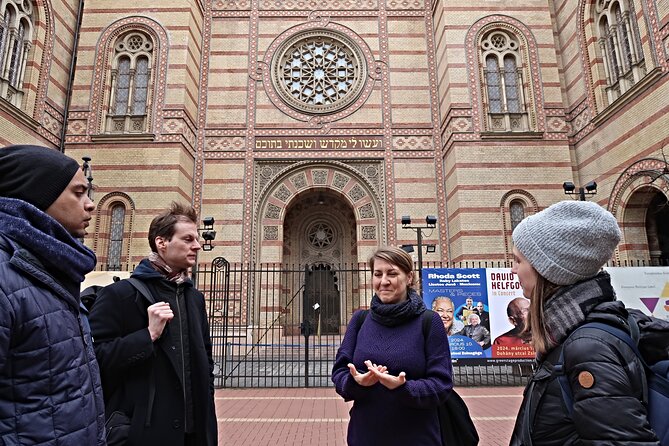
The tour starts at Kamara Café on Dohány u. 1b, right by the Great Synagogue area. The meeting point matters here because it means you can arrive near public transportation and settle in quickly. If you book pickup, the pickup location is described as a cafe right opposite the Great Synagogue area, and you’ll receive your guide’s photo, phone, and bio after booking.
You’ll be walking on foot for roughly three hours total, with multiple short stops and one longer stop at the Great Synagogue complex. The itinerary is structured so you don’t just look at one place for a long time and then rush to the next. The pacing is also why the small group size helps, since you can ask questions and hear the guide without straining.
Departures are available in the morning or afternoon. The start time given is 10:00 am, so that’s one clear option to plan around if you want a daytime itinerary with less risk of evening fatigue.
Stop 1: Great or Central Synagogue at Dohány Street, plus the museum grounds
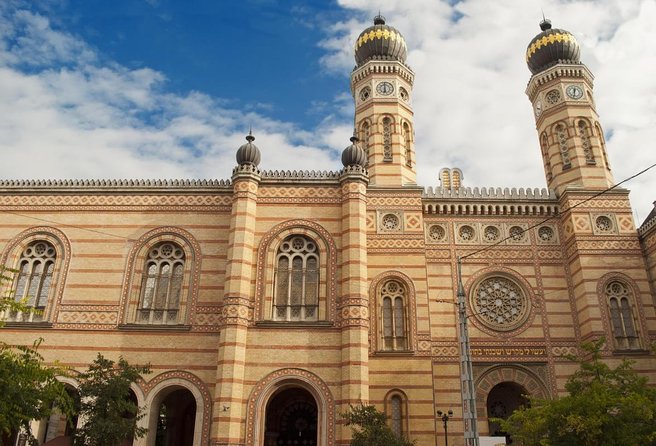
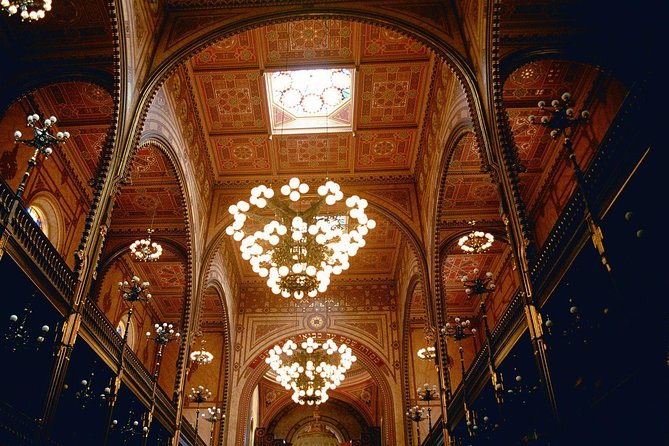
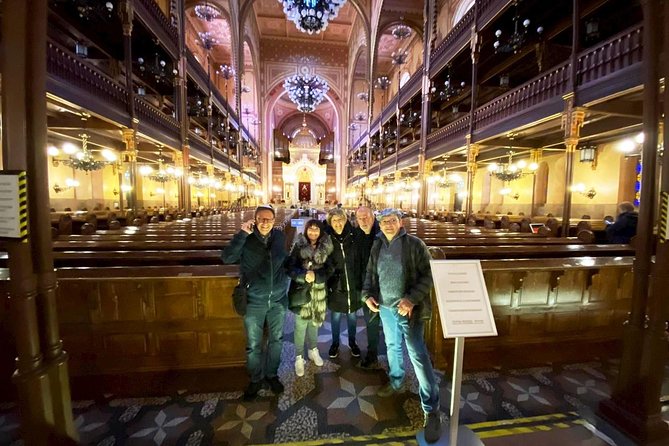
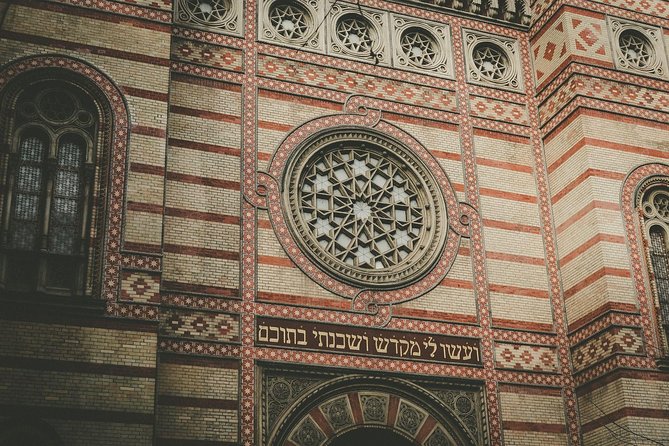
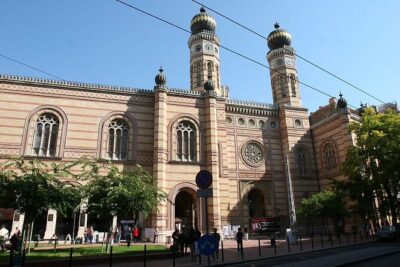
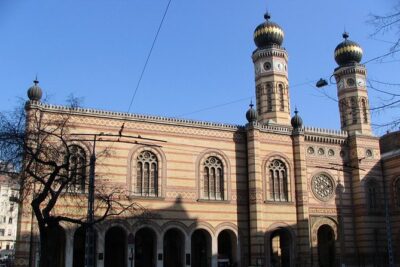
Your first stop is the Great or Central Synagogue, also known as the Dohány Street Synagogue. This is the big one, often described as the largest synagogue in Europe, and it’s easy to see why. The exterior and interior are a mix of celebration and memory, in a style that’s often called Moorish Revival.
The tour includes time inside the complex with help from a Jewish Studies Scholar. That matters because it shifts the visit from sightseeing to understanding, especially around what you’re looking at when the guide explains symbols, sections of the building, and how the site fits into the story of Budapest’s Jewish community.
Within the complex, you’ll have access to the Temple of Heroes, the Jewish Museum, and a Memorial Park. Note the time at this stop is about 30 minutes, so you won’t have hours to wander solo, but you will get a guided framework first. Admission tickets for this complex are not included, so you’ll want to plan for that extra cost.
A possible drawback is that this is also where dress rules come into play. Visitors to the Dohány Synagogue are requested to have shoulders and knees covered, so it’s worth dressing with that in mind from the start of your day.
Stop 2: Kazinczy Street Synagogue, the ghetto wall memorial, and a ritual bath
After the Great Synagogue, you walk toward Kazinczy Street Synagogue. This stop keeps the tour grounded in the everyday space of the old Jewish quarter, not just one major landmark. On the way, you’ll pass the neighboring Ghetto Wall Memorial, erected in 2014, which gives you a concrete reminder that the ghetto was not abstract history.
Then the tour moves into the area’s religious life. You’ll see a luxurious Mikve, which is a Jewish ritual bath, and you’ll continue to the Art Nouveau orthodox synagogue on Kazinczy Street. The guide brings attention to how these places signaled community identity, even when the surrounding city was under pressure.
When the synagogue is open to the public, you’ll visit the interior. That interior visit is a big part of the value, because it turns the building from a name on a map into a real space with meaning. The stop duration is about 35 minutes, which is enough time to absorb the explanations without feeling rushed.
Again, admission tickets for the Kazinczy Street Synagogue are not included. Also, you’ll want shoulders and knees covered here too, since this dress rule applies to both Dohány and Kazinczy synagogues.
More walking tours in Budapest:
- Budapest: Buda Castle Walk with Saint Stephen’s Hall
★ 4.5 · 3,012 reviews - Big Bus Budapest Hop-On Hop-Off Bus and Walking Tour
★ 3.5 · 2,206 reviews - Budapest: Buda Castle District Walking Tour
★ 4.6 · 2,108 reviews - Budapest City Landmarks Walking Tour in 2 Hours
★ 5.0 · 2,048 reviews
Stop 3: Rumbach Street Synagogue and what the Status Quo Ante means
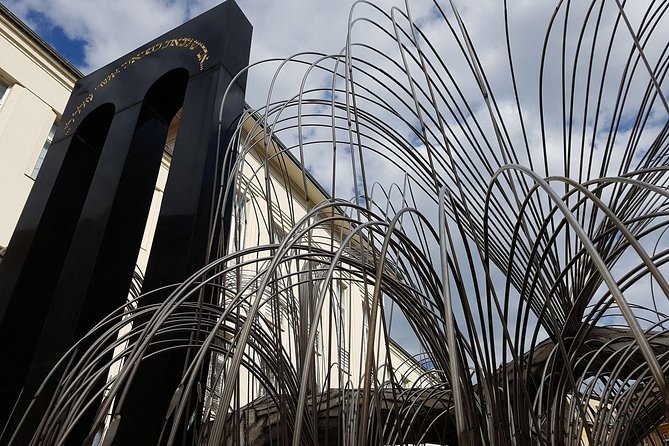
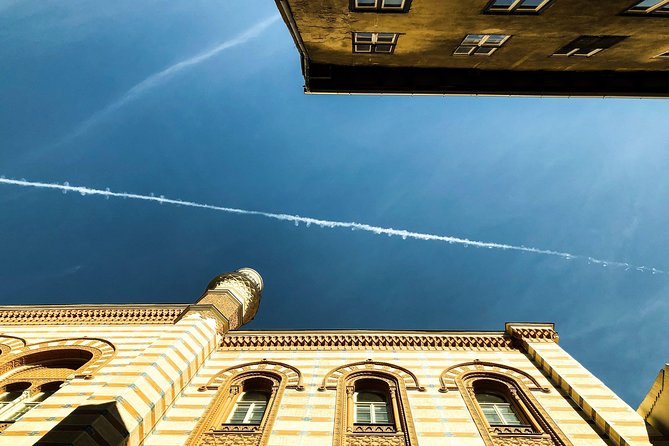
Next up is the Rumbach Street Synagogue, and it offers a different angle on Budapest’s Jewish community. The focus here is the Status Quo Ante stream of Judaism, so you’re not only learning geography, you’re learning how internal Jewish religious traditions shaped community life.
You’ll discover this history while observing the synagogue’s features, and when the building is open to the public, you can visit the interior. The stop time is about 25 minutes, so think of it as a concentrated, guided orientation rather than a long museum-style visit.
This part is especially useful if you’ve ever wondered why Jewish communities are not all the same. Even within one city, different groups formed around different interpretations and traditions, and those differences show up in the synagogues they built and the practices they preserved.
Admission tickets for the Rumbach Street Synagogue are not included, so keep that in mind if you’re trying to stick to a strict budget.
Stop 4: Shoes on the Danube Bank, the WWII memorial you should not skip
The final stop is Shoes on the Danube Bank. It’s free to visit, and it’s also the emotional finish line of the route. The memorial was erected on April 16, 2005, and it commemorates Jews murdered during WWII who were ordered to remove their shoes before being shot at the edge of the water.
The design is based on that missing detail: shoes left behind on the bank. Because it’s so direct, you don’t need any extra context to understand the intention, but the guide’s framing helps connect it to the broader story you’ve been hearing at the synagogues.
The time at this stop is about 20 minutes. That’s enough time to stand, read what’s there, and let the guide tie it into the larger historical pattern, without dragging it into an hour of numbness.
Price and value: what you get for $126.16 and what costs extra
At $126.16 per person for roughly three hours, the price lands in the mid-range for a guided, small-group history tour in a major European city. What you’re paying for is not just walking, but a structured route with a historian guide, plus interior access where the sites are open to the public.
Admission tickets are not included for the Dohány, Kazinczy, and Rumbach synagogues. You should budget for those. The good news is that one major stop, Shoes on the Danube Bank, is free, so not everything adds up.
When I look at value, I focus on whether the guide helps you see more than you could by yourself. The repeated praise for guides by name, including Orsolya, Agi, and Endre, points to a real strength: they connected the Jewish story to broader Hungarian context and made specific places feel understandable, not just impressive. One review even highlighted Orsolya’s ability to weave culinary context into the experience, and following her food recommendation like flodni cake turned into a memorable add-on.
If you want a tour where the main benefit is interpretation, not just access, this fits well. If you’re hoping to do a checklist of buildings without much explanation, you might feel the extra cost more than you expect.
What to wear, bring, and expect during the walking pace
This is a walking tour, so wear shoes you can stand in for a couple of hours. The tour is designed for most travelers to participate, and it follows a route that starts near the Great Synagogue and ends along the river.
Bring clothing that meets the religious site expectations at Dohány and Kazinczy. Shoulders and knees should be covered. If you forget, you might find yourself scrambling at the exact moment you’d rather be listening.
Because the tour includes multiple sites with ticket rules, it helps to come ready with a plan for admissions. The tour gives you the guided structure, but you handle tickets for the synagogues and the Great Synagogue complex.
Food and drinks are not included. If you want to turn this into a fuller day, the meeting point area is a convenient place to plan a snack before or after the tour, then match your timing to your next activity.
The guides make or break it, and this one gets high marks
The most consistently praised aspect is the guides themselves, especially their command of both local history and Jewish heritage in Budapest. Orsolya got strong notes for bringing stories alive, with academic depth and a real sense of pacing. Agi was highlighted for explaining locations and the surrounding neighborhoods in a way that made the whole community feel comprehensible by the end. Endre received praise as the most knowledgeable guide the group had, with strong storytelling and attention to detail across the Jewish quarter route.
Veronika also showed up as a standout even though she was not Jewish, with emphasis on how she still handled the tragic history with clarity and care. That tells me the tour does not depend on the guide sharing the same identity as the subject to do it well. It depends on preparation, respect, and the ability to teach without turning tragedy into a spectacle.
And then there’s the unexpected extra some groups noted, like the courtyard and the Tree of Life feature. Those small architectural or memorial details are exactly where a guide earns their fee, because they point you to what you might otherwise miss when you’re just walking past.
Who this tour suits best, and who might want a different option
This tour is ideal if you like structured context, especially when history is heavy. If you enjoy learning how different Jewish communities formed and what synagogues and memorials communicate, you’ll get more from the route. It’s also a good fit for couples and small groups because the size keeps it conversational.
I’d also recommend it to anyone staying in central Budapest who wants a guided plan for the Jewish quarter without wasting time figuring out where to go first. The route is tight enough to do well even when you’re only in the city for a short visit.
If you dislike walking, or if you really want long stays inside museums, you might find the time limits at each stop a bit short. The Great Synagogue complex is a major site, but your guided time is about 30 minutes, with the rest up to your own ticket time and pace.
Should you book this Jewish Budapest walking tour?
Book it if you want a guided walk that connects major synagogue architecture, ghetto-era reminders, and WWII memory into one coherent route. The historian-led structure, the small group size, and the consistently praised guides make this more than a photo tour.
You should think twice if you’re uncomfortable with dress requirements at religious sites or if you already planned to spend long hours inside each synagogue and museum on your own. In that case, you might prefer a self-guided approach with extra time for tickets and slower wandering.
If you’re arriving ready to learn, and you can handle a few emotionally difficult moments at the end, this tour is a strong way to understand Jewish Budapest in just a few hours.
FAQ
How long is the Jewish Budapest walking tour?
The tour lasts about 3 hours.
Where does the tour start and end?
It starts at Kamara Café, Dohány u. 1b, 1074 Budapest, and ends at Shoes on the Danube Bank in 1054 Budapest.
Is the tour in English?
Yes, it’s offered in English.
What is included in the price?
Included are a 3-hour guided walking tour and a historian guide.
What tickets are not included?
Tickets are not included for the Dohány Synagogue, Rumbach Street Synagogue, and Kazinczy Street Synagogue. Shoes on the Danube Bank is free.
Is pickup available?
Pickup is offered, with the meeting place identified near Kamara Café opposite the Great Synagogue area.
Do I need to follow a dress code?
Yes. Visitors to the Dohány and Kazinczy synagogues are requested to have shoulders and knees covered.
How big is the group?
The tour has a small group size with a maximum of 8 travelers.
Recently reviewed around Budapest
- Panoramic hike around Budapest★ 5.0 · 14 reviews
- PRIVATE (7 hours) Budapest and Szentendre city tour with lunch and winetasting★ 5.0 · 4 reviews
- Original Budapest Walking Tour★ 4.0 · 39 reviews
- Budapest Highlights Self guided scavenger hunt and Walking Tour★ 5.0 · 5 reviews
- Hungarian Gastro Cellar: Assisted Tasting Options★ 4.5 · 5 reviews
- Original Budapest Alternative Street Art & Jewish Tour★ 4.5 · 14 reviews
- Bratislava, one day private trip from Budapest with guide!★ 5.0 · 4 reviews
- One hour Hen or Stag private party boat Budapest with unlimited beer and wine★ 3.5 · 6 reviews
Jewish Heritage Tours, compared.
Budapest Jewish Heritage Memorial Walking Tour & Synagogue Entry
Read our review →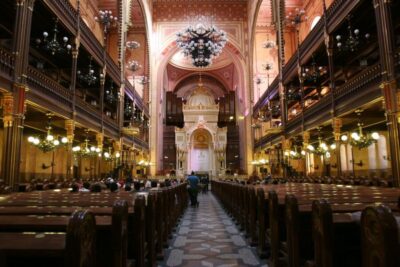
Jewish Heritage Guided Tour with Synagogue Ticket
Read our review →
Walking Tour Budapest incl. the Shoes on the Danube Bank
Read our review →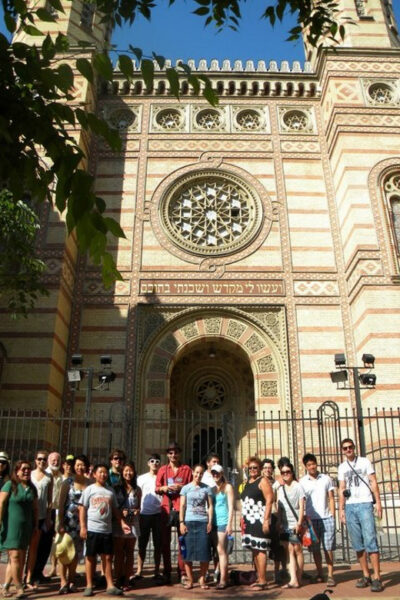
Past and Present of Budapest Jewish District Tour
Read our review →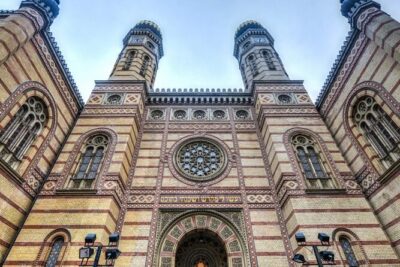
Budapest Dohany Synagogue & Hungarian Jewish Museum & free extras
Read our review →Browse the lists this tour appears in