
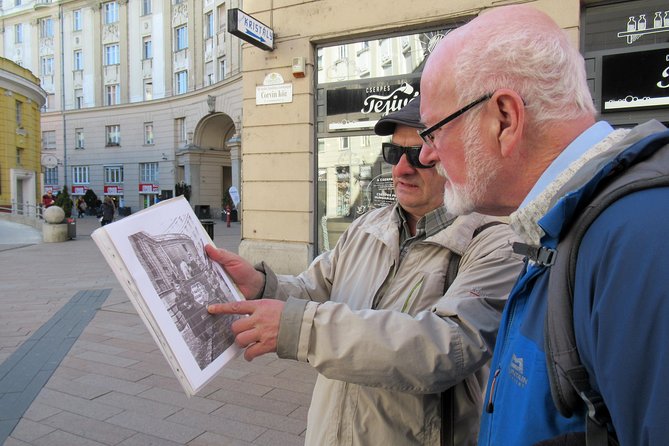
Reviewed · COMMUNIST HISTORY TOURS
Rise Against the Soviet: The 1956 Revolution – Private Tour
This tour is fascinating because it lets you read Budapest as a living timeline. You start at Kossuth Lajos Square and end near Corvin Cinema, and the 1956 Revolution story shows up in plazas, bridges, and even propaganda spaces, not just textbooks.
I especially liked the way the guide connects the dots with personal accounts from people who lived through the Communist era. I also love that the route is practical, with short stops at places tied to events, speeches, and resistance, so you leave with names to remember and a map in your head.
One possible drawback: it is only about 3 hours, so it is not meant to cover every single site connected to 1956. If you want a deep, chapter-by-chapter academic version of the uprising, you may need to pair this with extra time on your own.
Key highlights to look for
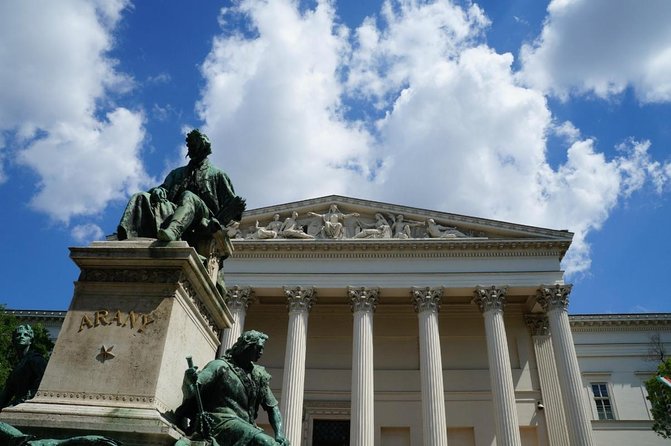
- Six stop route across Budapest tied to 1956 flashpoints from parliament square to Corvin köz
- Personal context from guides who lived under Communism, often shared alongside the public story
- Bigger timeline included, with the revolution explained in relation to earlier pressures and later collapse in 1990
- On-site details that make the past feel specific, like Radio Budapest and the Party HQ nickname
- Free time at each site for a few photos, a read of the handouts, and questions
- Handouts plus a Communist-themed souvenir to take home
Why Budapest in 1956 is more than a date on a wall
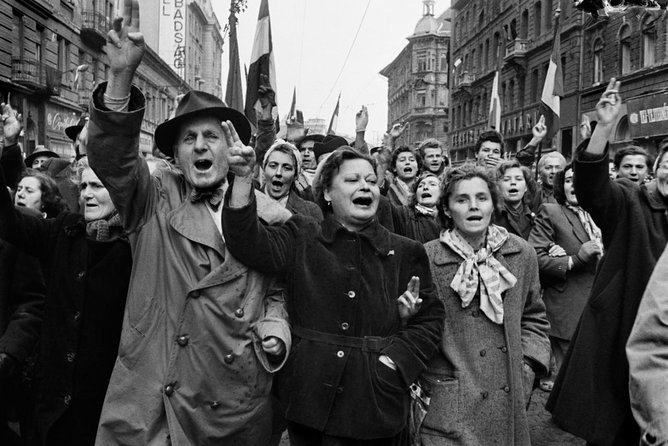
The 1956 Revolution is one of those moments that keeps echoing. In Budapest, that echo is physical. You can point to the exact squares where crowds gathered, the communications building where revolutionaries tried to reach the outside world, and the areas where young fighters tried to stop Soviet tanks with what they had.
What I find useful here is the way the tour treats 1956 as part of a longer story. You do not just get the week-by-week drama. You get context about how Hungary arrived at this rupture, and how the aftermath shaped life long afterward, including the eventual end of Communism in 1990.
More communist-era history tours in Budapest:
- Budapest: Communist History Tour with House of Terror Option
★ 4.8 · 182 reviews - Budapest: 3-Hour Walking Tour About Communism (Small Group)
★ 4.7 · 70 reviews - Communism in Hungary with a Historian
★ 5.0 · 70 reviews
Price and what you really pay for
The cost is $228.66 per group, up to 5 people, for about 3 hours. That sounds steep if you compare it to a walking tour that costs per person, but private tours in Budapest add up fast when you want a focused route and pickup.
Here is the value math that matters: if you are a couple, you are paying roughly $114 each at the top end. If you come as a small group of four to five, the price drops to something closer to “reasonable for a guide who customizes pace and questions.”
Also, you are not paying for museum entries on this one. The stops are marked as admission ticket free, and the main “cost” you pay for is expert interpretation, not gate fees.
How the tour runs in real life (timing, pace, and transit)
This is designed as a private activity, so it is just your group. Pickup is offered either from your hotel or from a central meeting point you agree on, which saves you the stress of figuring out where to be.
Expect a mix of walking and short public-transport segments. Public transportation tickets or passes are not included, so keep that in mind if you plan to use trams during the route. The tour is listed for moderate physical fitness, so I suggest comfortable shoes and a water bottle, especially if the day is warm.
One small practical tip: since you get handouts, you will probably want a pause at a couple stops to read before you move on. Build in a moment for your own questions. Good history tours move fast only because the guide does, so give yourself a tiny buffer.
Kossuth Lajos Square: where a mass demonstration turned tragic
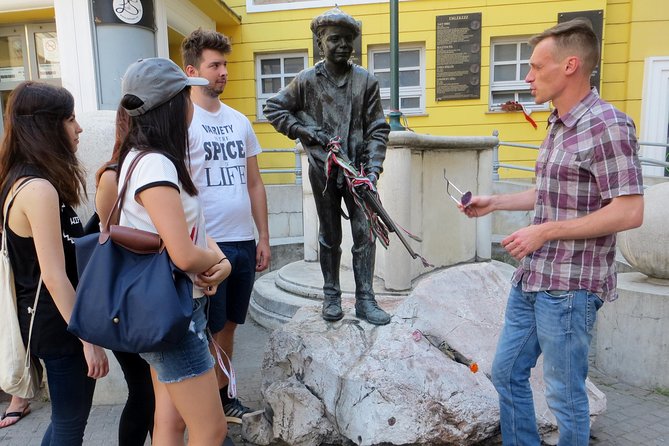
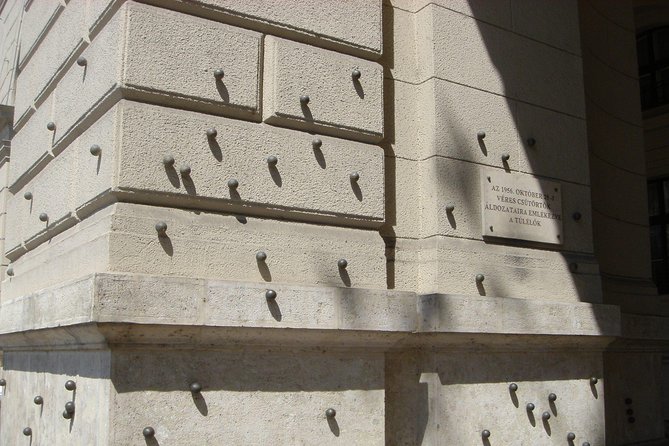
Your first stop is Kossuth Lajos Square, the setting for Hungary’s parliament. The architecture alone is worth a look, but the emotional center here is what happened in 1956 after a mass demonstration.
This is where the story becomes painfully specific. The tour points out that dozens were massacred by the government following the demonstration, and the square’s symbolism makes that detail land. It is not just a sad statistic. It is the physical space where state power confronted public protest.
Why I think this stop works: you get a clear sense of how quickly public momentum can be met with brutal force. Even if you already know the basics, seeing the parliament backdrop makes the stakes feel immediate.
A possible consideration: since this is an iconic square, it can be busy around normal sightseeing hours. If you are sensitive to crowds, you might want to mentally plan for people moving around the perimeter while you listen.
A few more Budapest tours worth comparing
- Private Budapest TukTuk Tour: Custom Route, Hotel Pickup
★ 5.0 · 1,307 reviews - Budapest Essentials Private Tour Highlights and Hidden Gems
★ 5.0 · 861 reviews - Budapest Private Tuk Tuk Half-Day Tour
★ 5.0 · 606 reviews - Budapest One Way Private Transfer to or from Airport
★ 4.5 · 548 reviews
Margaret Bridge and the Party HQ nickname, plus Imre Nagy’s statue
Next you head toward the Danube, where the guide connects the revolution to power centers. Near Margaret Bridge, there is a building that was dubbed The White House in communist times. The point is not the nickname itself, it is what the building represented: Party HQ for the Hungarian communist government.
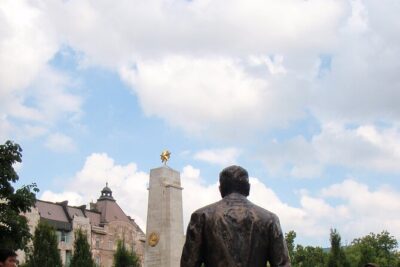
From there, you also see the statue of Imre Nagy, the Prime Minister in 1956 who was later murdered. That pairing matters. The tour uses the contrast between political authority and a leader’s tragic end to explain why 1956 played out the way it did.
I like that this stop teaches you how propaganda and control can look “official” and orderly. The building’s government role helps you understand why the uprising was not simply street fighting. It was also a fight over legitimacy, messaging, and the right to direct the country’s future.
Bem Square and the 200,000 student protests, with Bambi Eszpresszó
Then you move south toward Bem Square for the student protest story. The tour highlights that about 200,000 Hungarian students protested against Soviet rule in 1956. It also notes that the rally was originally organized to support Polish workers, which is a key reminder that the region’s political anger was connected.
This stop has an energy to it, even on a calm day. You learn why youth activism turned into a national pressure point, and how quickly protests could become a broader statement about sovereignty.
After the square, you visit Bambi Eszpresszó, a shelter for Buda-side intellectuals on Frankel Leó utca. The tour gives you a sense of why places like this mattered in Communist-era life, where conversations carried more risk and more meaning than you might expect.
One practical note: this is a short stop, so treat it as “pay attention” time, not as a long café hangout. If you want a deeper coffee break, save it for after the tour.
The Petöfi statue: public speech, punishment, and how symbols spread
At the Sándor Petöfi statue, the tour shifts to how revolutionary language travels. Petöfi is framed as a key figure in the 1948 revolution, so in 1956 he became a stand-in for all struggle against government.
The statue also functions as a meeting point for political events and protesters even today. That continuity is important. It tells you that 1956 left more than scars. It left tools, symbols, and phrases that people keep reusing.
Then you get a sharp, story-driven detail: in 1956, actor Sinkovits Imre came to the statue and recited words of Petöfi that incited revolution. He was subsequently arrested and imprisoned.
This is one of those moments where the tour does what good guides should do. It turns political slogans into real consequences for real people. I like that the guide makes that connection, because it helps you understand why governments fear public performance and public reading.
Radio Budapest on Sándor Bródy Street: when help was begged for
The next stop takes you to the Magyar Rádió Building on the tiny, one-way Sándor Bródy Street, also known as Radio Budapest. In the tour route, this is presented as one of the epicentres of fighting in 1956.
The key point: revolutionaries begged for help from the world at large from this building. That detail gives you a new angle on the uprising. It was not only about holding ground locally. It was also about trying to break through the isolation of international politics.
Why this matters for you: if your only mental image of 1956 is tanks and street conflict, this stop widens the picture. Communication becomes a battlefield, too. Radio and broadcast spaces connect the human urge to be heard with the strategic need to mobilize outside attention.
A consideration: because the street is described as small and a bit out of major thoroughfares, you will likely appreciate the guide’s directions here. It can be easy to walk past without noticing, which is exactly why guided routes pay off.
Corvin köz and Corvin Cinema: resistance with stolen guns and Molotov cocktails
The final stop takes you to Corvin Cinema and the surrounding Corvin köz area in southeast Budapest. This is described as a major resistance center in 1956.
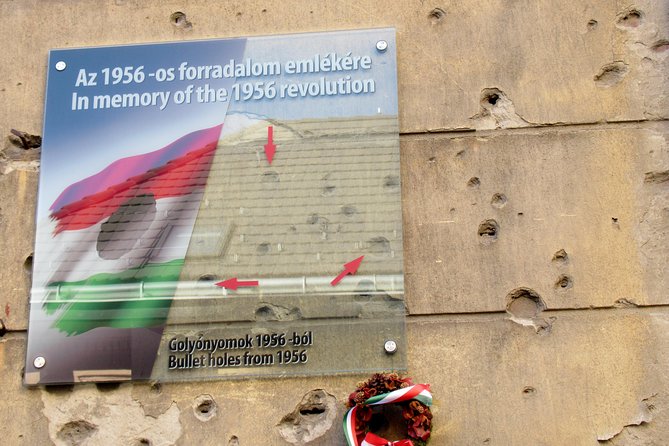
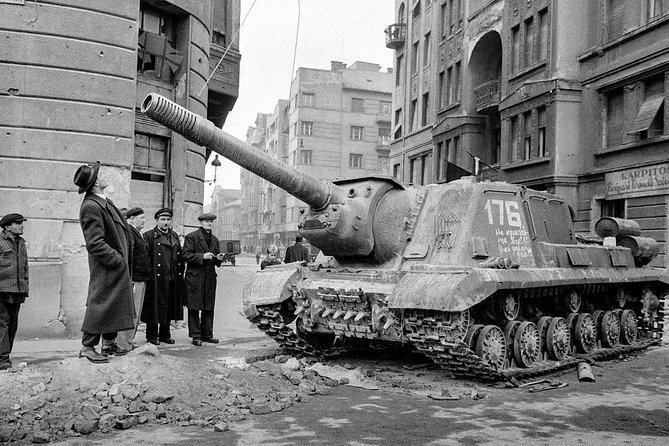
Here the tour covers the invasion of 1956 and the immediate aftermath, but it does so with on-the-ground reminders of the battles. The guide emphasizes that local youngsters fought invading Russians with Molotov cocktails and guns stolen from soldiers to fight Soviet tanks.
This is a sobering section of the route. It is easy to say “resistance happened,” but this stop gives you the kind of details that make resistance feel human and messy. It was not a movie plan. It was improvisation, fear, and determination in the middle of chaos.
Why I think the Corvin stop is worth the time: it provides a clear final image of how far people were willing to go when they felt their country was being crushed. And ending here makes the whole route feel cohesive, from political repression at Kossuth Square to armed resistance at Corvin köz.
The context the guide brings, and why pace matters
Across the route, the guide’s job is not just to point at landmarks. The tour is built to explain how different parts of the uprising connected.
One of the strongest themes in the experience is that it does not treat 1956 in a vacuum. You should expect the guide to connect the revolution to the broader sweep of Hungarian political history, including the eventual fall of Communism in 1990. That longer view helps you make sense of why people were willing to risk everything, and why the aftermath lasted.
I also like the practical flexibility some guides bring to pace. If you have someone in your group who walks slowly, the tour is set up so the guide can slow down and still keep the story moving in a way that feels respectful. That is especially useful if you are traveling with mixed ages.
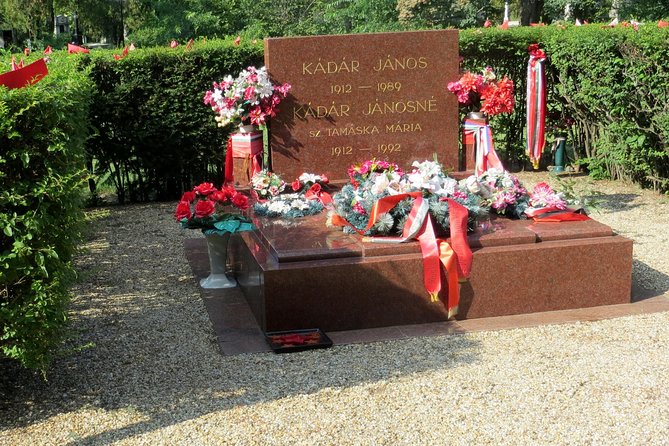
If you want more personal depth, you can ask your guide about extra related spots. For example, at least one guide has been known to take people to a cemetery connected to those killed during the 1956 revolution. You will not see that detail stated in the main route description, so treat it as a question, not a promise.
What you get to take home: handouts and a souvenir
Included in the tour are handouts and a communism-related souvenir. That might sound like a small thing, but it changes how you remember the experience.
On a tour like this, your brain collects names and places fast. The handouts help you anchor the route afterward, especially if you like to map out what you learned. The souvenir gives you a physical reminder that fits the theme, without turning the tour into a shopping stop.
Who this tour fits best
This is ideal for people who enjoy 20th-century history and Communist legacies, especially anyone who wants to see how history shows up in everyday city spaces. It is also a good match if you like story-driven guides who can blend public events with personal perspective.
If you are a first-time Budapest visitor who wants only the “pretty stuff,” this may feel heavier than you want on day one. But if you want real understanding of how the city got shaped by political pressure and resistance, you will likely appreciate the focus.
If you already studied the uprising, you may still enjoy the route, but remember it is a curated selection. You are not getting every related square and every street that ever appeared in 1956. You are getting key stages that explain the arc and the consequences.
Should you book this private tour?
Book it if you want a guided path through the most meaningful Budapest landmarks connected to the 1956 Revolution, and you value context, names, and personal stories. The private format, free-to-enter stops, and the included handouts make it a strong value when you share the cost across a small group.
Skip it, or plan a follow-up, if you want a full academic survey of every part of 1956. The time is limited, and the tour is intentionally selective. You will leave informed, but you will probably want to spend extra time later to pick up the details that only a longer stay can cover.
If you decide to go, come with one question in mind. Something like why the uprising turned from protest to resistance so fast, or how communication roles changed during the conflict. A good guide will run with it, and those are the moments where this tour becomes more than sightseeing.
FAQ
How long is the 1956 Revolution private tour in Budapest?
It runs for about 3 hours.
What is the price for this private tour?
The price is $228.66 per group, up to 5 people.
How many people can be in the group?
The group size limit is up to 5 people.
Is the tour offered in English?
Yes, it is offered in English.
Do you offer pickup in Budapest?
Yes. Pickup is available from your hotel in Budapest, or from a central meeting point you agree upon.
What is included in the tour?
Handouts are included, along with a communism-related souvenir.
Are admission tickets needed for the stops?
The stops listed are marked as admission ticket free.
Is food or drinks included?
No. Other drinks or food are not included.
Can I cancel for a full refund?
Yes, you can cancel for free up to 24 hours in advance for a full refund.
Recently reviewed around Budapest
- Budapest: Vacation Photographer to collect great memories★ 5.0 · 49 reviews
- From Budapest: Guided Tour of Eger with Wine Tasting★ 4.5 · 6 reviews
- Budapest: City Bike Tour with Coffee Stop★ 5.0 · 37 reviews
- Budapest: Danube River Views Bike Ride★ 4.8 · 23 reviews
- Walk to recent and aged spiritual sanctuaries near Budapest★ 5.0 · 5 reviews
- Budapest: Guided Tour of the Parliament Building in Spanish★ 4.6 · 1,240 reviews
- Budapest: Private Walking Tour with a Local Guide★ 3.6 · 6 reviews
- True Crime Walking Tour in the Buda Castle district★ 5.0 · 26 reviews
Communist History Tours, compared.
Communist History Tour with House of Terror Option
Read our review →
3-Hour Walking Tour About Communism (Small Group)
Read our review →
Lives of Hungarians Under Communist and Capitalist system
Read our review →
Private Budapest Hammer & Sickle Communist Times Tour
Read our review →
Browse the lists this tour appears in