
Reviewed · COMMUNIST HISTORY TOURS
Life Under Communism” with optional visit to the House of Terror
Budapest’s communist story is written right into the streets, squares, and monuments, so this tour feels practical, not academic. I like that you get a street-level walking route tied to real events, and I also like the added optional visits that help you see how the ideology still shows up today.
One thing to consider: the experience depends on which option you pick, and if you are hard of hearing or you prefer a louder guide style, you may want to ask how the guide handles audio in museum spaces.
Key things you will notice on this tour
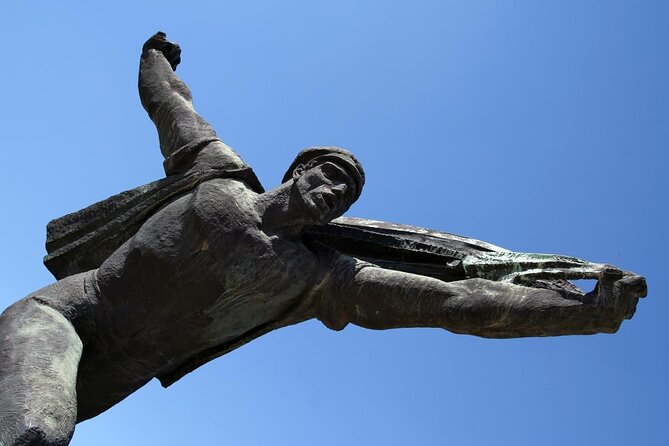
- Liberty Square opens the Cold War story fast, starting with the big Soviet memorial linked to the Siege of Budapest
- Kossuth Square and Parliament connect directly to 1956, including what happened in front of the building
- Corvin köz puts you near resistance history, where young fighters used Molotov cocktails and stolen guns
- Erzsébet Bridge and Március 15. Square add a lived-in feel, with a popular social scene in a historic spot
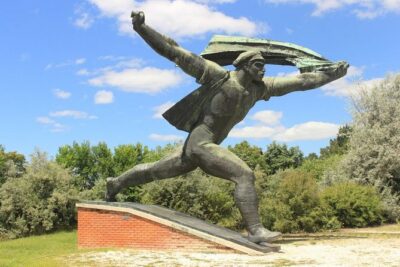
- Memento Park is a “keep the statues” case study, born after 1989 when the city chose preservation over removal
- House of Terror turns into a message in stone and steel, with a renovated setting and even a T-54 tank inside
Walking the communist story Budapest leaves in plain sight
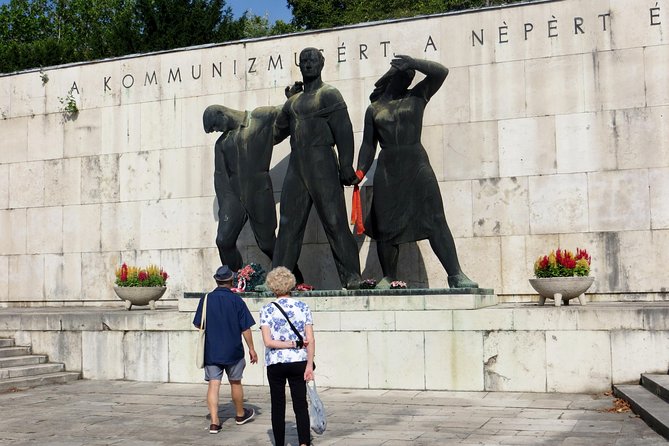
Budapest is great at doing layers. One minute you are admiring architecture from older empires. The next minute you are staring at symbols tied to WWII, Soviet power, and the 1956 uprising. This tour is interesting because it does not just point at monuments. It connects them to how people actually lived, what they feared, and what they hoped for.
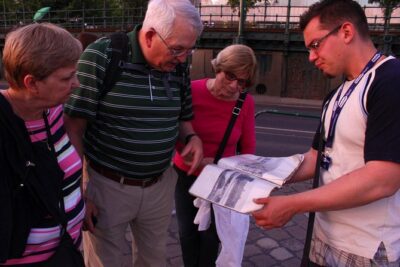
You start in the city center and build outward, with pauses where the guide explains what the buildings and statues meant at the time. I find that approach lands better than a lecture, especially when you are moving between places that still look impressive today, even if the ideas behind them were oppressive.
You also get a planned coffee stop at Bambi Presszó, a place often described as a holdout for communist culture. That matters, because you are not only learning history, you are doing it in the same city atmosphere that shaped everyday life.
More communist-era history tours in Budapest:
- Budapest: Communist History Tour with House of Terror Option
★ 4.8 · 182 reviews - Budapest: 3-Hour Walking Tour About Communism (Small Group)
★ 4.7 · 70 reviews - Communism in Hungary with a Historian
★ 5.0 · 70 reviews
Liberty Square and the Soviet memorial, the first big “why”
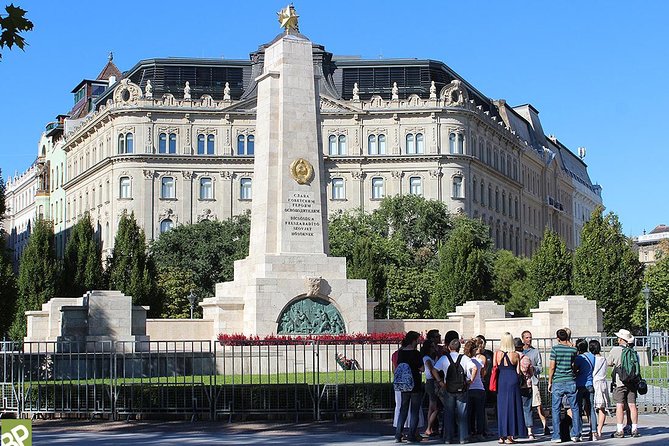
Your tour begins at Liberty Square, where you will see a memorial linked to the Soviet army and the Siege of Budapest. The siege lasted 50 days, and it was tied to the end of World War II, when the capital was encircled and fighting dragged on.
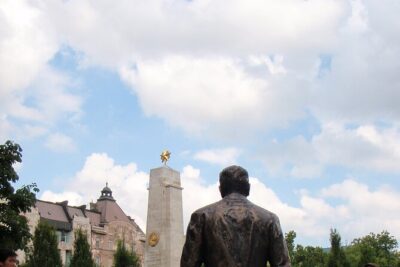
This is a smart opening stop for your trip because it frames the entire story. When a guide starts with the siege, it helps you understand why Soviet influence became so hard to escape later. You also get to see how state power tried to shape memory in stone and scale, because the memorial is described as grand and intentionally prominent.
Take a minute to look at the way the memorial sits in the space. Monuments like this are not meant to be background. They are meant to direct how you feel as you walk past them.
Szabadság tér: peace, space, and the Habsburg shadow
From there you head to Szabadság tér, one of the city center’s stately squares. The big open dimensions come from the Habsburg era, when a fortress-style building called the Újépület stood where the square is today.
Even if you are focused on communist-era topics, this stop helps you keep context. Budapest did not switch governments overnight. Empires layered on top of each other, and the urban design shows it. A big open square also changes how people gather, protest, and move, which becomes important later when the story turns to 1956.
This square gives you a breather too. You get a peaceful, spacious green area where you can reset your brain before the heavier stops.
Kossuth Square and the Hungarian Parliament during 1956
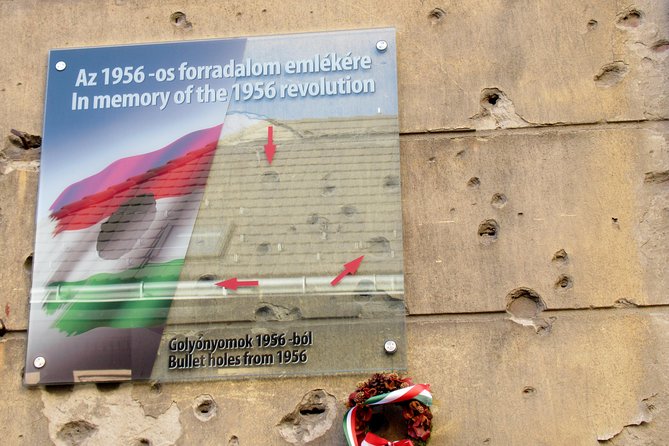
At Kossuth Square you will stand near the Hungarian Parliament Building, the kind of landmark that looks solid enough to survive any political storm. The square was renamed in 1927 after Lajos Kossuth, and the Parliament has been part of Hungarian public life for generations.
The guide then shifts from architecture to eruption. During the 1956 revolution, a firefight reportedly started in front of the Parliament building. The details are still uncertain, including exactly how many demonstrators died. You will also hear that the crowd in front of Parliament included a mix of civilians, not just young men. The account includes women, children, and elderly people.
This is not the kind of history that stays theoretical. It changes how you see crowds in the square. Even if you do not love history, you can feel the gravity of a place where violence sparked from public gathering.
A different way to spend a day in Budapest:
- Budapest: City Highlights Cruise with Welcome Drink
★ 4.6 · 35,610 reviews - Budapest: Unlimited Prosecco, Beer and Aperol Spritz Cruise
★ 4.8 · 25,310 reviews - Budapest: Széchenyi Spa Day Ticket with Optional Upgrades
★ 4.3 · 23,911 reviews - Budapest: Nighttime or Daytime Sightseeing Cruise
★ 4.2 · 21,062 reviews
Practical note
The Parliament stop includes a free admission ticket listed in the tour info, so you can plan for that moment without worrying about paid entry.
Március 15. Square and Petőfi: the old bridge meets everyday life
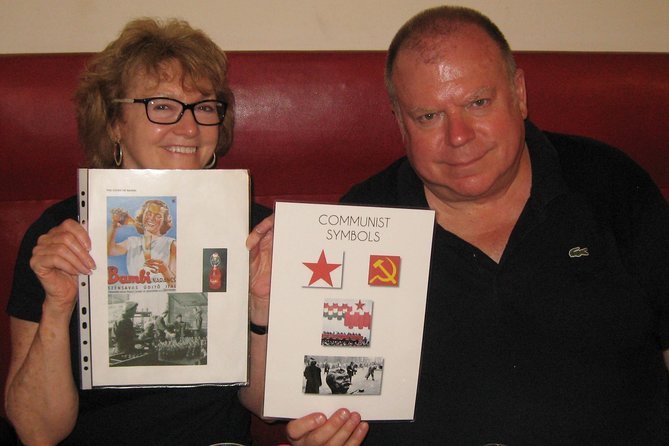
Next you go to the Petőfi Statue and Március 15. Square, near the foot of Erzsébet Bridge. The setting is right by the oldest church in Budapest, and after renovations in 2011, the area became a popular scene of social life, not just a tourist stop.
This part of the route is valuable because it shows the contrast between ideology and normal life. You are still in the same city, still near historic institutions, but the square feels like people use it for hanging out, not just remembering.
If you like street photography, this is a good spot. Even if you only stay a few minutes, the mix of historic and everyday gives you something to hold onto after the heavy 1956 discussions.
Corvin köz: where young resistance met Soviet tanks
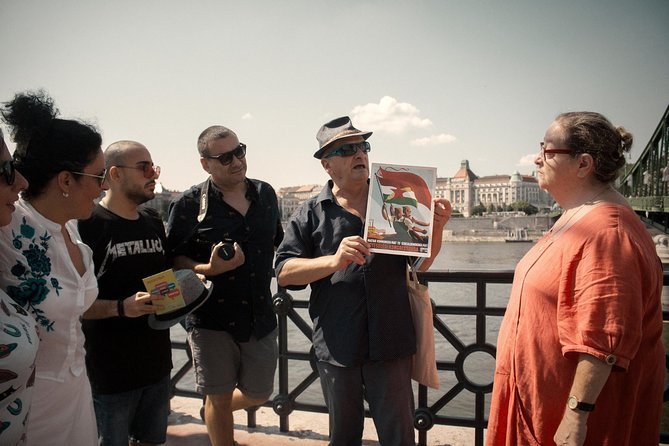
One of the most emotionally charged stops is Corvin köz, described as a major resistance center in 1956. Here, local youngsters fought the invading Russians using Molotov cocktails and guns stolen from soldiers, with the goal of confronting Soviet tanks.
Walking around this area with a guide changes the experience. Instead of seeing a neighborhood block, you start noticing reminders of battles and how the street itself can keep a memory alive. It is also a useful stop for understanding why 1956 had such strong local identity, not just political slogans.
The guide typically talks through the invasion and what followed. That aftermath piece matters, because revolutions rarely end where the uprising begins. You will leave with a better sense of why the story does not end after a single event.
Crossing toward Gellért Hill for the Soviet-era “Liberty” view
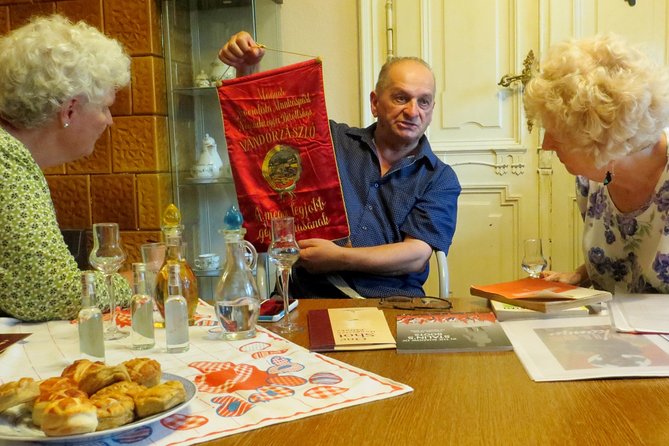
From Corvin köz you cross one of Budapest’s prominent bridges to reach St Gellért Square at the foot of Gellért Hill. This bridge segment is more than scenery. It is your physical transition from one cluster of stories to the next, with time to absorb what you just learned.
At St Gellért Square, the guide explains the naming too, connected to Bishop St Gellért, also called the Martyr for Hungarian Christendom. Then you get an excellent view of the Liberty statue, erected in 1947 to commemorate what was described as the Soviet liberation of Hungary.
This is a useful moment to pause, because the word liberty can mean different things depending on who is telling the story. The statue is a visual reminder of how political powers frame the same events in their own language.
If you like “read the city like a document” travel, this is one of the best payoff points on the tour.
Optional stop: Memento Park and the choice to preserve communist statues
If you choose the Memento Park option, you will visit a setting created after communism collapsed in Hungary in 1989. The key story here is that Budapest was left with many public artworks celebrating the era. In 1993, four years later, the city decided to save the statues rather than destroy them, and that decision led to the park concept.
That preservation choice is exactly why this stop can be so meaningful. People often destroy symbols to erase a regime. Here, the city did something more complicated: it kept the statues, and let you interpret them in a new context.
You should expect a more reflective, “how do we remember” kind of visit. The tour info lists 1 hour and says admission is included for this option, which makes it easy to plan without adding extra museum budgeting.
Who Memento Park suits
Choose it if you want a calmer experience with time to think about memory, symbolism, and how a country handles uncomfortable visuals.
Optional stop: House of Terror, the museum built to confront
If you choose the House of Terror option, you will add about 1 hour and get museum admission included. The museum is tied to the building’s renovation and rebuild, with reconstruction plans attributed to architects János Sándor and Kálmán Újszászy.
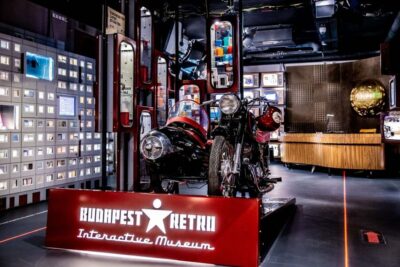
Visually, the tour info describes the exterior as black and monument-like, framed against other buildings on Andrássy Avenue. Inside, you will see a T-54 tank on display. That kind of object pulls the experience out of abstract history and into physical, mechanical reality.
This stop tends to feel heavier than Memento Park because it is aimed at documenting terror through direct displays and curated environments. If you are sensitive to intense historical material, plan your pace and give yourself a moment to reset after.
Who should pick House of Terror
Pick this option if you want the clearest confrontation with oppression and state violence, with a museum format that focuses on the machinery of terror.
The coffee break at Bambi Presszó: why it belongs on this route
A standout highlight is the stop for coffee at Bambi Presszó, often described as the last stronghold of communist culture. Whether you love history or you just want a memorable afternoon, this break helps your brain connect the serious parts of the tour to the everyday texture of Budapest.
Think of it like a palate cleanser. You are moving through streets where political meaning lives in monuments. Then you sit with coffee in a place that feels like a cultural survival story.
Also, if you want to keep learning after the tour, this is a good time to ask practical questions. Guides often know where to go next for food, architecture, and public transport routes.
Guides and pacing, what works best in practice
The tour’s value depends heavily on the guide. In the experiences I saw reflected through different guide names, Miklós and Balázs showed up as examples of guides who were attentive and able to shape the walk around the group’s interests.
One repeated theme is that a strong guide can answer questions in a way that makes you feel like you understand what you just saw. Another theme is that you are not only handed facts. You are taught how to comfortably use the transportation system after the tour, so your learning does not end when the walking stops.
Pacing also matters. The tour is listed at about 3 hours. Since you are covering multiple stops, wear shoes that handle city walking and small changes in slope. The tour is labeled with a moderate physical fitness level, which is a good clue that it is not a slow sit-down experience.
Price and value: when $280.33 per group makes sense
The price is listed as $280.33 per group for up to 5 people, with a duration of about 3 hours. That structure can be a big deal.
Why? Because the cost is not per person. If you are traveling as a small group or as a family, you can split the price and effectively turn it into a guided museum-plus-walk day without paying per ticket on top. The tour also includes informative handouts, a local guide, and entrance tickets for the optional visit options.
You should still budget for personal spending like additional food and drink, since that is not listed as included. And if the day requires extra local transit beyond walking, you may want to plan for that. At the same time, the tour includes multiple major sites where access is free for at least one major stop, and optional museum admissions are handled when you select them.
Best value scenario
If you want both context and access, and you pick the option that matches your interests, you are paying for time and interpretation, not just entry stamps.
Tips to make your day smoother
A few practical moves can improve your experience immediately.
First, decide now which optional museum you want. Memento Park is better for symbolism and memory. House of Terror is better for direct, intense confrontation.
Second, bring curiosity but also emotional stamina. This is a communist-era tour with 1956 resistance and terror context. You do not have to tough it out. If something hits hard, take a breath and keep your pace.
Third, if you care about audio clarity in museums, ask your guide about how they handle sound. One of the weak points that shows up in real feedback is that some guides may not be loud enough in certain settings. A quick check can save you frustration.
Should you book this communist-era walking tour?
Book it if you want Budapest history that is tied to what you can actually see, where you are walking through the same squares and streets that shaped events like the Siege of Budapest and the 1956 revolution. The included handouts and the fact that you can add Memento Park or House of Terror makes it flexible without turning it into a checklist of random stops.
Skip or reconsider if you know you only want very light, surface-level sightseeing, because the material includes violence, political repression, and contested stories. Also reconsider if you strongly prefer loud, energetic delivery, since the experience can vary depending on the guide’s style and museum acoustics.
If you do book, pick your optional stop with intention. That choice shapes the emotional tone of the afternoon, and it can make the tour feel like the right kind of history for you, not just a scheduled walk.
FAQ
What is the duration of the tour?
The walking tour is listed at about 3 hours.
How much does it cost?
It is priced at $280.33 per group, for up to 5 people.
Does it include tickets?
The tour includes entrance tickets for the optional visit choices. Admission for the Hungarian Parliament Building stop is listed as free.
What optional visits are available?
You can add either Memento Park (1 hour) or the House of Terror Museum (1 hour), depending on your selection.
Where does the tour start?
It starts in Liberty Square.
Is pickup included?
Pickup is offered, but hotel pickup and drop-off are listed as not included.
What language is the tour in?
The tour is offered in English.
Is this a private tour?
Yes, it is a private tour, with only your group participating.
Is there a coffee stop?
Yes, the tour includes a coffee stop at Bambi Presszó.
What physical condition do I need?
A moderate physical fitness level is recommended, since you will be walking between multiple stops.
Are children welcome?
Children must be accompanied by an adult. Service animals are allowed.
Recently reviewed around Budapest
- Panoramic hike around Budapest★ 5.0 · 14 reviews
- PRIVATE (7 hours) Budapest and Szentendre city tour with lunch and winetasting★ 5.0 · 4 reviews
- Original Budapest Walking Tour★ 4.0 · 39 reviews
- Budapest Highlights Self guided scavenger hunt and Walking Tour★ 5.0 · 5 reviews
- Hungarian Gastro Cellar: Assisted Tasting Options★ 4.5 · 5 reviews
- Original Budapest Alternative Street Art & Jewish Tour★ 4.5 · 14 reviews
- One hour Hen or Stag private party boat Budapest with unlimited beer and wine★ 3.5 · 6 reviews
- Bratislava, one day private trip from Budapest with guide!★ 5.0 · 4 reviews
Communist History Tours, compared.
Communist History Tour with House of Terror Option
Read our review →
3-Hour Walking Tour About Communism (Small Group)
Read our review →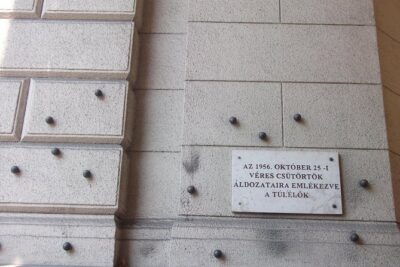
Lives of Hungarians Under Communist and Capitalist system
Read our review →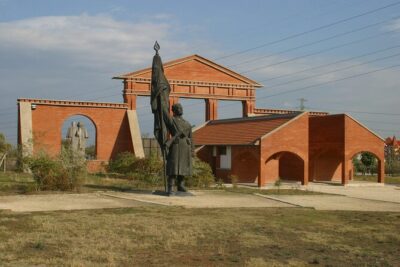
Memento Park Visit with Private Trabant Transfer
Read our review →Browse the lists this tour appears in