Reviewed · TOURS
Explore Budapest from the Local’s Perspective – Public Transportation Tour
Budapest can feel big and a bit twisty at first. This tour is interesting because it turns the city into a classroom, using public transit as the main way you move and learn. You hop between major sights, while a guide helps you figure out where to stand, what route to take, and how to keep the day simple.
I especially like the included 24-hour public transportation pass. It means you are not stuck thinking only about this 3-hour window. I also like the hands-on focus, because you get practice with real lines across Budapest, not just a lecture.
One possible drawback to consider: this is a public-transport experience, so expect a brisk rhythm with walking and waiting. If you want slow, sit-down sightseeing all day, this might feel a little fast.
Key takeaways before you go
- A 24-hour pass starts your day and keeps it going, even after the tour ends
- You learn by riding, with an emphasis on how to use Budapest’s system
- Landmark stops are timed around transit flow, so navigation clicks faster
- Your guide matters, and many groups highlight Miklós for clear, practical explanations
- You’ll see both classic monuments and transport hubs, from Heroes’ Square to Deák Ferenc tér
Why a 24-hour transit pass is the real value here
The best part of this tour is not that you visit the famous places. It is that you learn how to reach them like a local. The included 24-hour transit pass lets you keep moving right after the tour. That is huge in a city where your time can disappear if you rely only on taxis or long walks.
In practical terms, the pass gives you breathing room. You can use it to get to a museum you decide on last minute, grab a neighborhood dinner, or reposition before sunset. And since the tour covers big-name sights on both sides of the Danube, you also learn how Budapest’s layout connects.
You also get tools to keep going on your own: a rider’s booklet (a manual for Budapest public transport), a map of the route, and a notebook plus a souvenir pen. Those extras might look small, but they help you avoid that common travel feeling of guessing with confidence.
Other things people book in Budapest:
- Budapest: City Highlights Cruise with Welcome Drink
★ 4.6 · 35,610 reviews - Budapest: Unlimited Prosecco, Beer and Aperol Spritz Cruise
★ 4.8 · 25,310 reviews - Budapest: Széchenyi Spa Day Ticket with Optional Upgrades
★ 4.3 · 23,911 reviews
Andrássy Avenue and Heroes’ Square, the start that teaches the city

The tour begins with pickup from your accommodation. That matters because it removes the first headache. You do not have to find the right tram or metro stop before you even understand the system.
From there, you head to Andrássy Avenue, the grand boulevard dating back to the late 1800s and lined with Neo-renaissance facades. It was recognized as a World Heritage Site in 2002, and it is also one of Budapest’s main shopping-and-theater corridors. The value here is simple: you get oriented in a place that visually anchors the city. Even if you do not shop much, it is an easy mental map point later.
Then comes Heroes’ Square, one of Budapest’s headline spaces. The statue complex with the Seven chieftains of the Magyars is hard to miss. You also learn about the Memorial Stone of Heroes, which people sometimes confuse with other famous “unknown soldier” type memorials. That kind of detail sticks because it is tied to what you are actually seeing, not what you read later.
Plan for a short pause here. You will want time to look up at the monuments, not just stand and move on.
City Park sights: castles and art, plus the fun of moving like locals
The tour keeps rolling into City Park, which is a smart choice because it gives you multiple “classic Budapest” moments in a compact area.
First is Vajdahunyad Castle. It was built for the Millennial Exhibition celebrating 1,000 years of Hungary since the conquest era, and it was designed by Ignác Alpár to echo other landmarks from the Hungarian Kingdom. Today it houses the Museum of Hungarian Agriculture. Even if you do not go inside, the castle is a great way to connect Hungary’s story to what you see in front of you.
Next you reach the Museum of Fine Arts, facing the Palace of Art. Built between 1900 and 1906 with an eclectic-neoclassical look, it holds an international collection with more than 100,000 pieces. Right beside it, the Budapest Hall of Art hosts temporary contemporary exhibitions, and it has a café plus a bookstore and library that look out over Heroes’ Square. This pairing is useful because it gives you a quick mental model of Budapest’s art spectrum, from classic collections to changing exhibits.
You then pass by the City Park Ice Rink, which opened in 1870 and is described as one of Europe’s oldest and largest public rinks. Even if you are visiting in warm weather, it is a fun stop because it signals how this park has been part of public life for generations.
A tip: City Park can feel like a “photo zone” if you rush. Slow down for one moment. Pick a viewpoint, look around, and let the park become a landmark you can reuse when you navigate later.
Margaret Bridge, then the public-transport rhythm kicks in
Once you move away from Heroes’ Square and the museum-castle cluster, the tour shifts from “sightseeing walking” to “transit thinking,” and that is where the experience really pays off.
You stop at Jászai Mari tér, a large public-transport hub near the eastern foot of Margaret Bridge. It is also a social place, named after Mari Jászai, a major Hungarian actor. This stop is practical because it shows how Budapest handles flow. You see how people queue, switch modes, and keep their day moving without making it complicated.
Next is Margaret Bridge, connecting Buda and Pest and linking Margaret Island to the banks. The bridge is noted as the second-northernmost and second-oldest public bridge in Budapest. Standing on or near it helps you understand river geography, which makes later bridge choices easier.
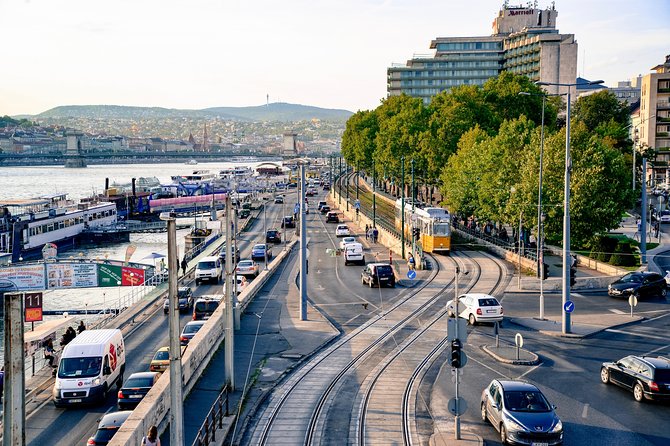
Then you ride a major ring-road tram corridor along Nagykörút. The experience highlights one of the busiest tram lines in the world, often said to be the busiest. Even if you ignore the legend, the timing point is real: trams run frequently, and during rush hours the intervals get very tight. That frequency is a lifesaver for visitors because you do not need perfect timing to get where you want to go.
If you are the type who loves efficiency, this part is catnip. You start to feel how Budapest moves.
A different way to spend a day in Budapest:
- Budapest: Nighttime or Daytime Sightseeing Cruise
★ 4.2 · 21,062 reviews - Budapest: 1-Hour Evening Sightseeing Cruise with Drink
★ 4.5 · 8,330 reviews - Budapest Danube Cruise and Dinner Options, Live Music and Dance
★ 4.5 · 7,428 reviews - Budapest: Historic Cruise with Welcome Drink
★ 4.7 · 6,512 reviews
Nyugati, Deák Ferenc tér, and Elizabeth Square: where navigation clicks
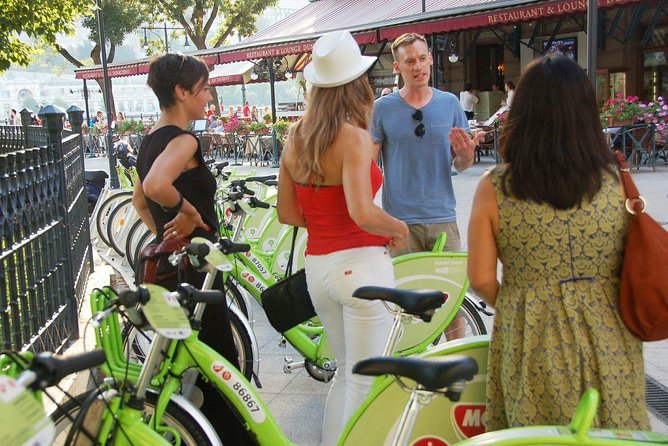
After the tram section, you hit two of Budapest’s biggest “where do I go next” zones.
First is Budapest Western Railway Station (Nyugati pályaudvar). It is one of the city’s three main terminals, and it is connected to trams and the metro, including the 4 and 6 tram lines plus M3 metro. The surrounding area is busy with restaurants, bars, and stores, so it is not just a transit stop, it is a practical meeting point.
Then comes Deák Ferenc Square (Deák Ferenc tér). This is the junction that helps you stop guessing. The square is named for Ferenc Deák, known as the Wise Man of the Nation. Three metro lines converge under the square, and tram lines 47 and 49 also originate here. Add multiple bus lines, and you get a central control room for the city. Once you know Deák Ferenc tér, Budapest becomes easier.
Right nearby is Elizabeth Square, a park next to Deák Ferenc tér. It is popular with young people, and the grassy areas can include alcohol sales, with the area lively late into the night. I like this stop because it balances the “monument” vibe with real street life. It is a reminder that transit is not only for getting to sights, it is how people actually live here.
Practical note: if your feet get tired, these hub areas are also good places to regroup. They are designed for movement, so you can pause without losing your orientation.
Crossing into Buda: Szent Gellért Square, thermal baths, and Gellért Hill
The tour then heads toward the Buda side and starts stacking up views, architecture, and a classic Budapest “ritual.”
You spend time at Buda Castle area, with the tour mentioning the funicular option as a way to travel toward the castle zone. Even if you are not riding it that moment, it is valuable to know the funicular exists, because it can save effort when the hill terrain and stairs feel like too much.
Next is Szent Gellért Square, which has a water-themed design. The waves show up in wavy benches and a small fountain with a pond-like decoration near the entry to the underground station area. It is a small detail, but it gives you a sense of how Budapest decorates with meaning, even in transit-adjacent spaces.
Then you reach Gellért Thermal Baths and Swimming Pool, part of the Hotel Gellért complex. Thermal baths are a huge part of Budapest culture, and even if you only see the exterior or learn what the bath complex is, this stop helps you decide whether you want to schedule a soak on another day.
Right after that is Gellért Hill, rising to about 235 meters and described as one of the best panorama points over Budapest. The hill is named after Bishop Gellért, who came from Italy around 1000 AD. The story of his arrival, King St. Stephen inviting him, and the legend of him being rolled down a barrel into the Danube in 1046 adds context to why this hill feels like more than a viewpoint.
You cross toward Liberty Bridge (Szabadság hid) to connect you back across the Danube. This walk-through part helps you stitch together the river city. You start noticing how bridges line up with neighborhoods and transit corridors.
Price, what you get, and what you still pay for
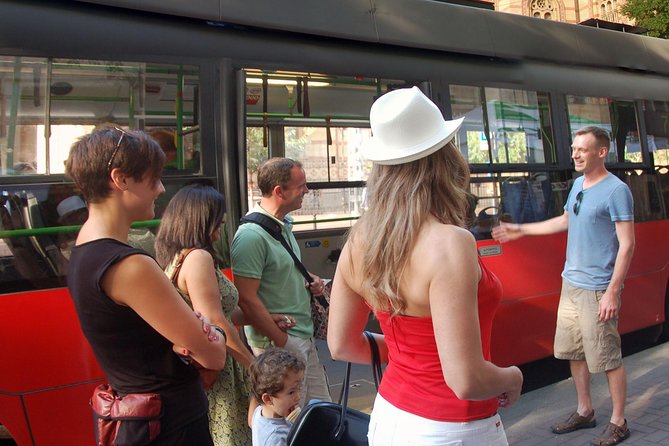
At $118.58 per person for about 3 hours, this tour is priced like a specialized experience, not a basic walking tour. I think it is fair value if you plan to use public transport anyway, because the included 24-hour pass lowers your cost for the rest of your day.
You also get several tangible extras: notebook, souvenir pen, map of the route, and the rider’s booklet for Budapest public transport. Add the local guide, plus pickup from your accommodation, and you are paying for both logistics and guidance.
What is not included is food and drinks. So budget for at least a snack or a meal. Also, while many stops are noted as admission free in the itinerary, you should treat museums and specific interior experiences as optional add-ons unless something explicitly says otherwise.
Who should book this public transportation tour
This is a great fit if you want to feel confident fast. It suits you if you like cities where walking is part of the day, but you also want the smart shortcuts that transit provides. It also works well for people who prefer learning how to navigate over collecting random photos.
You might especially enjoy it if:
- you plan to use trams and metro for most outings
- you want a guided path across both Pest and Buda
- you like practical tips, not only monuments
It may feel less ideal if you want long museum time or a slow, loungey tour style.
Should you book it?
Yes, if your goal is to get your bearings fast and then keep exploring with real confidence. The combination of a local guide, a 24-hour pass, and a route built around major transit hubs makes it easier to turn Budapest into a city you can move around in, not a map you study from afar.
If you are the kind of visitor who hates standing around waiting for transport, this could feel like too much “in between time.” But if you can handle short breaks and want to learn how Budapest’s system actually works, this is one of the more practical ways to spend a first half-day.
FAQ
Is the tour offered in English?
Yes, the tour is offered in English.
How long is the Budapest public transportation tour?
It runs for about 3 hours.
Does the price include transportation tickets?
Yes. You get a 24-hour pass for Budapest public transportation.
What is included in the tour besides the guide?
Included items are a notebook, souvenir pen, map of the route, rider’s booklet (manual for Budapest public transport), and the local guide. Pickup is also offered from your accommodation.
Is food included?
No. Food and drinks are not included.
Is this a private tour?
Yes. It is a private tour/activity, meaning only your group participates.
Can I cancel for a full refund?
Yes, you can cancel for a full refund if you cancel at least 24 hours before the experience’s start time.
Recently reviewed around Budapest
- Panoramic hike around Budapest★ 5.0 · 14 reviews
- PRIVATE (7 hours) Budapest and Szentendre city tour with lunch and winetasting★ 5.0 · 4 reviews
- Original Budapest Walking Tour★ 4.0 · 39 reviews
- Budapest Highlights Self guided scavenger hunt and Walking Tour★ 5.0 · 5 reviews
- Original Budapest Alternative Street Art & Jewish Tour★ 4.5 · 14 reviews
- Hungarian Gastro Cellar: Assisted Tasting Options★ 4.5 · 5 reviews
- Bratislava, one day private trip from Budapest with guide!★ 5.0 · 4 reviews
- One hour Hen or Stag private party boat Budapest with unlimited beer and wine★ 3.5 · 6 reviews
Tours, compared.
City Sightseeing Hop-On Hop-Off Bus Tour & Extras
Read our review →
Buda Castle District Vampires and Myths Night Tour
Read our review →
Big Bus Hop-On Hop-Off Tour & Danube River Cruise
Read our review →
Big Bus Budapest Hop-On Hop-Off Bus and Walking Tour
Read our review →