
Reviewed · WALKING TOURS
Downtown Pest Walking Tour
Downtown Pest has a special kind of energy. It is where you see how a new Hungary wanted to look powerful, modern, and culturally serious, and you can trace that story street by street.
I like that this tour focuses on the big symbols, from the Parliament to Heroes Square, not just random streets. I also like the human touch, because you are walking with a historian guide who explains what the buildings meant, not only what they look like.
One thing to consider: it is a 3-hour walking tour. If you tire easily on foot or hate crowded sidewalks, plan to move at a steady pace and wear comfortable shoes.
Key points to know before you go
- Historian guide, live and in English, so you can ask questions as you walk.
- Big landmarks in one loop, from Kossuth Square through Freedom Square, up to Heroes Square.
- Art Nouveau and “nobility city planning”, including time along Andrassy Boulevard.
- You will stop at serious history, including the Holocaust Monument by the Danube.
- Confirmed highlights for photo lovers, like the Stock Exchange Palace and the Opera House area.
- Flexible group options, with private or small groups available.
Time travel through Pest’s power blocks
Downtown Pest is the east-bank stage where Hungary showed off. In the second half of the 19th century, Pest grew into the opulent political, financial, and religious center of the newborn Hungarian nation. The cool part is that you can still walk that logic today. You start with government, move to finance and religious life, then finish in a place built for a major national anniversary.
This tour is structured like a guided storyline. You are not just checking boxes. You are learning why each stop sits where it does, and how the city’s leaders wanted to be seen. That is why it works for first-timers and repeat-visitors alike, because it connects the dots.
A bonus for your experience: the guides mentioned in recent bookings, like András and Zsofia, are praised for clear storytelling and taking time with questions. So if you like a guide who actually slows down at the important moments, this one fits.
More walking tours in Budapest:
- Budapest: Buda Castle Walk with Saint Stephen’s Hall
★ 4.5 · 3,012 reviews - Big Bus Budapest Hop-On Hop-Off Bus and Walking Tour
★ 3.5 · 2,206 reviews - Budapest: Buda Castle District Walking Tour
★ 4.6 · 2,108 reviews
Meeting at Szamos Cafe, then straight to Kossuth Square
You meet at Szamos Cafe, Budapest Kossuth Lajos tér 10. From there, the tour gets you lined up for the main dramatic entrance: the Parliament area at Kossuth Square.
The start matters here. You are positioned at the center of the story, not off in some side street. And once you’re there, everything you see next makes more sense because you know what kind of era you’re walking through.
Expect a paced beginning. The tour is only 3 hours total, so you will cover a lot, but it is not the kind of sprint where you barely get your eyes on the facades. The guides in past experiences have been described as patient and easy to talk to, which you really feel when you ask something and the guide answers without rushing.
Hungary’s Parliament in 1896, the outside and the inside
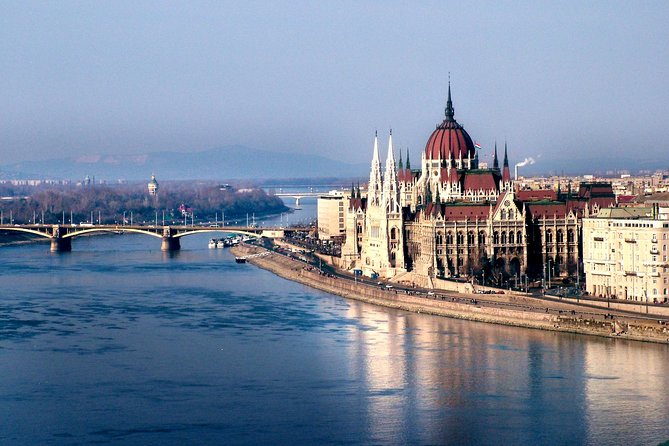
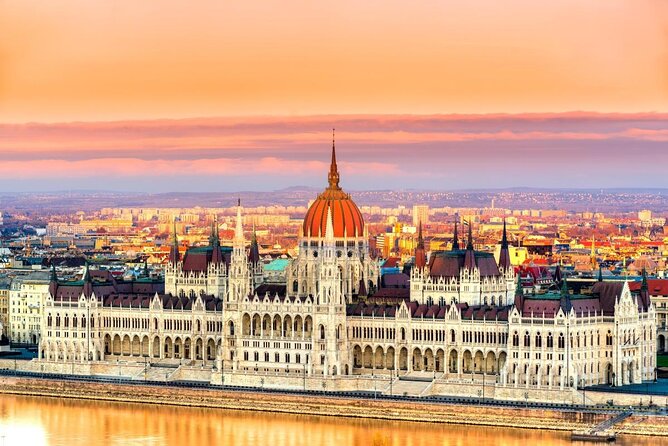
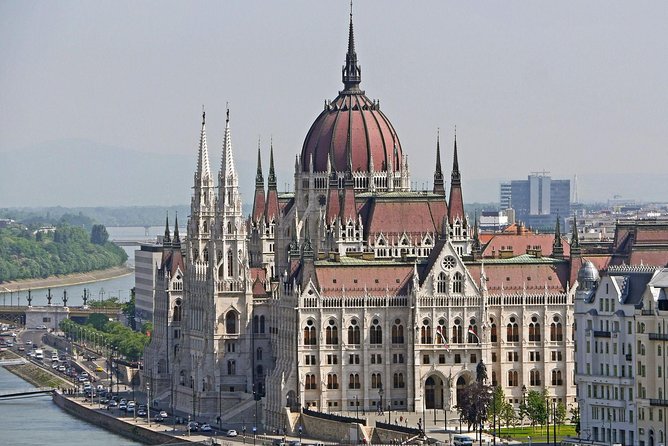
The first major stop is the Hungarian Parliament building near Kossuth Square. At its inauguration in 1896, it was the largest and most costly structure ever built in Hungary. Even if you do not care about political history, the scale hits you quickly. It is massive from the outside, and it is designed to project seriousness.
Inside, the emphasis shifts to culture. The Parliament houses works of art representing nearly every famous Hungarian painter and sculptor of the time. That means your visit is not only about power and law. It is also about national identity, and the way Hungary wanted art to speak for the state.
Practical tip: Parliament is a landmark you will likely see from photos later. But seeing it in person this early in the tour helps you frame what you’re seeing next. You start with the nation’s self-image, then you move to other places that carried that self-image into finance and religion.
The Danube-front Holocaust Monument, right behind Parliament
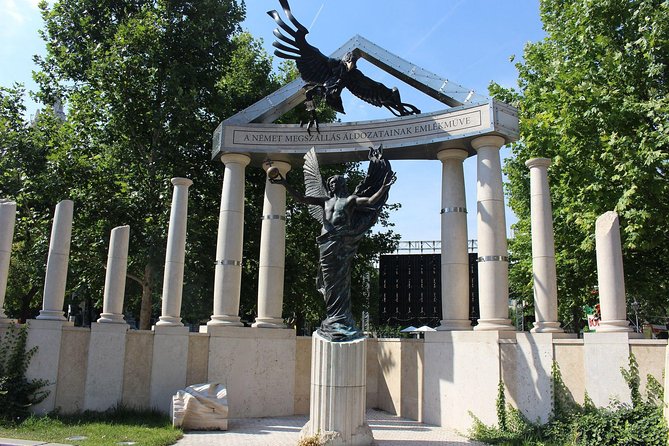
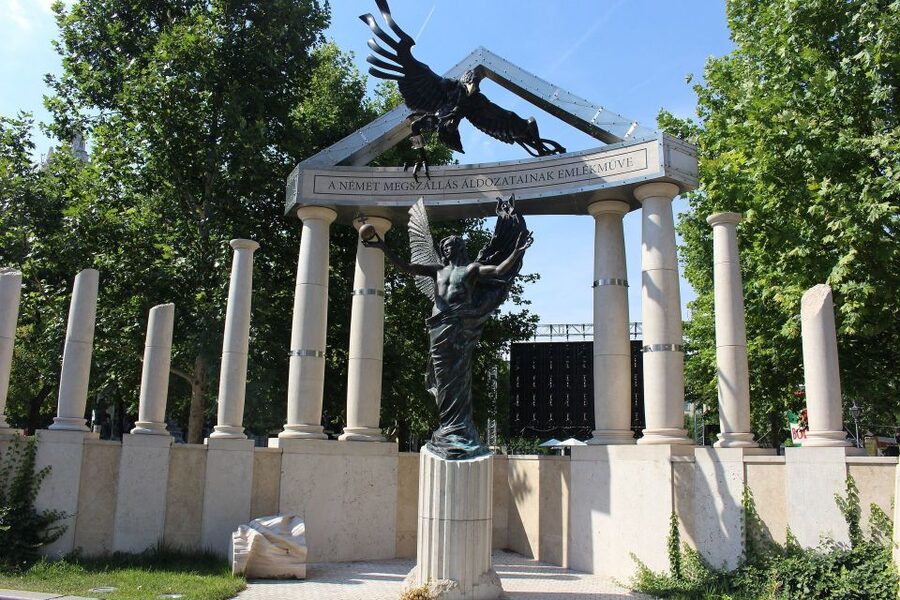
Next comes one of the most important stops on the walk. There is a Holocaust Monument by the Danube River, right behind Parliament, created to pay tribute to Jewish citizens of Budapest who were tragically killed in the last months of World War II.
This stop is not presented as a quick photo stop. It sits in the exact geography of memory, and the tour context helps you understand why it belongs on this route through 19th-century ambition and later catastrophe.
If you want a good experience here, give yourself a minute to pause. Let your eyes adjust, and do not feel rushed. Even on a walking tour, this is the kind of moment where slowing down actually improves how you process what you’re seeing.
A different way to spend a day in Budapest:
- Budapest: City Highlights Cruise with Welcome Drink
★ 4.6 · 35,610 reviews - Budapest: Unlimited Prosecco, Beer and Aperol Spritz Cruise
★ 4.8 · 25,310 reviews - Budapest: Széchenyi Spa Day Ticket with Optional Upgrades
★ 4.3 · 23,911 reviews - Budapest: Nighttime or Daytime Sightseeing Cruise
★ 4.2 · 21,062 reviews
Freedom Square and the Stock Exchange Palace: money with a face
From the Parliament area, the tour moves to Freedom Square. It was originally built as the financial center of the city, and many people consider it Budapest’s most beautiful square. That claim makes more sense once you see what the square is doing: it looks elegant, but it is also built for institutions that mattered.
Here you will visit the massive Stock Exchange Palace and take in the opulent buildings that still house several banks. It is easy to walk past finance buildings in other cities without thinking twice. Here, the tour teaches you why the architecture itself was part of the message. The city’s financial power was meant to be legible and impressive.
If you’re the kind of traveler who likes architecture, this is a strong stretch. You get scale, details, and a clear explanation of the role of finance in the city’s rise.
Cardinal Mindszenty and the political drama behind faith
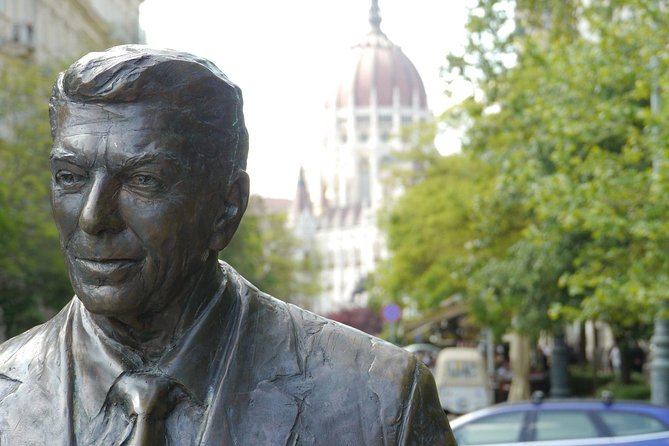
At Freedom Square you also see the statue of Cardinal Mindszenty. He was the head of the Catholic church in Hungary, and he lived hidden for 15 years in the U.S. embassy while on the run from the communists.
This is a good reminder that Budapest’s story is not only about 19th-century glamour. It also includes the political struggles that came later, and how religious leadership could become part of national tension.
The way this fits into the walking route is smart. Parliament sets the official tone. Freedom Square shows institutional power. Then Mindszenty adds the human and moral layer, making you think about how faith and politics overlap when regimes change.
St. Stephen’s Basilica, Art Nouveau streets, and Budapest’s religion mile
Next you head toward St. Stephen’s Basilica, passing by several Art Nouveau buildings that Budapest is famous for. This is one of those walking segments where the architecture almost feels like you’re changing chapters. The style signals the city’s self-confidence and taste, especially as Pest grew.
As you move along, your guide keeps the focus on what the buildings represent in the city’s broader development. You are not memorizing dates for the sake of it. You’re learning how style, money, and civic identity were linked.
If you are planning photos, bring your phone battery and take your time. Art Nouveau details reward close attention, and this route gives you multiple chances to stop without turning the tour into a grind.
The second-largest synagogue and the Jewish bourgeois role in the city
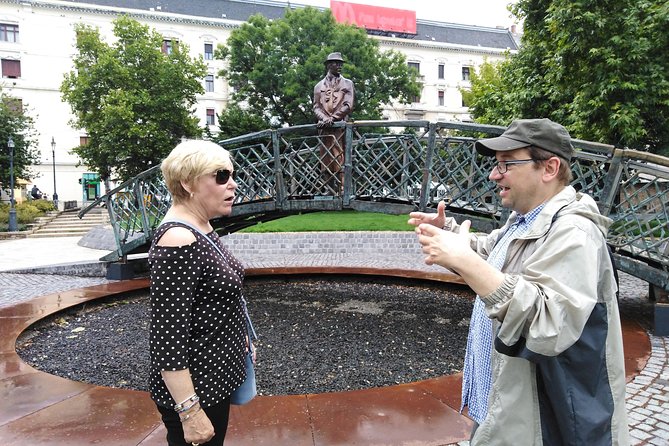
A bit farther along you reach the second-largest synagogue in the world. The tour frames it as a monument to the vital role the city’s Jewish population and its wealthy bourgeois played in the development of Budapest.
That matters. It is not a generic stop about a religious building. You learn how community wealth and civic influence shaped the city’s growth, especially as Pest became an economic and cultural hub.
This is another moment where the tour can enrich your understanding even if you do not have a deep background. The guide’s job here is to connect the architecture and location to the people and systems that made the city what it became.
Andrassy Boulevard: the esplanade designed for nobility
After the basilica area, you travel along and under Andrassy Boulevard, described as an esplanade designed for the country’s nobility. The concept is simple but powerful. Urban design tells you who a city expected to inhabit and impress.
So when you’re walking this stretch, you should pay attention to how the boulevard feels compared to the tighter squares and landmark clusters. This part of the tour gives you a sense of social hierarchy written into the city layout.
Andrassy Boulevard is also a practical advantage. It helps you get a breather from stop-and-go corners while still staying connected to the main landmarks.
A short stop by the Opera House
The tour includes a short stop at the Opera House. You do not spend forever here, because the goal is to keep the pacing and cover the key nodes of Pest’s story.
Still, this stop works as a bridge. The Opera House area naturally connects to the city’s cultural ambition. After you’ve seen government, finance, and religious landmarks, the opera setting reinforces the idea that Pest wanted to be both powerful and artistically important.
If you love performing arts, you may wish you had longer. But for most people, that short look is enough to plant the idea and keep you moving toward the final big finish.
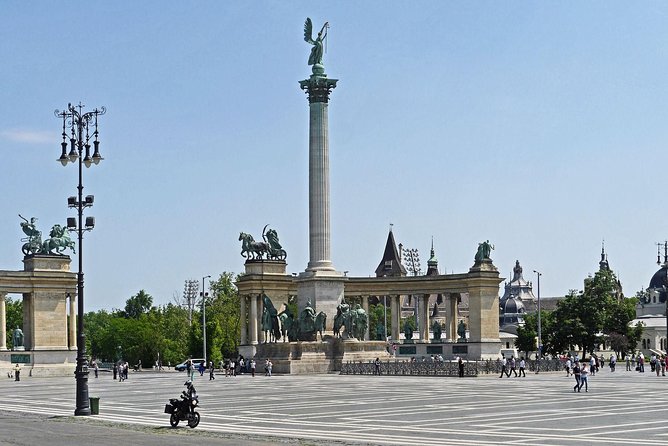
Heroes Square and the 1,000-year anniversary of a kingdom
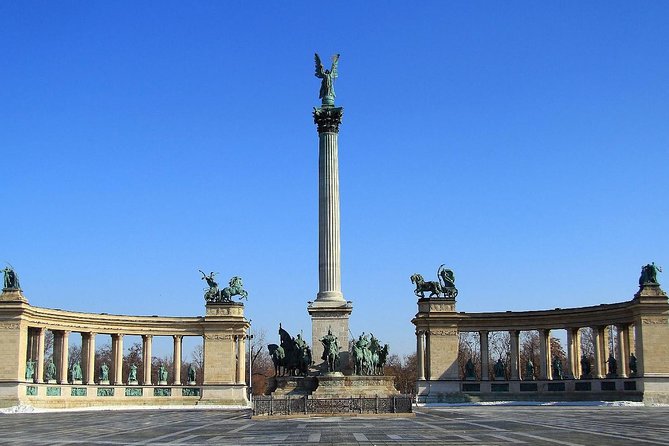
The tour ends at Heroes Square. In 1896, Hungarians celebrated the 1,000-year anniversary of the founding of their kingdom here. That is a huge anchor point for the whole experience. It ties the city’s late-19th-century ambition together with a message of continuity and national pride.
When you reach Heroes Square, you get the payoff of everything you walked through earlier. Parliament told you about power. Freedom Square told you about money. The religious landmarks and community stories broadened the picture. And Heroes Square is the dramatic finale that frames it all as part of a long national narrative.
If you want one practical photo tip: at the end of a 3-hour walk, people often rush. Try not to. Heroes Square is the kind of place where a few extra seconds make your photos look better and your memory last longer.
How the guide style shapes the whole tour
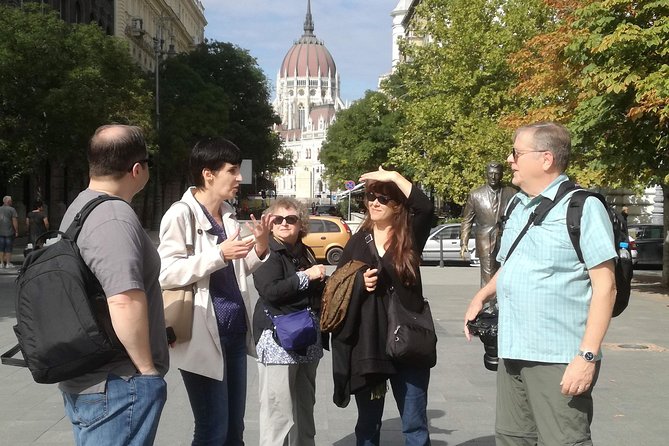
A lot of walking tours fail when the guide rushes or sticks to a script. This one is built around a historian guide, and past experiences tied to specific guides like András and Zsofia highlight the same pattern: they take their time, answer questions, and keep the history objective.
That is what you want when you’re mixing stunning architecture with very heavy history at the Holocaust Monument. The best guides can hold both in one route without making either feel like an afterthought.
Also, there’s a social factor. The descriptions of the guides emphasize they are easy to talk to and good-humored. That helps when you are standing on sidewalks and you have questions that pop up naturally as you see monuments and squares.
Value for $123: what you are really paying for
At $123 per person for a 3-hour walk, you are not paying just for access to buildings. You are paying for a historian to give meaning to what you would otherwise experience as a set of impressive sights.
Here is the value equation that matters:
- You cover multiple headline landmarks in one organized route, rather than trying to figure out the pacing on your own.
- You get context that helps you understand why the places exist and how they fit into the nation’s late-19th-century rise.
- You get live English commentary, so you can clarify details as you go.
Could you do parts of this itinerary on your own? Sure. But paying for the guide saves mental effort. You arrive with curiosity, and you leave with connections you might not make without help.
Who this tour fits best
This is a great fit if you:
- Want a strong overview of Pest’s downtown identity in just half a day
- Like architecture with context, especially Art Nouveau and major civic landmarks
- Appreciate a tour that mixes national pride with real 20th-century memory
It is also a good option if you prefer walking as your main way to explore. The route is designed around the center of the city, so you are not spending your time in transit.
Practical advice before you lace up
This is a downtown walking route, so comfort is key. Wear shoes you can handle for a 3-hour walk, and bring a layer for weather changes. Budapest can shift fast, and the tour includes multiple outdoor segments.
Bring a charged phone. You will want photos of Parliament, Freedom Square, Art Nouveau facades, and Heroes Square. Just remember that a photo does not replace reading the guide’s explanation, so aim for a few good shots, not dozens of blurry ones.
Finally, arrive a bit early at Szamos Cafe. It gives you time to settle in and start without stress, which makes the whole experience more enjoyable.
Should you book the Downtown Pest Walking Tour?
If you want a guided introduction to Pest’s downtown power and style, this is an easy yes. It combines major landmarks you will want to see anyway, with a historian guide who connects them to the way Hungary tried to define itself, first through ambition and architecture, and later through hardship and memory.
The main reason to skip is simple: if walking 3 hours is hard for you, or if you prefer self-paced sightseeing only, you might feel pressed by the schedule. But for most visitors, the payoff is strong because the route tells a coherent story from Kossuth Square to Heroes Square.
FAQ
How long is the Downtown Pest Walking Tour?
The tour lasts 3 hours.
Where do I meet the guide?
You meet at Szamos Cafe, Budapest Kossuth Lajos tér 10.
Is the tour offered in English?
Yes, the live tour guide speaks English.
What is included in the price?
The price includes a 3-hour guided walk through downtown Pest and a historian guide.
What are some of the main stops on the tour?
You will see the Parliament at Kossuth Square, the Holocaust Monument by the Danube, Freedom Square and the Stock Exchange Palace, St. Stephen’s Basilica, the second-largest synagogue, along Andrassy Boulevard, the Opera House area, and Heroes Square.
Is the group private or small?
Private or small groups are available.
Can I cancel and get a refund?
Yes. There is free cancellation, and you can cancel up to 24 hours in advance for a full refund.
Can I reserve and pay later?
Yes. You can reserve now and pay later.
Recently reviewed around Budapest
- Panoramic hike around Budapest★ 5.0 · 14 reviews
- PRIVATE (7 hours) Budapest and Szentendre city tour with lunch and winetasting★ 5.0 · 4 reviews
- Original Budapest Walking Tour★ 4.0 · 39 reviews
- Budapest Highlights Self guided scavenger hunt and Walking Tour★ 5.0 · 5 reviews
- Hungarian Gastro Cellar: Assisted Tasting Options★ 4.5 · 5 reviews
- Original Budapest Alternative Street Art & Jewish Tour★ 4.5 · 14 reviews
- Bratislava, one day private trip from Budapest with guide!★ 5.0 · 4 reviews
- One hour Hen or Stag private party boat Budapest with unlimited beer and wine★ 3.5 · 6 reviews
Walking Tours, compared.
Big Bus Budapest Hop-On Hop-Off Bus and Walking Tour
Read our review →
Budapest City Landmarks Walking Tour in 2 Hours
Read our review →
3-Hour Orientation Walking Tour of Buda and Pest
Read our review →
Budapest Historical Sightseeing – Free Walking Tour
Read our review →
Budapest All in One Small Group Walking Tour with Strudel Stop
Read our review →Browse the lists this tour appears in