Reviewed · TOURS
Café Wandering: An Excursion through Budapest’s Belle Epoque
Budapest’s Belle Epoque is easy to romanticize from a distance, but this tour gives you the real feel by pairing buildings you can actually see with the café culture that shaped writers, artists, and poets. I especially like the way the guide turns interior details into stories, and I like that you get a small-group pace with an art historian leading the whole walk. One thing to consider: refreshments are not included, so if you want cakes and coffee at every stop, your final bill will go up.
You start in the city center and move between landmark cafés, then finish at a striking art nouveau orthodox synagogue. Expect a lot of looking up, a little tram time by the Danube, and plenty of context that makes the décor mean something, not just something pretty. The guide credentials are serious, too, since the tour staff are professors, doctoral students, historians, journalists, art critics, and published authors. I also found it helpful that English is offered and the group is limited to just eight people, which keeps questions from getting lost in the crowd.
Key Highlights to Know Before You Go
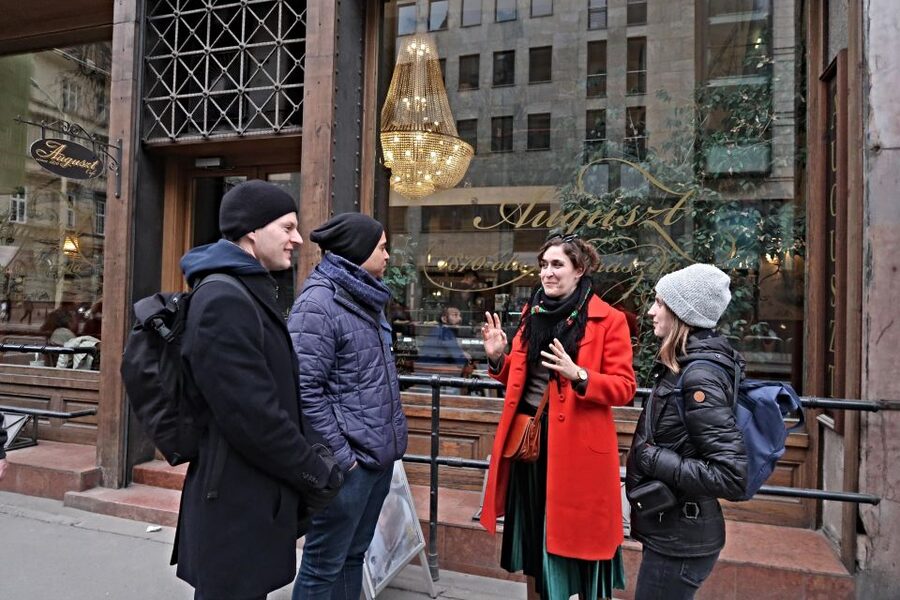
- Gerbeaud as your launch point, starting at Café Gerbeaud on Vörösmarty tér
- Tram along the Danube to connect café culture with the city’s 19th-century power center
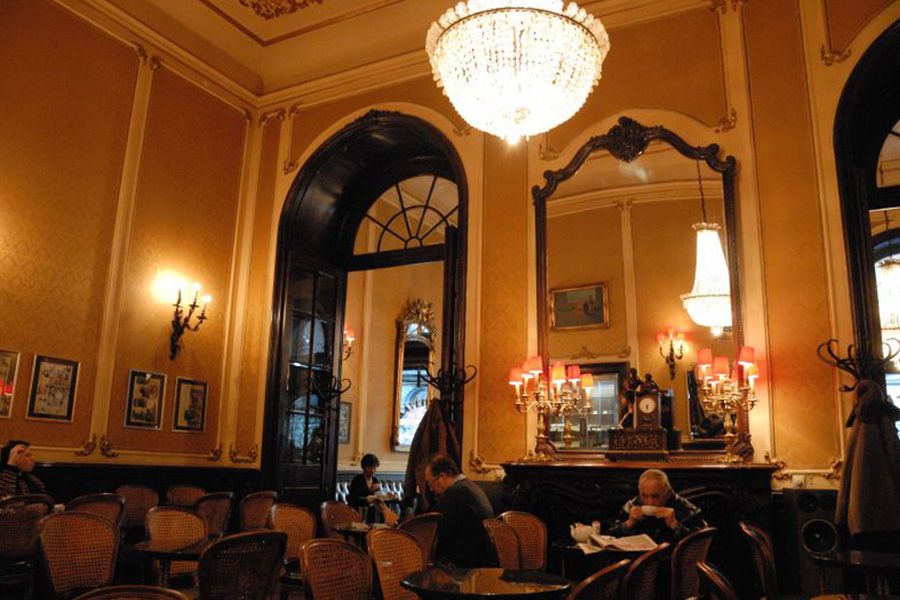
- Imperial interiors at Central Cafe, Café Astoria, and other classics, with design details you can spot on the spot
- Asian motifs and designer references you will be guided to notice across the interiors
- Urania Café on Rákóczi Street, home to the oldest film theater in Budapest, plus lecture culture
- Kazinczy Street Synagogue, a memorable art nouveau finish to the walking loop
Budapest Belle Epoque, Café Culture, and Architecture in One 3-Hour Loop
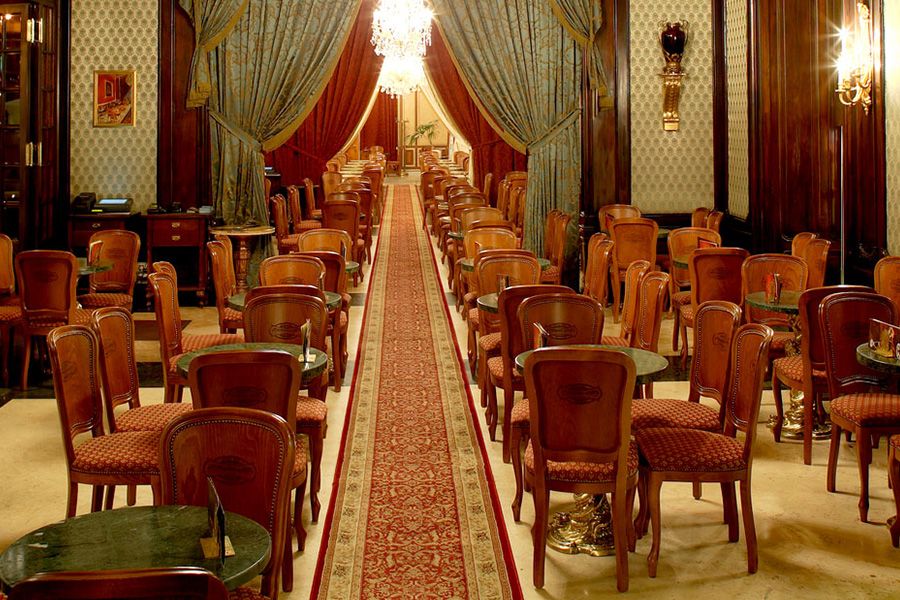
This is the kind of tour that works because it refuses to treat cafés as background props. You are not just sipping your way through Instagram-worthy interiors. You are getting an art historian’s eyes on the architecture and design that made these places central to daily life in Budapest’s 19th and early 20th century. Then the tour adds cultural context by talking about the poets, artists, and writers who would have recognized these spaces as their social meeting points.
The pacing also matters. At three hours, you are not stuck on a half-day timeline. You get enough time to see multiple grand interiors, hear why they look the way they do, and still have energy left for wandering after. And because the group is capped at eight, the guide can answer questions about specific details, like what particular design cues are trying to signal.
The value question is simple. You are paying $123 per person for a guided walk plus an art historian guide. You will not spend that much time learning like this if you go solo, especially when the whole point is understanding what you are looking at. The main trade-off is that refreshments are extra, and the tour does not include cakes, coffees, or drinks. If you plan to order something at each stop, budget for it.
Other things people book in Budapest:
- Budapest: City Highlights Cruise with Welcome Drink
★ 4.6 · 35,610 reviews - Budapest: Unlimited Prosecco, Beer and Aperol Spritz Cruise
★ 4.8 · 25,310 reviews - Budapest: Széchenyi Spa Day Ticket with Optional Upgrades
★ 4.3 · 23,911 reviews
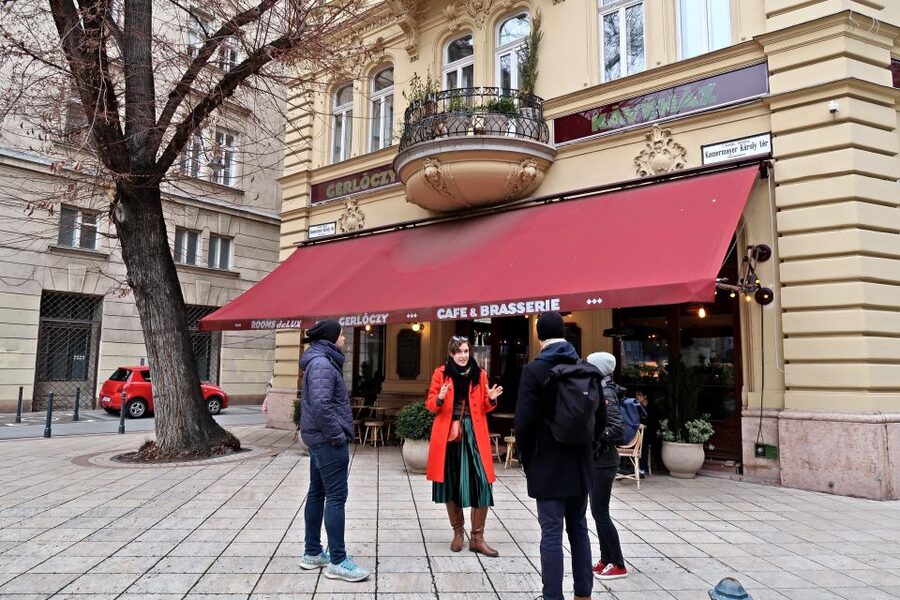
Starting at Café Gerbeaud on Vörösmarty tér
The tour begins at Café Gerbeaud, at Vörösmarty tér 7-8, 1051. It is a solid way to start because you are already in the heart of the city, and Gerbeaud gives you a clear baseline for what “grand café culture” looked like during Imperial Budapest.
This first stop sets the tone. You get an overview of the atmosphere and why cafés in this era were social hubs for both locals and visitors. That matters because later, when you see ornate interiors, you are not just admiring the surface. You are thinking about how people used these rooms, how they dressed for them, and why the design would support conversation, display, and status.
Practical tip: show up a few minutes early so you can settle in and orient yourself. When a guide starts with the kind of context that explains the rest of the route, you will want to be fully present for it.
Central Cafe and Restaurant 1887, the Dignity of Habsburg-Era Power
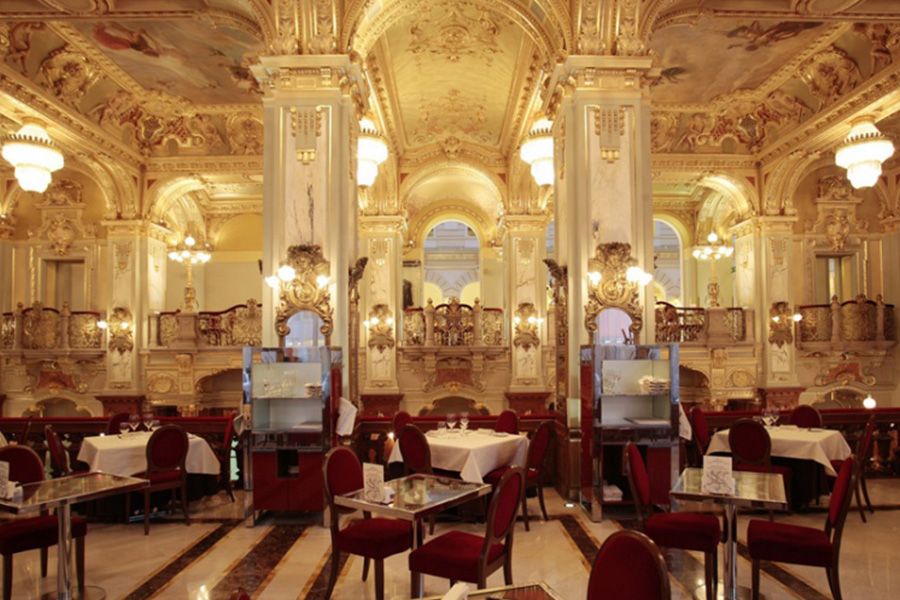
After Gerbeaud, you take a tram ride along the Danube to Central Cafe and Restaurant 1887. This tram segment is more than a commute. It helps you connect the café world to the broader city story, where the Danube corridor shaped movement and influence.
Central Cafe is described as dignified and as an epitome of café house culture at the height of the Habsburg Empire’s economic and cultural reach in the 19th century. In other words, the tour is not treating café décor as pure decoration. You are being taught to read it as a statement.
What you should pay attention to here:
- The sense of ceremony in the space, the kind of design that makes a regular coffee stop feel like an event
- How the décor supports lingering, meeting, and performing identity in public
- The way interior styling connects to the broader idea of cultural power and confidence
This is also one of the stops where you will likely notice design cues the guide points out, including Asian motifs and elements used by designers. The point is not that Hungarian cafés were copying faraway styles. The point is that European design at the time was often in dialogue with other aesthetics, which makes these interiors more layered than they first appear.
A small caution: Central Cafe is a place where you can get tempted to order something quickly just because the room begs for it. If you want to keep the tour tight and on time, decide in advance what you might buy during the free time your guide offers, rather than making decisions under the full weight of the décor.
Café Astoria, Classic Grandeur Plus Details to Read Like a Book
Next up is Café Astoria Restaurant, described as more than a century old and evocative of classic European coffee houses. If Central Cafe feels like authority, Café Astoria often feels like theater.
This stop is a strong match for people who love interiors. You are given time and context to look around, not just walk through quickly. And because the tour is led by an art historian, the “why” comes with the “what.” You will hear how these rooms functioned as social stages and how the look of the café supported the culture inside it.
Astoria also plays well with the tour’s theme of cross-cultural design touches. That includes the expectation that you will examine Asian motifs and elements embedded in the interior language. You might not catch those references on your own right away, because you are often busy admiring the main fixtures. The guide helps you see what to notice first.
If you are sensitive to crowds, consider timing. This is a guided walk that includes multiple café interiors in one outing, which means you can hit a busy moment. The small group size helps you move as a unit without feeling like you are constantly squeezing through strangers.
A different way to spend a day in Budapest:
- Budapest: Nighttime or Daytime Sightseeing Cruise
★ 4.2 · 21,062 reviews - Budapest: 1-Hour Evening Sightseeing Cruise with Drink
★ 4.5 · 8,330 reviews - Budapest Danube Cruise and Dinner Options, Live Music and Dance
★ 4.5 · 7,428 reviews - Budapest: Historic Cruise with Welcome Drink
★ 4.7 · 6,512 reviews
Művész Coffee House (Artist Cafe), When the Café Is Part of the Arts Scene
The route continues to Művész Coffee House (Artist Cafe). This is where the tour theme of poets, artists, and writers stops being abstract.
As the name suggests, the point here is artistic life. You are in a space that connects the idea of café culture to the reality of how creative people gathered, talked, debated, and built reputations in public. The guide’s job is to connect what you see in the room to the kinds of conversations that would have happened there.
This is a good stop for anyone who likes cultural storytelling and not just architecture trivia. Even if you do not read Hungarian literature, the atmosphere of these places makes more sense when you understand cafés as institutions where ideas moved around.
Practical note: if you enjoy watching people and soaking up atmosphere, Művész is the kind of place where that feels natural. If you are more detail-focused, you can still get plenty out of the interior design pointers, especially when the guide guides you toward specific decorative elements.
Urania Café on Rákóczi Street, the Oldest Film Theater Connection
After Café Astoria, you also visit Urania Café on Rákóczi Street. This is a fascinating pivot because it ties café culture to intellectual life and media. Urania is known for lectures given by prominent intellectuals before large audiences, and it houses the oldest film theater in the city.
This stop gives you something important: cafés were not only for daytime socializing. They were also linked to the public sphere, to ideas, to events that pulled crowds. The guide helps connect the café world to a wider culture of public talk and public art.
If you like history explained through living institutions, Urania is a smart moment. It keeps the route from becoming a museum of interiors. You are seeing how these cultural spaces keep echoing forward, even as the city changes.
New York Palace Café, Designer Motifs and a Finish That Feels Like a Signature
The tour then moves to New York Palace Café, which includes a guided tour. This stop is where the “look closely” advice starts to pay off. You are encouraged to examine the interior design and notice the variety of motifs and references embedded in the décor.
It is also a useful contrast stop. By the time you reach New York Palace, you have seen enough other interiors to understand what each place is trying to communicate. This is how café culture becomes more than a list of famous names. You start seeing each café as its own style of social identity.
The guide’s art-historian lens helps here because you are not left with vague praise like “it is beautiful.” You are given talking points that help you understand how design choices create a particular mood, how ornamentation can signal status, and how decorative influences can travel across Europe through designers.
Kazinczy Street Synagogue, Art Nouveau as the Final Impression
The experience culminates at the art nouveau orthodox Kazinczy Street Synagogue. This is a powerful finish because it broadens your idea of Belle Epoque style from cafés into religious architecture.
You get to close the loop. The tour began with grand café interiors rooted in 19th-century culture. Now you end with a building that carries its own flamboyant elegance and symbolism. It is the kind of last stop that makes you feel you gained something more than café décor appreciation.
Also, ending with a synagogue makes the overall route feel balanced. You are not only looking at Christian-era city landmarks or purely secular cultural spaces. You are seeing a distinctive architectural language connected to the city’s diverse cultural fabric.
What You’ll Learn From an Art Historian Guide (and Why It Matters)
This tour is led by an art historian guide, and the tour provider notes that the guides can include professors, doctoral students, historians, journalists, art critics, and published authors. That kind of range usually translates into more than facts. It translates into better explanations.
One review highlights that the experience was informative, and another thanks the guide named Kota for being excellent. That matters because “informative” is not always automatic on architecture tours. Here, the guide’s role is to turn details into understanding, like why these cafés became social hubs and how design choices linked to the cultural climate of the time.
If you like knowing what you are looking at, this is where you benefit. You are not just walking past pretty rooms. You are learning to spot cues and interpret them. And because this is a small group, you can likely ask questions if something catches your eye and you want a deeper explanation.
Price and Value: Is $123 Worth It?
At $123 per person for a 3-hour small-group guided walk, this tour sits in the mid to higher end of city experiences. The value comes from two things that are harder to DIY:
- The guide. You are paying for an art historian to interpret architecture and design, and to connect café interiors with the writers and artists who used them.
- The structure. You see multiple landmark interiors in one outing, with context at each stop, instead of spending your limited vacation time searching for what matters.
Your main extra cost is refreshments. Since the tour does not include coffee, cakes, or drinks, you have control. You can choose to buy one thing you really want, or skip purchases and stay focused on the tour itself. Either way, you are not forced into paying for snacks at every stop.
My practical take: if you are the kind of person who looks at buildings and wonders why they are designed that way, this price is easier to justify. If you only want to “pop into a café and enjoy coffee,” a self-guided plan might be cheaper.
Who This Tour Fits Best
I think this tour is a great match for:
- People who love architecture, interiors, and design details
- Travelers who want café culture context in a short time window
- Anyone interested in Hungarian cultural life, including writers and artists connected to café spaces
- Folks who appreciate a blend of secular and religious architecture in one afternoon
It might be less ideal if:
- You want a long sit-down food crawl, because the schedule is built for guided walking and viewing interiors
- You prefer total freedom over a planned route, since you will be moving between several specific landmarks
Should You Book Café Wandering in Budapest?
If your goal is to understand Budapest’s Belle Epoque through the places people actually gathered, I would book it. The short duration, the small-group size, and the art historian guide are a strong mix for value. You also get a satisfying variety, from Gerbeaud’s Imperial café atmosphere to the bold art nouveau finish at Kazinczy Street Synagogue, plus the Urania Café connection for lecture and film theater culture.
Do not book it if you are mainly after the cheapest coffee and the most unstructured time. This tour is about learning and looking. The cafés are the lesson.
If you book, bring a curious mindset. Pick one detail at each stop that you want to understand, then ask the guide about it. That is when the tour stops being a pleasant walk and becomes your own little private course in Budapest design and culture.
FAQ
Where is the meeting point for the tour?
You meet at Café Gerbeaud, Budapest Vörösmarty tér 7-8, 1051.
How long is the Café Wandering experience?
The tour lasts 3 hours.
Is the tour guided, and is there an art historian?
Yes. It is a live guided walk with an art historian guide, in English.
How big is the group?
The group is small, limited to 8 participants.
Are refreshments included in the price?
No. Cost of refreshments, cakes, and coffees selected at the cafés visited is not included.
What are the cancellation and payment options?
You can cancel up to 24 hours in advance for a full refund, and you can reserve now and pay later to keep plans flexible.
Recently reviewed around Budapest
- Panoramic hike around Budapest★ 5.0 · 14 reviews
- PRIVATE (7 hours) Budapest and Szentendre city tour with lunch and winetasting★ 5.0 · 4 reviews
- Original Budapest Walking Tour★ 4.0 · 39 reviews
- Budapest Highlights Self guided scavenger hunt and Walking Tour★ 5.0 · 5 reviews
- Hungarian Gastro Cellar: Assisted Tasting Options★ 4.5 · 5 reviews
- Original Budapest Alternative Street Art & Jewish Tour★ 4.5 · 14 reviews
- Bratislava, one day private trip from Budapest with guide!★ 5.0 · 4 reviews
- One hour Hen or Stag private party boat Budapest with unlimited beer and wine★ 3.5 · 6 reviews
Tours, compared.

City Sightseeing Hop-On Hop-Off Bus Tour & Extras
Read our review →
Buda Castle District Vampires and Myths Night Tour
Read our review →
Big Bus Hop-On Hop-Off Tour & Danube River Cruise
Read our review →
Big Bus Budapest Hop-On Hop-Off Bus and Walking Tour
Read our review →