

Reviewed · WALKING TOURS
Budapest: Guided Walking Tour of Pest
Budapest’s Pest side is the kind of place you understand best on your feet, not from behind glass or from a bus window. I love the way this walk gives you architecture close-up while keeping you moving between landmarks and calmer side streets, so the city feels real instead of staged.
I also like the line-up: St. Stephen’s Basilica and the Danube riverside views are big moments early, and they set the tone for everything that comes next. The one drawback to weigh is that this is a walking, see-from-outside style tour, so if you expect lengthy close-up time at major buildings or paid interior access, entrance fees are not included.
If you’re ready for an efficient 2-hour introduction to Pest, this tour is an easy win. Guides like Monica and Lena have been praised for being friendly, engaging, and careful about keeping the group together.
Key things to look forward to

- St. Stephen’s Basilica up close, Budapest’s largest cathedral
- Chain Bridge and Danube Bank walking views that help you orient fast
- The Hungarian Parliament area, known for being the world’s third largest Parliament building
- Liberty Square plus a street market stop for real-life local flavor
- Escaping tour-bus crowd zones while still hitting the big Pest sights
Why Pest is a best-first look, and why this tour works on foot

Pest can be overwhelming, mainly because the highlights are scattered but visually dramatic. You can spend a whole morning “trying to line things up” on your own and still feel like you missed the point. This guided walk is designed to solve that. You start with key landmarks, then keep moving so the city map clicks into place.
I also like that the tour aims for an in-between experience. You see major sights, but you also get a chance to slip past the worst crowd flow. That matters in Budapest, because it’s easy to end up stuck behind groups and photo traps.
The pace is built for a tight time window. Two hours is not a lot, but it’s long enough to cover Pest’s most useful orientation points, including minor streets and alleyways where the city texture shows up.
More walking tours in Budapest:
- Budapest: Buda Castle Walk with Saint Stephen’s Hall
★ 4.5 · 3,012 reviews - Big Bus Budapest Hop-On Hop-Off Bus and Walking Tour
★ 3.5 · 2,206 reviews - Budapest: Buda Castle District Walking Tour
★ 4.6 · 2,108 reviews
Finding the start point: Molnár’s Kürtőskalács
The tour meets at Molnár’s Kürtőskalács, a smart choice because it’s a recognizable landmark and it puts you right in the flow of Pest sightseeing. Before you join, I suggest doing one quick thing: scan the area so you know where the group gathers and where the guide is likely to move first. That keeps you from feeling rushed at the starting moment.
If you like eating while you travel, this start location is a small bonus. You’re already near a popular food spot, so it’s easy to grab a snack either before the tour begins or right after you finish, without changing your whole plan.
St. Stephen’s Basilica: the cathedral moment you remember

The walk includes St. Stephen’s Basilica, Budapest’s largest cathedral. This is the kind of stop that changes your mental picture of the city. Instead of just seeing buildings, you feel the scale and the “center of gravity” of Pest’s classic landmarks.
What I like here is the sequence. Hitting a major cathedral early helps you pick up the visual language of the area, so the later stops feel connected instead of random. Even if you’re not a hard-core architecture person, the size and presence of the basilica makes it an anchor point for the rest of the tour.
Also, if you care about photos, this is where you want to settle in. Big religious architecture creates strong angles, and you’ll spend the rest of the walk mentally “checking your position” against that first reference point.
Chain Bridge and the Danube Bank: your orientation shortcut
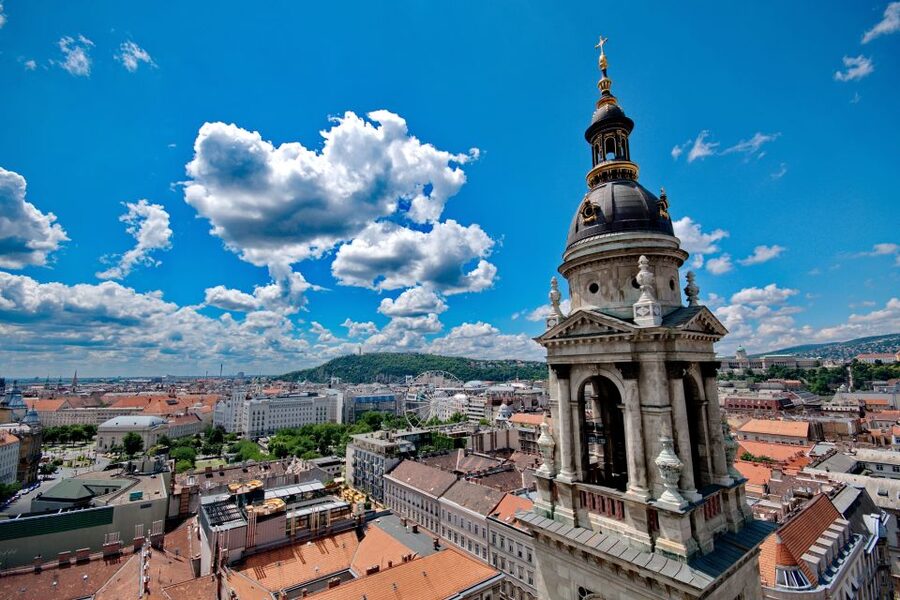
Next comes the Chain Bridge and the Danube Bank area. Chain Bridge is Budapest’s oldest suspension bridge, and the riverside setting makes it an instant lesson in how the city is laid out across the water.
I like this segment because it helps you stop thinking in straight lines. When you walk the Danube Bank, you start to understand how Pest connects visually and physically to the rest of the city. Even if you never plan to cross right away, you’ll see where the sightlines are and why they matter.
You’ll also be walking past the Danube Bank area and toward the larger political and cultural centers that sit nearby. It’s a smooth handoff from “iconic view” to “walkable city story,” which is exactly what you want on a first visit.
A few more Budapest tours worth comparing
- Budapest: Parliament Building Entry Ticket and Audio Guide
★ 4.5 · 3,844 reviews - Budapest: Opera House Guided Tour
★ 4.6 · 1,533 reviews - Budapest Small-Group Guided Tour on MonsteRoller e-Scooter
★ 5.0 · 1,517 reviews - Budapest: Bar Crawl with a Local Guide
★ 4.9 · 1,112 reviews
House of Hungarian Art Nouveau: where style starts telling the story

Part of the route includes the House of Hungarian Art Nouveau. It’s not just a name on a map, it’s a reminder that Pest isn’t only about grand monuments. This kind of stop gives you a quick taste of how different design eras coexist in the city streets.
I recommend using this part of the tour like a visual palate cleanser. Instead of rushing toward the next famous landmark, take a few moments to look at the details and the street-level feel. That’s where you’ll start noticing what’s unique about Pest compared to generic city centers you’ve seen elsewhere.
If you’re traveling with someone who cares more about photos than facts, this is a good compromise stop. It helps you keep interest up without requiring tickets or long lines.
Hungarian Parliament on the walk, not in the ticket line
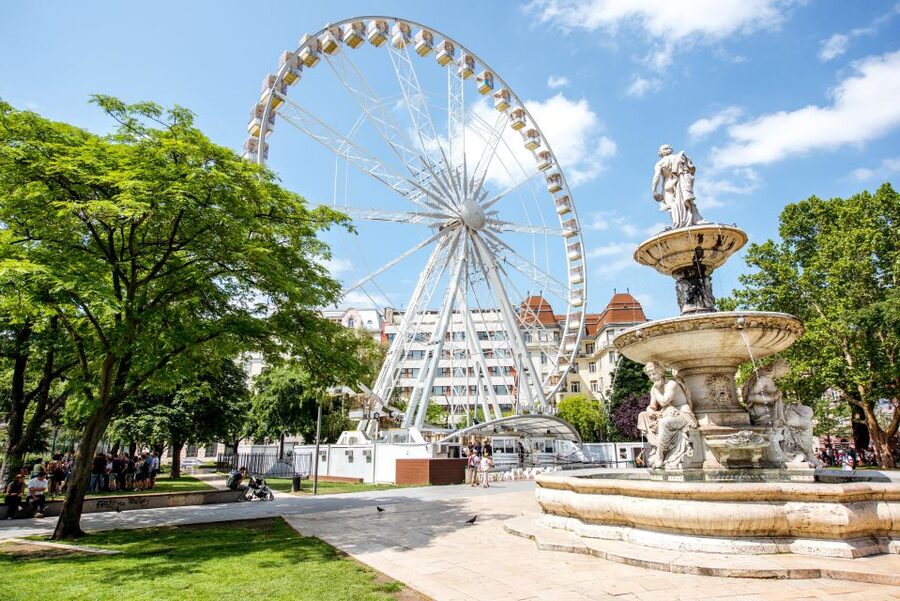
The route includes the Hungarian Parliament building area, described as the world’s third largest Parliament building. Even if you don’t go inside, seeing it in context is valuable. Parliament is one of those structures that makes the city feel official and historic at the same time.
The practical reality to know: this tour does not include entrance fees. That means you’re mostly going to be seeing the building from the street and walking around it in the surrounding area. One group expectation that came up is that some people wanted closer access or more on-the-ground time than a walking route can always provide.
So here’s my advice. If your goal is to learn what you’re looking at outside, this stop will work well. If your goal is to go deep inside specific rooms or you want lots of time standing right up against the structure, plan on adding your own ticketed experience on another day.
Liberty Square and a street market: the best kind of break

Liberty Square is part of the walk, along with time around a street market. This is a great moment to shift gears. After monuments and architecture, the market adds motion and everyday life.
I like market stops for a simple reason: you get to relax your brain. You’re no longer trying to decode buildings, you’re just taking in how people actually live and shop in the middle of sightseeing.
If you’re hungry or thinking about food for later, this is also a useful scouting point. You’ll see what’s being sold and how the area feels, which helps you pick where to eat after the tour ends without guessing blindly.
Hidden alleyways and 19th-century streets: why the “lesser-known” part matters
The tour doesn’t only stick to the biggest posters in Budapest. It also includes lesser-known sights and hidden alleyways, plus 19th-century buildings. This is where the tour earns its keep.
Without this kind of detour, a walking tour can feel like a checklist. With alleyways and side streets, you start to understand how Pest really functions. You see how architecture changes block by block. You also get small moments that feel more personal, less like a photo set.
A useful way to experience this part is to slow down for a minute. Look up, then look at the street level. That quick switch helps you connect what you saw at the basilica or Parliament with what you’re seeing now.
The guides: friendly, engaging, and good at keeping the group together

The tour is led by a professional guide, and English is offered. Based on guide feedback, Monica has been praised for friendliness and tons of history about Pest. Lena and Lina have also been described as passionate and engaging, with a balance of serious historical context and a lighter, humorous tone.
A small but important detail: multiple comments highlight that the guides keep an eye on the group. In a city full of traffic, curbs, and fast-moving crowds, that simple skill is the difference between a smooth walk and a stressful one.
If you want a walking tour that feels like it’s guided in real time rather than “read from a brochure,” this is the right style. You’ll get explanations that help the sights make sense as you move.
Rain or shine, and what to plan for in two hours
The tour runs rain or shine, so your planning should match that. Wear comfortable shoes with grip, because even light rain can make sidewalks slick. Bring a compact rain layer or umbrella, depending on what’s easiest for you to manage.
Two hours means you should treat it like a highlight circuit, not a slow stroll. You’ll likely get enough time at each stop to take photos and absorb the basics, including time to pause, rather than feeling like you’re sprinting nonstop. Still, the best mindset is focus over fatigue. You’ll enjoy the tour more if you’re ready to walk between moments instead of expecting long lingering.
Also, since entrance fees are not included, decide ahead of time which, if any, buildings you want to see inside. Use the tour to build your wish list and your bearings, then handle ticketed visits separately.
$16 for a guided Pest introduction, and how to judge the value
At about $16 per person for a 2-hour guided walk, the value is in three things.
First, you’re paying for direction. Pest has a lot of competing sights, and a guide helps you connect them logically. Second, you’re paying for narration. The tour is built around learning the history behind the places you visit, not just walking past them. Third, you’re paying for time efficiency. Two hours is a practical slot that fits into most Budapest schedules.
The one cost consideration is that entrance fees are not included. So if you plan to enter major sites, budget separately. Still, even with that added, a guided orientation can be money well spent, because it reduces your chances of spending the rest of your trip “backtracking” to places you finally understand after a tour.
Given the strong average rating of 4.3 out of 5, it’s clear that most people find the structure and guide quality worth it for the time.
Who this tour suits best (and who should choose differently)
This tour is a great match if you want:
- A clear first pass at the Pest side highlights
- Architecture viewing with context, not just sightseeing snapshots
- A route that includes both big landmarks and smaller street moments
- A guide-led pace that helps you cover more ground without feeling lost
It might be less ideal if you:
- Want a tour focused on interior entry and extended time in one building
- Expect lots of close-up time at a single major structure, rather than a balanced walking route
- Prefer a self-guided wander where you choose each stop and timing
In other words, this is best as your “get oriented and learn the story” tour, not your only Budapest stop.
Should you book the Budapest Guided Walking Tour of Pest?
I’d book it if you’re trying to make your first day in Pest feel organized, not chaotic. The combination of St. Stephen’s Basilica, Chain Bridge and the Danube Bank, the Hungarian Parliament area, and Liberty Square with a street market gives you both the skyline and the street-level reality in just two hours.
Skip this one only if you already know you want interior access and long close-up time, because entrance fees are not included and the format is primarily a walking, see-from-outside experience.
If you want an easy, guided way to understand Pest fast, this tour is a solid choice, and the guide quality seems to be the main reason people feel satisfied.
FAQ
Where is the meeting point for the Pest walking tour?
Meet at Molnár’s Kürtőskalács.
How long is the guided walking tour of Pest?
The duration is 2 hours.
Is the tour offered in English?
Yes, it is a live tour guide in English.
Does the tour run in bad weather?
Yes, the tour takes place rain or shine.
What is included in the price?
A professional tour guide is included.
Are entrance fees included?
No, entrance fees are not included.
Recently reviewed around Budapest
- Panoramic hike around Budapest★ 5.0 · 14 reviews
- Budapest Highlights Self guided scavenger hunt and Walking Tour★ 5.0 · 5 reviews
- PRIVATE (7 hours) Budapest and Szentendre city tour with lunch and winetasting★ 5.0 · 4 reviews
- Original Budapest Walking Tour★ 4.0 · 39 reviews
- Hungarian Gastro Cellar: Assisted Tasting Options★ 4.5 · 5 reviews
- Original Budapest Alternative Street Art & Jewish Tour★ 4.5 · 14 reviews
- Bratislava, one day private trip from Budapest with guide!★ 5.0 · 4 reviews
- One hour Hen or Stag private party boat Budapest with unlimited beer and wine★ 3.5 · 6 reviews
Walking Tours, compared.


Big Bus Budapest Hop-On Hop-Off Bus and Walking Tour
Read our review →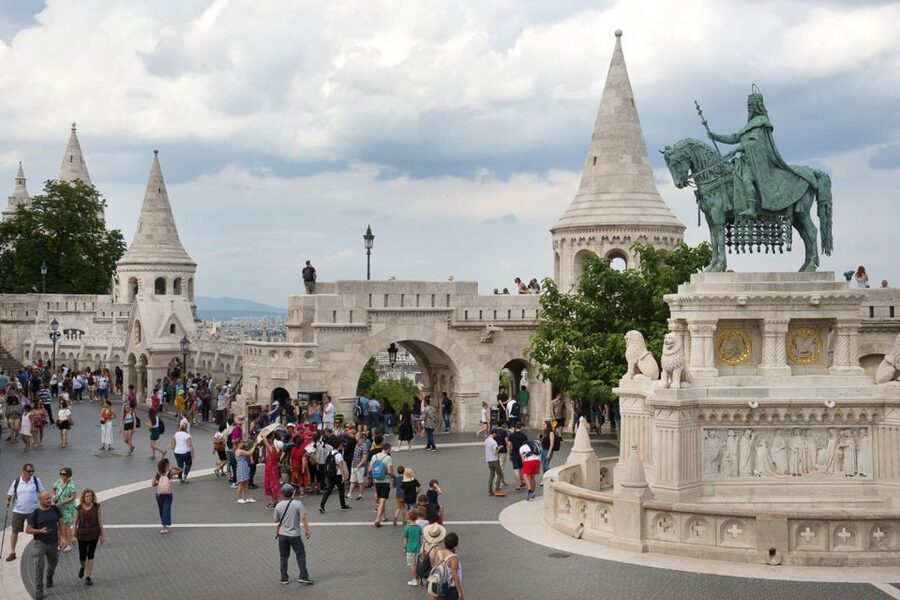
Budapest City Landmarks Walking Tour in 2 Hours
Read our review →
3-Hour Orientation Walking Tour of Buda and Pest
Read our review →
Budapest Historical Sightseeing – Free Walking Tour
Read our review →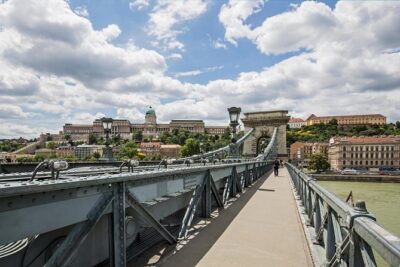
Budapest All in One Small Group Walking Tour with Strudel Stop
Read our review →Browse the lists this tour appears in