
Reviewed · WALKING TOURS
Budapest Art Nouveau Walking Tour
Budapest Art Nouveau tours are interesting because they teach you how to look, not just where to walk. I love the Hungarian Secession twist on Art Nouveau, especially how it turns architecture into street-level storytelling. I also love the chance to focus on the Postal Bank by Ödön Lechner, nicknamed Hungary’s Gaudi. One consideration: some interiors depend on the day, so on certain weekends or Saturdays you may not get into every building.
This is a 3-hour, historian-led stroll through the Belle Époque layer of the city. The best part is that you’re not stuck with only exterior photos, since the tour is designed around stops where you can actually spend time inside key entrance spaces. If you want zero walking and guaranteed access to every interior, this may feel a bit “depends on the day.”
Key Art Nouveau Moments You Shouldn’t Rush
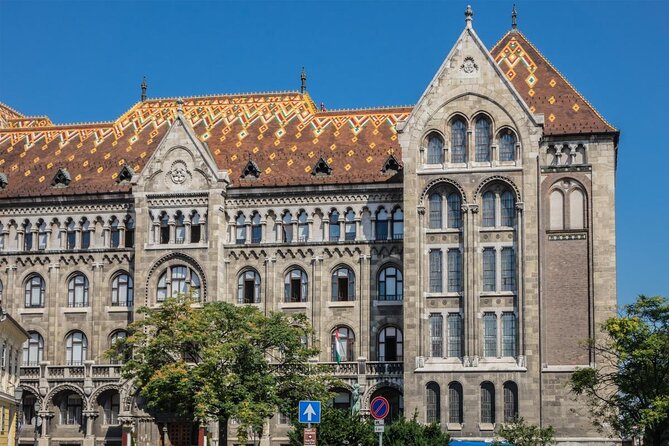
- Ödön Lechner’s Postal Bank (Hungary’s Gaudi), the standout starting wow factor
- Gresham Palace entrance hall details, where the outside and inside design connect
- Zsolnay porcelain tile patterns on facades, including how ceramic becomes decoration
- Asian motif influences explained in the context of both Hungarian identity and European Orientalism
- A finish at the Kazinczy Street Synagogue, including the Art Nouveau interior when it is open
Why Hungarian Secession Feels Like Art Nouveau With a Purpose
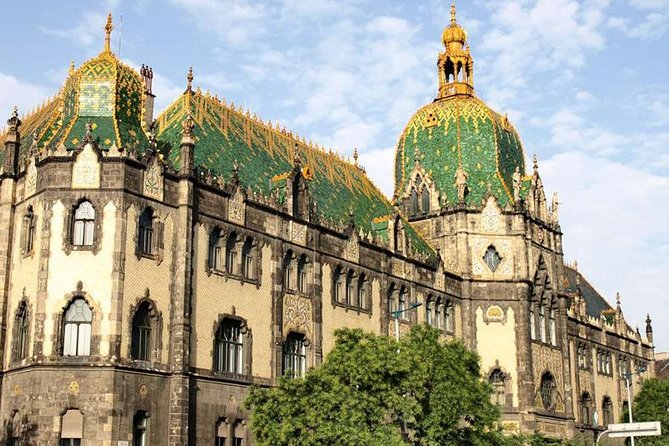
Art Nouveau spread across turn-of-century Europe, but Hungary shaped it into something more personal and more experimental. On this tour, the point is not to memorize a style name. The point is to learn why Hungarian Secession looks the way it does, and how materials and symbols do the heavy lifting.
You’ll hear how Ödön Lechner helped define the movement. And you’ll notice a specific signature: ceramics, especially Zsolnay pieces, and design language that borrows from what people believed about Eastern origins. The guide also frames it as part of a bigger European trend called Orientalism, so you get both the local pride angle and the wider art-history context. That balance matters. It turns decoration into meaning.
This tour is also a practical way to break up Budapest’s sightseeing. You get a tight route, a clear theme, and just enough time in each place to spot patterns you might miss on your own.
More walking tours in Budapest:
- Budapest: Buda Castle Walk with Saint Stephen’s Hall
★ 4.5 · 3,012 reviews - Big Bus Budapest Hop-On Hop-Off Bus and Walking Tour
★ 3.5 · 2,206 reviews - Budapest: Buda Castle District Walking Tour
★ 4.6 · 2,108 reviews
Finding the Theme Fast: Bedö House and Early Stops
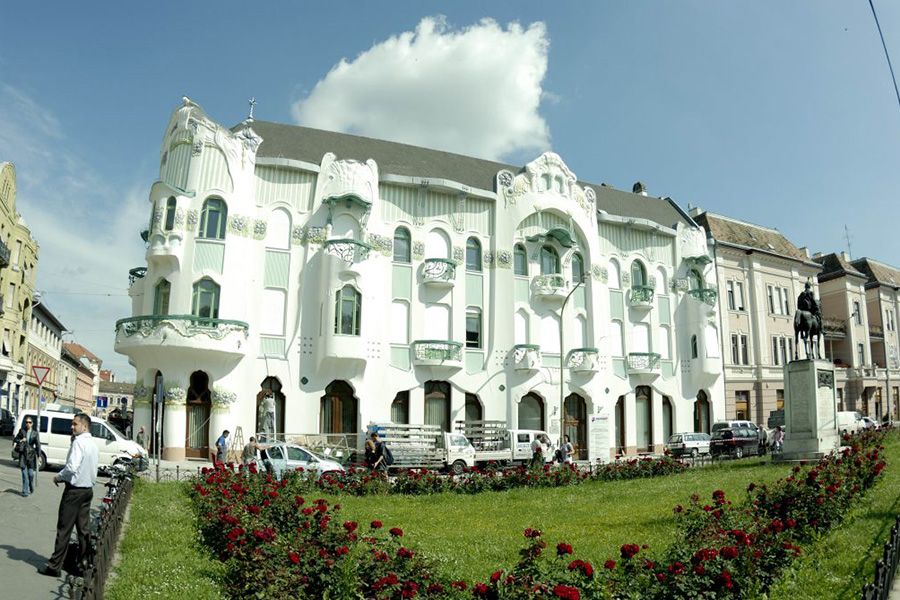
The walk starts with an opening round of guided context, so you can read what you’re seeing as you go. One early stop is Bedö House, where you’ll get a guided look that sets up what comes next. Rather than treating the city like a random collection of ornate buildings, the guide helps you track repeating ideas: how facades communicate wealth, how entrances are part of the show, and how designers used materials like a visual alphabet.
Then the route connects into other grand, civic-feeling architecture, including the Hungarian State Treasury stop. Even if you’re not a hardcore architecture person, these early moments are where the tour starts paying off. You begin to see what makes Hungarian Secession different from the more famous Art Nouveau look you might already know from other countries.
If you’re the type who likes to get your bearings fast, this structure helps. If you prefer total freedom to wander, you might feel a little guided at first, but the payoff is that you’re learning the “why” while you’re still close to the places.
Entering Ödön Lechner’s Postal Bank, the Hungary’s Gaudi Moment
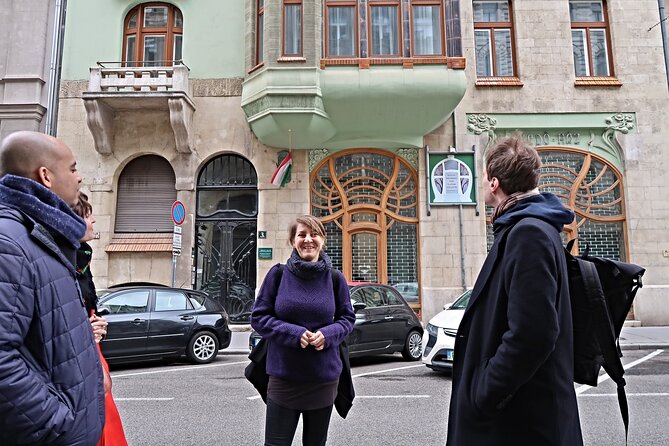
The tour’s headline attraction is the Palace of the Royal Post (often linked to Ödön Lechner), and it earns its reputation. The nickname Hungary’s Gaudi gets used because the design energy is so unmistakable. This is where you start to understand that Hungarian Secession wasn’t trying to be quiet or subtle.
Here’s what I like about the approach: you’re not only looking from the sidewalk. The stop is set up so you can take in the details outside and then get access to the entrance area. That matters because Art Nouveau often hides its best ideas in the transitions. Pay attention to how ornament and structure meet at corners, archways, and thresholds.
Inside (even if you’re mostly in an entrance space), you’ll get the kind of explanations that make the building feel less like a museum display and more like an alive design system. The guide can tie Lechner’s choices back to ceramic work and to the movement’s fascination with symbolic forms.
Practical note: photos are great here, but don’t only aim for the big facade shots. Spend time looking at smaller repeating motifs. That’s what you’ll carry to the next stops.
Gresham Palace: How Wealth Gets Turned Into Design
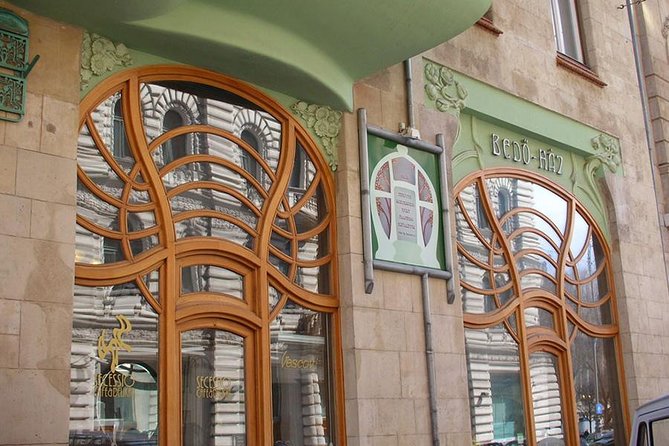
Next comes Gresham Palace, and this is another stop built for people who care about interiors, not just exteriors. The tour again benefits from one key advantage: visitors can access the entrance hall area, so you’re able to see how the design logic continues once you step inside.
Gresham Palace is especially valuable for two reasons. First, it gives you a direct feeling for the city’s affluence during the early 20th century, when “modern” architecture was also a status signal. Second, it’s a good place to compare what you saw at the postal building. You can start noticing differences in how designers used ornament, proportion, and materials.
One thing to keep in mind is that entrance access can be limited to certain areas. You’re not promised a full guided tour of every room in the way a museum might. But this is still one of the best kinds of stops for an Art Nouveau walking tour because the entrance hall is where you catch both the theatrical outside and the crafted inside.
A different way to spend a day in Budapest:
- Budapest: City Highlights Cruise with Welcome Drink
★ 4.6 · 35,610 reviews - Budapest: Unlimited Prosecco, Beer and Aperol Spritz Cruise
★ 4.8 · 25,310 reviews - Budapest: Széchenyi Spa Day Ticket with Optional Upgrades
★ 4.3 · 23,911 reviews - Budapest: Nighttime or Daytime Sightseeing Cruise
★ 4.2 · 21,062 reviews
Zsolnay Ceramics and the Power of Facade Material
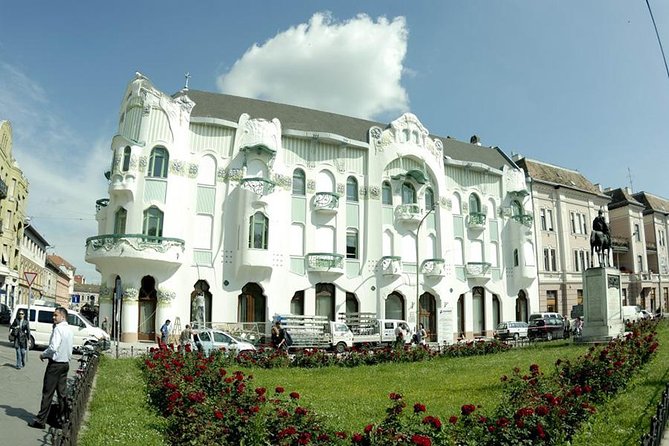
If there’s one theme that keeps the tour from feeling like a list of pretty buildings, it’s Zsolnay porcelain. The ceramics from the renowned Zsolnay factory in Pécs are a hallmark of Hungarian Art Nouveau, and this tour makes sure you understand why that matters.
You’ll examine ceramics and see how tiles can do more than decorate. The point is that ceramic becomes a design tool. It shapes texture, color, and pattern in ways that paint and stone simply can’t match. On a facade, those ceramic elements act like visual rhythm. They also help buildings look more animated, like the surface has its own movement.
This is also where the tour’s “Hungarian take” on the broader Art Nouveau story becomes tangible. Hungarian Secession didn’t just copy trends from elsewhere. It chose materials that could express the style’s energy and symbolism.
Don’t underestimate this section. If you only remember one thing from the tour, make it the role of ceramics. You’ll start spotting them all over the city afterward.
Asian Motifs Explained, Without the Confusion
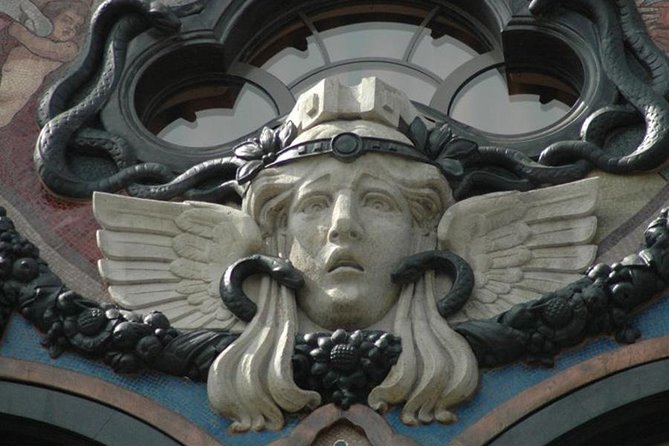
Another signature of Hungarian Secession is the use of Asian motifs and elements. The tour doesn’t just point at the designs and move on. You’ll consider where those motifs come from in the Hungarian narrative, including the idea of supposed Eastern origins.
At the same time, you’ll hear the other side of the story: European-wide Orientalism. That part is important. It keeps the tour from becoming a one-note explanation. Instead, you get a clearer view of how ideas travel, get interpreted, and sometimes get repackaged through local design agendas.
What this means for you while walking is simple: you’ll look at decorative forms differently. You won’t only ask what the motif looks like. You’ll ask what it was meant to signal, and how designers used it to craft a modern identity.
If you’ve ever felt confused by Art Nouveau symbolism, this is the section that usually clears it up.
Side Stops That Teach You How to Spot Art Nouveau
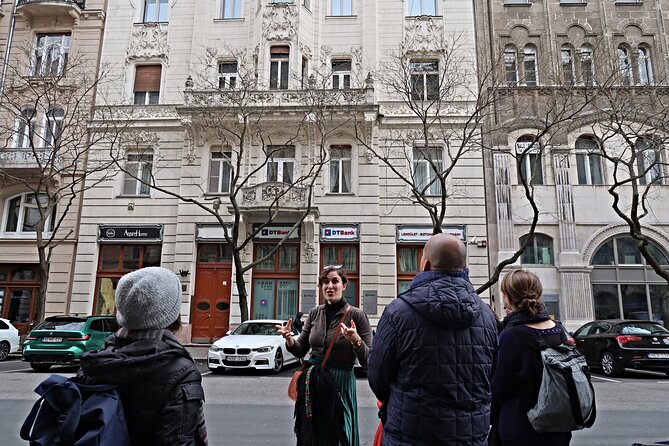
Between the big-ticket buildings, you’ll make several smaller, smarter stops. The route includes a flower shop with its original interior, a department store, and several bank offices. Even without extra ticketing details, these kinds of commercial and everyday spaces are where you learn the real lesson: Art Nouveau was meant for public life, not just monuments.
You’ll also visit a small but noteworthy Art Nouveau museum and coffee house stop. This is a good break point. It gives your eyes time to rest and lets the guide zoom out and connect details across buildings.
One practical advantage: these in-between stops keep the pacing from turning into nonstop staring at facades. You get variety, and the guide can point out tiny cues you might otherwise miss.
Finishing at Kazinczy Street Synagogue, the Art Nouveau Finale
The tour ends at the Kazinczy Street Synagogue, and this is a fitting close because synagogues can show Art Nouveau ideas in a more surprising way. The tour is set up to conclude at this location, including attention to the Art Nouveau interior.
But there’s an important day-of-week reality check. The Orthodox Synagogue on Kazinczy Street is closed on Saturdays. If your tour lands on a Saturday, the experience may shift, and you might not get the interior payoff.
When it is open, finishing here can feel like a switch flips. You’ve spent the walk learning how Hungarian Secession uses ceramics and motifs. Then you see those design ideas applied in a religious space, and the whole style clicks into a broader emotional story, not only an aesthetic one.
Day-Of-Week Changes, and How to Make Them Work for You
This is one of those tours where the best plan is to understand the limits upfront. On weekends, you cannot enter the Hungarian National Bank. On Saturdays, the Kazinczy Street Synagogue interior is closed.
The good news is that the tour is designed to adapt. If a site is closed, the guide can adjust based on your interests or extend the route to other Hungarian Art Nouveau favorites, such as the Gellért Bath Hotel, the Museum of Applied Arts, and the Geology Museum.
If you hate surprises, send a message ahead of time and ask what your guide expects to include on your specific day. If you’re more flexible, treat this as a chance to see more of Budapest’s applied arts side. Museum stops and building exteriors connected to design schools and public architecture can be just as revealing as the big names.
Price and Value: Is $123 Worth It?
At $123 per person for a 3-hour walking tour, the value depends on what you care about most. This price isn’t trying to compete with the cheapest city walk. You’re paying for a live historian guide and for a route that prioritizes places where design details are explained and where you can often access entrance areas.
Here’s how to judge the value fairly:
- You’re getting guided interpretation of specific buildings linked to Hungarian Secession, not a general “look at the pretty stuff” walk.
- The structure focuses on two major sites where entrance hall access lets you connect exterior ornament to interior design choices.
- The tour saves your time. In a city with thousands of sights, a thematic route with a specialist can be cheaper than spending extra time piecing together your own plan.
Potential extra costs can appear depending on what’s open. The House of Hungarian Art Nouveau can cost 1000 HUF per person (about $3.50). The Orthodox Synagogue interior can cost 2000 HUF per person (about $7.00). So the realistic budget is $123 plus a small add-on if those interiors are open on your day.
One more practical point: tram and metro tickets are not included. That’s normal, but you should factor it into your day if you plan to move between stops.
Who This Tour Fits Best
This tour is a strong match if you want design history that doesn’t feel academic. You’ll like it if you enjoy spotting symbolism, materials, and how a style becomes a city identity.
It’s also a great pick if you’re visiting Budapest for the first time and want a more focused “one theme, multiple buildings” outing. The 3-hour length is long enough to see major works, but short enough to keep your remaining day flexible.
If you’re a total beginner with architecture, the guide structure helps. If you’re a seasoned architecture nerd, you’ll probably appreciate the material focus on Zsolnay and the attention to motif meanings and European context.
Should You Book This Budapest Art Nouveau Walking Tour?
I think it’s worth booking if you want to come away with better eyes, not just more photos. The combination of a historian guide, key Hungarian Secession landmarks like the Postal Bank by Ödön Lechner and Gresham Palace, plus the ceramics and motif storytelling is a good match for most people who like European cities with personality.
Book it especially if you’ll be in Budapest on a day when the major interior access is possible, since the entrance hall access and synagogue finale make the tour feel complete. If your dates land on a Saturday, don’t automatically cancel. Ask the guide what substitutions they’ll make, like the Gellért Bath Hotel, Museum of Applied Arts, or the Geology Museum. You’ll still get the Art Nouveau lesson plan, just with a different set of pages in the same story.
FAQ
How long is the Budapest Art Nouveau Walking Tour?
It lasts 3 hours.
How much does the tour cost?
The price is $123 per person.
What is included in the price?
You get a 3-hour walking tour with a historian guide.
Are tram or metro tickets included?
No. Tram and metro tickets are not included.
Is the tour in English?
Yes, the live tour guide is English.
Will I be able to enter the Hungarian National Bank and the Kazinczy Street Synagogue?
On weekends, you cannot enter the Hungarian National Bank. The Orthodox Synagogue on Kazinczy Street is closed on Saturdays.
What extra costs might I pay if sites are open?
Additional costs may apply: House of Hungarian Art Nouveau is 1000 HUF per person (about $3.50), and the Orthodox Synagogue on Kazinczy Street is 2000 HUF per person (about $7.00).
Recently reviewed around Budapest
- Panoramic hike around Budapest★ 5.0 · 14 reviews
- PRIVATE (7 hours) Budapest and Szentendre city tour with lunch and winetasting★ 5.0 · 4 reviews
- Original Budapest Walking Tour★ 4.0 · 39 reviews
- Budapest Highlights Self guided scavenger hunt and Walking Tour★ 5.0 · 5 reviews
- Original Budapest Alternative Street Art & Jewish Tour★ 4.5 · 14 reviews
- Hungarian Gastro Cellar: Assisted Tasting Options★ 4.5 · 5 reviews
- Bratislava, one day private trip from Budapest with guide!★ 5.0 · 4 reviews
- One hour Hen or Stag private party boat Budapest with unlimited beer and wine★ 3.5 · 6 reviews
Walking Tours, compared.

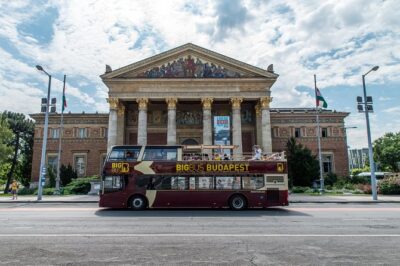
Big Bus Budapest Hop-On Hop-Off Bus and Walking Tour
Read our review →
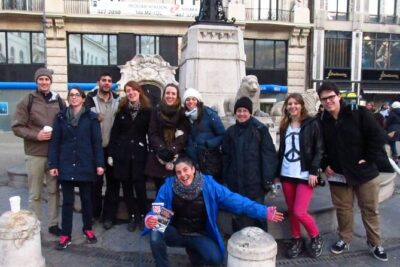
Budapest City Landmarks Walking Tour in 2 Hours
Read our review →
3-Hour Orientation Walking Tour of Buda and Pest
Read our review →
Budapest Historical Sightseeing – Free Walking Tour
Read our review →
Budapest All in One Small Group Walking Tour with Strudel Stop
Read our review →Browse the lists this tour appears in