

Reviewed · COMMUNIST HISTORY TOURS
Born Under The Red Star – The History of Communism in Hungary – Private Tour
This tour is compelling because it walks you through the places where Hungary’s 20th-century politics got brutally real, from WWII memory to the 1956 uprising. You also get a practical way to connect the dots, with stops that explain how power changed hands and how everyday life was shaped by ideology. You can keep it personal since it is a private tour.
I especially like two things. First, the route mixes major landmarks with the most emotionally heavy stop in Budapest, the House of Terror Museum. Second, you get a fun break that still fits the theme, a drink at a Communist-themed bar, plus coffee or tea and maps.
One drawback to consider is timing and ticket details. Some sites are listed as free and some are not, and a couple of visitors have run into confusion about entrance coverage, so it pays to confirm what is included for the day you go.
Key highlights you will remember
- House of Terror Museum on Andrássy út 60, with exhibits covering fascist and communist terror, and a focus on victims
- Szabadság tér with two controversial memorials tied to Holocaust memory and the 1945 Soviet liberation
- 1956 Hungarian Revolution memorial, placed where you can see how the uprising is still honored in public space
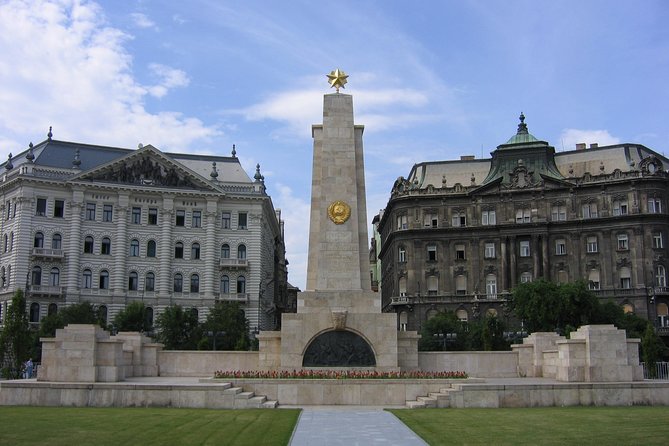
- Soviet Heroic Memorial at a WWII park setting, a reminder of how regimes shape historical storytelling
- Private format with pickup, so you spend less time figuring out transit and more time listening
- Communist-themed bar stop, where you get a retro soda break instead of rushing straight through history
Why this communist history walk is worth your time
Budapest has plenty of history tours that skim the surface. This one feels more like a guided pathway through power and propaganda, with each stop doing a job. You leave with a clearer sense of what people were living through, not just what happened on paper.
The private setup matters. You can ask follow-up questions, slow down at the spots that hit you hardest, and skip the tangents that do not help you. It also keeps the group small in practice, which is a big deal when the subject turns heavy.
For your planning brain, the tour is about 3 hours, with short visits at each location. That is long enough to get context and a coherent story, but short enough that you can still do other sightseeing the same day.
More communist-era history tours in Budapest:
- Budapest: Communist History Tour with House of Terror Option
★ 4.8 · 182 reviews - Communism in Hungary with a Historian
★ 5.0 · 70 reviews - Budapest: 3-Hour Walking Tour About Communism (Small Group)
★ 4.7 · 70 reviews
Pickup, route flow, and why timing feels quick (in a good way)
This tour is built for easy logistics. You get hotel or apartment pickup where you request, and the guide meets you right at your address. There are also mobile tickets, and the tour runs in English.
The stop lengths are tight, usually around 15 minutes, with a longer stretch at Szabadság tér. You should treat each stop like a chapter heading, not a museum marathon. The value is how the guide links each location to the next one.
If you are thinking about transit, the tour operates in the central city. You are also noted as being near public transportation, and in at least one case, a guide used the subway to connect you to the Terror Museum area more efficiently. So if you hate long walks on busy streets, this format usually works.
Good weather is required. If conditions are bad, the operator offers a different date or a full refund. In summer, that usually means you will get more useful outdoor time and fewer rushed detours.
Stop 1: Soviet Heroic Memorial, WWII memory with a political message
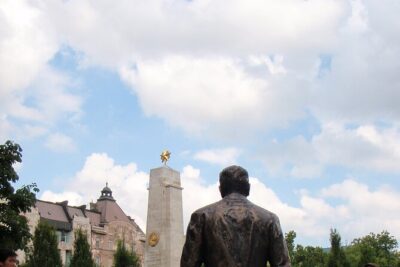
The tour begins at the Soviet Heroic Memorial, a white obelisk in a park setting. It is a WWII monument, but it is not just about battle years. It is about who gets credited, who gets celebrated, and how liberation narratives get packaged.
You get about 15 minutes here, which is enough time to understand what the memorial represents and why it still sparks emotion. In a city full of statues and plaques, this one is a clear early signal: the Communist era was not only about ideology, it was also about managing memory.
What to watch for is how the guide frames the obelisk in relation to later events. It sets up the big theme of the tour, that history in Hungary was rewritten again and again by the people in charge.
Stop 2: House of Terror Museum, the hardest stop on the route
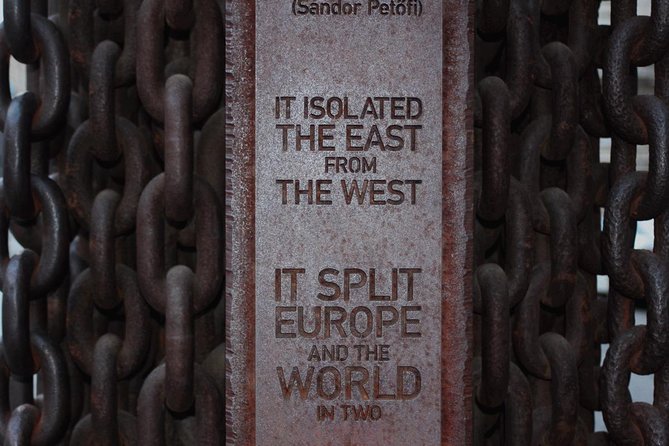
Then comes the House of Terror Museum on Andrássy út 60. This is the most serious stop, and for good reason. The museum focuses on exhibits tied to both fascist and communist regimes in 20th-century Hungary, and it also serves as a memorial to victims who were detained, interrogated, tortured, or killed in the building.
Plan on 15 minutes. That can sound short for something this intense, but it is typically enough for the guide to explain the core story and point you toward what to remember. If you want to linger longer, you might need a separate, longer museum visit later.
This is also where it is smart to be extra clear about entrance coverage. The tour data indicates admission is free at this stop, but there has been at least one experience where entrance coverage did not match expectations. If this museum is the main reason you booked, I recommend you ask the guide or confirm ahead of time what tickets are included so you are not scrambling on site.
Even with a quick visit, this stop tends to be the one that changes how the rest of the day feels. After you understand what the building symbolizes, the outdoor memorials stop being abstract.
More history-led tours in Budapest:
- Budapest: Historic Cruise with Welcome Drink
★ 4.7 · 6,512 reviews - Budapest Historical Sightseeing – Free Walking Tour
★ 5.0 · 1,302 reviews - Buda Castle District Dark History, Legends and Vampire Night Tour
★ 4.5 · 1,240 reviews - BloodThirsty Hungary: Walking tour & Dark Historical Stories
★ 4.9 · 633 reviews
Stop 3: St. Stephen’s Basilica, a major church stop with a different kind of power
Next you will reach St. Stephen’s Basilica (Szent István Bazilika). This is a Roman Catholic church named for Stephen, the first king of Hungary. The right hand of Stephen is housed in the reliquary, and the basilica used to be one of Hungary’s largest church buildings before 1920.
You are allotted about 15 minutes. Admission is not included at this stop, so factor in that you may need to pay entrance costs on your own if you want full access. In at least one case, a guide helped a visitor get into the basilica by purchasing the cheapest available ticket, which suggests you should expect to handle ticket details yourself here.
Why include a church in a communist history tour? Because regimes compete for authority. When communism suppresses religious influence, places like this basilica become symbols of who still holds cultural weight, even when politics tries to take over everything.
If you are sensitive to rules and security checks, plan a little extra patience. Houses of worship usually have their own procedures, and you will be moving quickly on a timed tour.
Stop 4: Szabadság tér, Holocaust memory and Soviet liberation in the same view
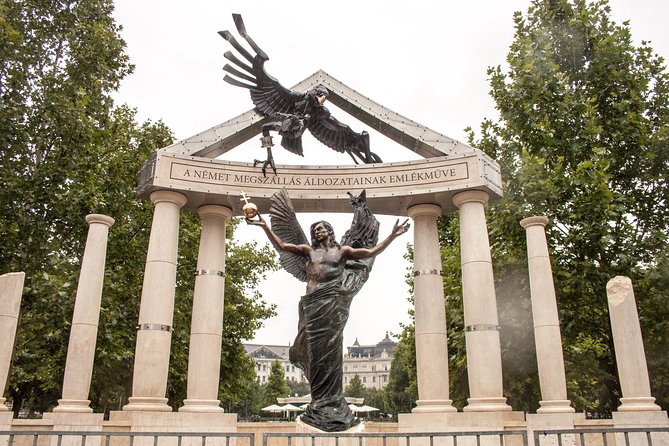
Szabadság tér, or Liberty Square, is where the tour gets especially real for modern Budapest. The square includes two controversial memorials. One honors Hungarian Jewish victims of the Holocaust. The other commemorates Soviet soldiers who liberated Budapest in 1945.
You get about 25 minutes here, giving you time to take in the layout and let the contradictions sit in your brain. This is not a simple story of good versus bad. It is a place where different kinds of remembrance overlap, and where public space becomes political.
On the west side of the square, you will also see the United States Embassy and the historicist style headquarters of the Hungarian National Bank. That visual pairing matters. It helps you see how Budapest moved from one era of state control to another kind of international and financial presence.
If you like history that connects to today, you will enjoy this stop. It is where ideology, trauma, and national identity collide in everyday city life.
Stop 5: The 1956 Revolution memorial, why one year keeps echoing
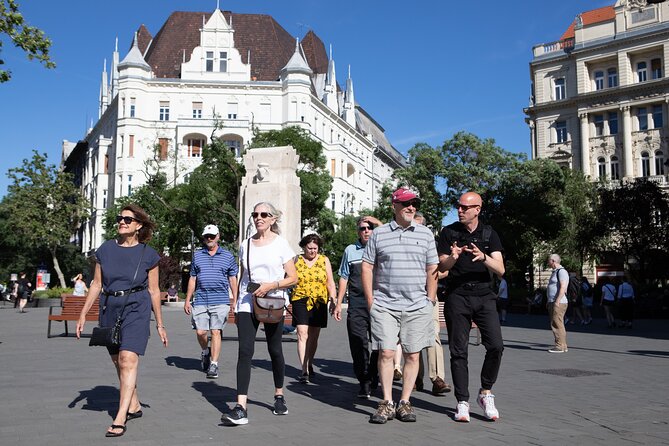
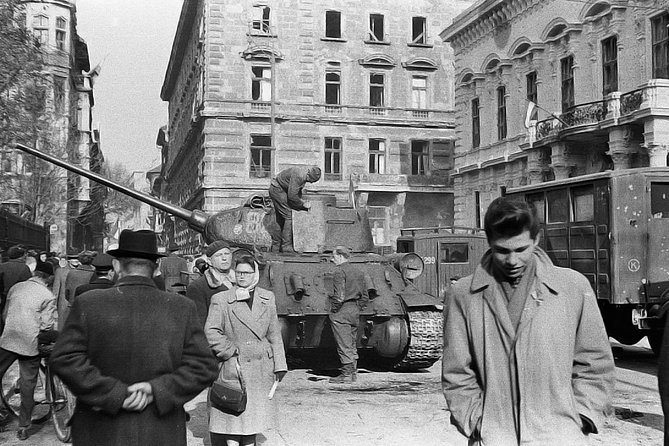
The tour then moves to the Memorial to the 1956 Hungarian Revolution and War of Independence. This one is straightforward and direct: it honors the heroes of the 1956 uprising against the communist regime.
You spend about 15 minutes. Again, it is not long, but it gives you the key anchor. 1956 becomes a reference point you can carry to other parts of Budapest. When you recognize the period, the memorials and street names start making more sense.
What makes this stop valuable is its placement in a tour that already covered terror, intimidation, and manufactured narratives. By the time you reach 1956, you understand that resistance was not theoretical. It was people pushing back with real consequences.
If you are the type who likes to understand why certain events still get taught and commemorated, this is one you will feel.
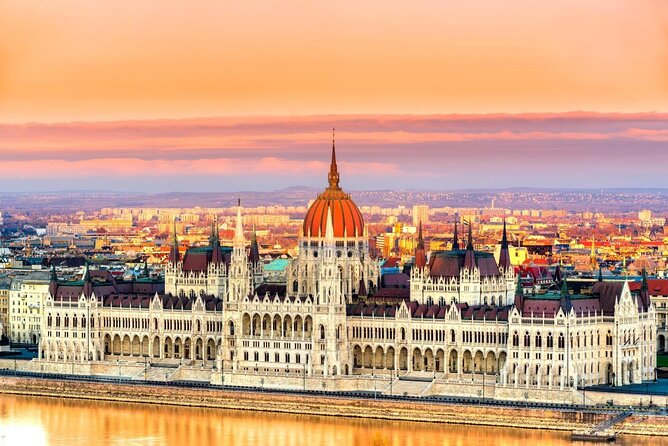
Stop 6: Hungarian Parliament Building, seeing the end of one chapter
Finally, you will reach the Hungarian Parliament Building (Országház). It is the seat of the National Assembly of Hungary and a major Budapest landmark. The tour time is short at about 15 minutes, and admission is not included.
This stop works best as a final contrast. A parliament building is about representation and formal national decision-making. In a communist history tour, that contrast is the point. You are literally walking from a story of coercive power toward a story of governance.
If you are hoping for an interior visit, you should not count on it being part of the tour. Because admission is listed as not included, you might need a separate plan if you want to go inside.
Even from outside, it is a strong finish. You end the walk with a sense of how modern Hungary wants to present itself, in stone and symmetry, after decades of upheaval.
The Communist-themed bar stop, a clever human break
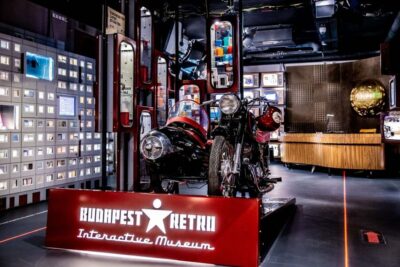
One of the included treats is a stop at a Communist-themed bar for a retro soda. It is included as part of the tour, and you also get maps and further recommendations, plus coffee and/or tea.
This is a smart pacing tool. After you spend time near the House of Terror and Holocaust-related memorials, you need a small reset. The soda break gives you a chance to ask questions while people are still awake and thinking clearly.
This is also where the tone of the guide matters. In strong tours, this kind of break does not turn into random chatter. It helps you connect the facts from the walk to what the era meant in everyday life. If you get a guide like Julia or Brigit, the subject can feel very personal without turning into sensationalism.
You also might meet guides like Norbert, whose friendly flexibility helped people make the route feel smoother. And if you end up with Leslie, you should know he has a reputation for being direct and informed, especially on the tough context around the buildings you see.
Price and value: what you get for $108.14 per person
At $108.14 per person, this is not the cheapest way to cover central Budapest landmarks. But it is also not trying to be a mass-market bus tour, and that is where the value lives.
You are paying for:
- Private format for just your group
- Pickup from your address
- A guided story that connects WWII memory, Communist terror, 1956 resistance, and modern memorial spaces
- Included refreshment time, the retro soda plus coffee or tea
- Maps and recommendations to help you keep exploring afterward
The biggest value comes from context. A solo walk could get you to the sites, but you would probably miss the connections that make the day click. With a guide, the stops become a coherent narrative instead of a checklist.
The one price risk is not the guide. It is the entrance question at sites where admission is not clearly included. St. Stephen’s Basilica and the Parliament Building are marked as not included, and there has been some mismatch reported around the Terror Museum and basilica ticket interpretation. If you plan to visit interiors or domes, budget extra time and a little extra money.
Who should book this tour, and who might want a different option
This is ideal if you want a 3-hour way to understand Hungary’s Communist era in Budapest without spending your whole day hopping between museums. It also works well if you like honest, sometimes uncomfortable history that explains how regimes operated and why certain places are still controversial.
It is also a good fit if you prefer a guided experience due to language or because you want the big picture quickly. In reviews, the strongest praise goes to guides who provide real detail and bring the subject down to human scale.
It might be less ideal if you want a museum-heavy schedule. The museum time is short, so you should treat the House of Terror stop as orientation rather than exhaustive reading. If you are a deep researcher type, you will likely want to return on your own for a longer visit afterward.
Also, if you have physical limitations, note that the tour asks for moderate physical fitness. The stops are not far apart in central areas, but there is still walking and time spent outdoors at memorial sites.
Should you book Born Under The Red Star?
Yes, if you want a focused, private introduction to Hungary’s Communist past in Budapest, with the House of Terror as the emotional center. The included retro soda and coffee or tea help you keep your energy up, and the guide-led pacing keeps the day from turning into a rushed museum sprint.
Book it especially if you like history that connects buildings, memorials, and public debate. Szabadság tér and the 1956 memorial are the kind of places where a guide helps you read what you are seeing, not just where it is.
Skip it or adjust expectations if you are hoping for fully included museum entrances at every stop. Some sites require additional ticket decisions, so confirm on the day, especially for places marked as not included like St. Stephen’s Basilica and the Parliament Building.
FAQ
Is this tour private?
Yes. It is a private tour, meaning only your group participates.
How long is the tour?
It runs for about 3 hours.
Do I get hotel pickup?
Yes. Hotel or apartment pickup is included, and your guide meets you at your requested address.
Is the tour in English?
Yes, it is offered in English.
Are entrance tickets included for the main sights?
Some are listed as free and some are not. The Soviet Heroic Memorial, House of Terror Museum, Szabadság tér, and the 1956 revolution memorial are marked as free. St. Stephen’s Basilica and the Hungarian Parliament Building are marked as not included.
What happens if the weather is bad?
The experience requires good weather. If it is canceled due to poor weather, you will be offered a different date or a full refund.
Recently reviewed around Budapest
- Panoramic hike around Budapest★ 5.0 · 14 reviews
- PRIVATE (7 hours) Budapest and Szentendre city tour with lunch and winetasting★ 5.0 · 4 reviews
- Original Budapest Walking Tour★ 4.0 · 39 reviews
- Budapest Highlights Self guided scavenger hunt and Walking Tour★ 5.0 · 5 reviews
- Hungarian Gastro Cellar: Assisted Tasting Options★ 4.5 · 5 reviews
- Original Budapest Alternative Street Art & Jewish Tour★ 4.5 · 14 reviews
- Bratislava, one day private trip from Budapest with guide!★ 5.0 · 4 reviews
- One hour Hen or Stag private party boat Budapest with unlimited beer and wine★ 3.5 · 6 reviews
Communist History Tours, compared.
Communist History Tour with House of Terror Option
Read our review →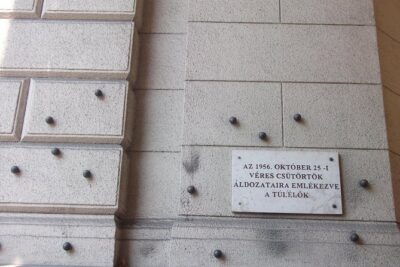
3-Hour Walking Tour About Communism (Small Group)
Read our review →
Lives of Hungarians Under Communist and Capitalist system
Read our review →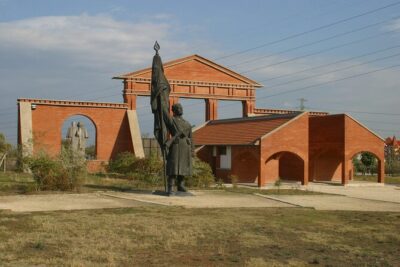
Memento Park Visit with Private Trabant Transfer
Read our review →Browse the lists this tour appears in