
Reviewed · BUDA CASTLE TOURS
Buda Castle Walking Tour: A Kingdom of Many Nations
Budapest’s Castle Hill is one of those places where you can almost read the city’s history on the walls. In about three hours, you move from royal power to church splendor, then up to big Danube views at Fisherman’s Bastion, all in a calm small-group format. The setting itself is a treat, with narrow, cobbled streets and architecture that changes style every few steps.
I love the way this tour gives you clear stops and real context, so Matthias Church and the Fisherman’s Bastion viewpoint mean something, not just photos. I also like the small-group feel, with guides such as Peter and Kata adjusting the pace and the stories to your interests. One consideration: entrance tickets for Matthias Church and Fisherman’s Bastion are not included, and the walking includes uneven cobbles and some stairs.
Key points worth knowing before you go

- Max 6 people on the group, with a very manageable pace through Castle District streets
- Matthias Church is a highlight, and you’ll spend real time with the roof details and interior
- Fisherman’s Bastion delivers Danube and city views, but plan on paying the site fee
- A 1,000+ year story in one loop, from early fortress plans to Renaissance courts and later rulers
- Local guide style matters, and several guides bring personal local details into the walk
- Buda Castle exteriors, not an interior palace tour, so set expectations for what you will see
Castle Hill in a small group: why this walk works
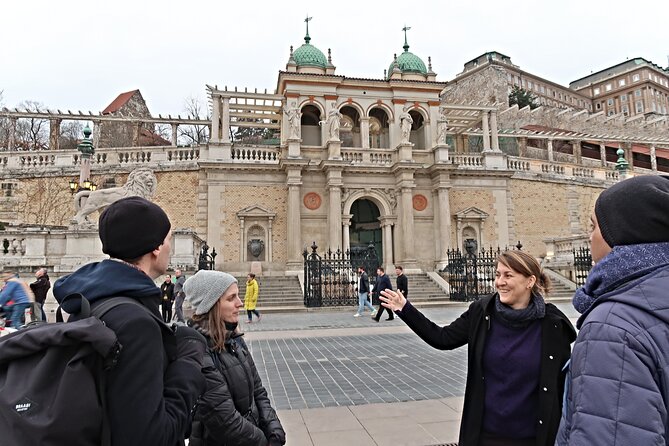
If you only have a day or two in Budapest, Castle Hill can feel like a maze. This is the kind of area where big buses drop crowds near the big monuments, and then people rush past half the story. I like that this tour keeps you moving through the UNESCO-protected Castle Hill area as a coherent place, not a random list of sights.
The tour’s theme is change. You start with royal power at the Buda Castle complex, then you pass the official residence of the Hungarian President, then you focus on Matthias Church, and you end with Fisherman’s Bastion and the Vienna Gate viewpoint. You’re not just looking at impressive buildings. You’re seeing how the same hill got used again and again by different rulers and needs.
The other part that makes this feel good is the pace and size. I’ve seen big tour groups try to steamroll a site like this. Here, the maximum group size is small, and the guides can adapt, which shows up again and again in how the tour is described by people who went. When your guide can slow down for the detail you care about, the whole walk feels more personal.
More Buda Castle and Castle District tours:
- Budapest: Buda Castle Cave Tour
★ 4.7 · 5,677 reviews - Budapest: Buda Castle District Vampires and Myths Night Tour
★ 4.6 · 3,830 reviews - Budapest: Buda Castle Walk with Saint Stephen’s Hall
★ 4.5 · 3,012 reviews
Price and what you actually get for $126.15
At $126.15 per person for about three hours, this is not a budget stroll. But for Castle Hill, the value is in two things: a strong guide and tight group size.
A guided walk matters here because architecture is only half the fun. The other half is understanding why one building style appears next to another, why the same spot became a fortress, then a royal court, then a different kind of seat of power. This tour is built around that kind of interpretation. Guides also help you avoid the common problem of missing key perspectives and explanations while you’re trying to squeeze in photos.
What you should factor into value is the ticket piece. You’ll pay entrance fees on your own for Matthias Church and Fisherman’s Bastion. Buda Castle stops are presented as ticket-free within the tour time blocks, but the standout indoor and terrace experiences are not included. If you’re the type who wants to go inside Matthias Church and enjoy the Fisherman’s Bastion terrace fully, you should treat those fees as part of your planning, not a surprise.
Also note what is not included. There is no hotel pickup or drop-off, and there’s no food included unless stated. So you’re buying the guide and the route, not convenience extras.
Meeting at Országház u. 31: simple logistics that save time
You start at Budapest, Országház u. 31, 1014 Hungary. That matters because Castle Hill is easiest when you begin the walk already pointed in the right direction. The meeting spot is near public transportation, so you can use transit to get close instead of guessing your way up the hill.
The tour runs with morning or afternoon departures depending on the day, and it lasts about three hours. I like having options, because you can pick the timing that best fits your plan for the rest of Budapest. If you want your Danube views to line up with the rest of your day, choose the departure that gives you breathing room afterward for coffee or a longer wander in the district.
Wear shoes you’d wear for uneven cobbles. Castle Hill is pretty, but it is not flat. This is not a slow cruise where you can glide by everything. You’ll walk for the full three hours, with short stops and a steady flow.
Stop 1 and 2: Buda Castle, the fortress that kept getting rebuilt

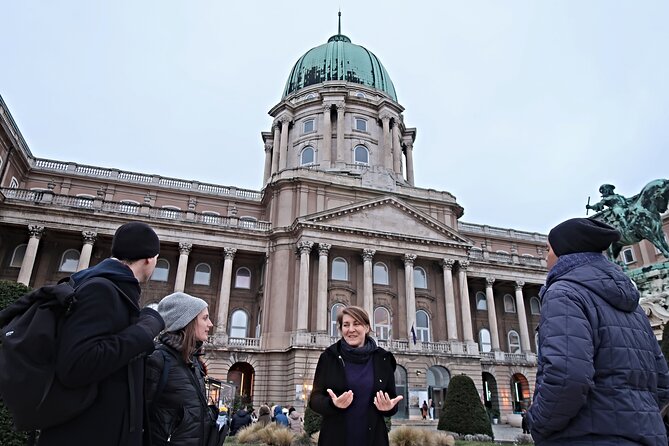
You begin on Castle Hill with the big visual contrast of the palace mass and the colored roof of Matthias Church pointing up from the middle of it all. Even before you get into deep details, this area sets the tone: narrow streets, stone facades, and a skyline that feels concentrated.
At the palace end of the hill, the story you learn is one of repeated reinvention. The building you see today did not appear in one clean chapter. It was rebuilt, extended, altered, burned down, and rebuilt again. Its current eclectic look mostly comes after World War II. That means you’re not just seeing one era. You’re seeing what survived, what was restored, and what got reimagined.
You also get a timeline anchored to rulers:
- Around 1250, King Béla IV erected a fortress after a devastating Mongol invasion by Mongolian hordes.
- In the late 15th century, King Matthias made the court one of the most famous in Europe.
- Then came Turkish rule for over 150 years.
- After that, Hapsburg emperors followed.
This is where the tour earns its keep. Instead of treating “history” as a pile of dates, it turns it into a reason for the mix of architecture and the sense that power kept returning to this hill.
One practical note: this is not framed as a palace interior tour. You’ll focus on the Castle Hill complex and the key exteriors and viewpoints. If you expect to walk room to room inside the palace buildings, you may feel disappointed. The route is built for the district experience, not for a ticketed palace museum circuit.
More walking tours in Budapest:
- Big Bus Budapest Hop-On Hop-Off Bus and Walking Tour
★ 3.5 · 2,206 reviews - Budapest: Buda Castle District Walking Tour
★ 4.6 · 2,108 reviews - Budapest City Landmarks Walking Tour in 2 Hours
★ 5.0 · 2,048 reviews - 3-Hour Orientation Walking Tour of Buda and Pest
★ 4.8 · 1,834 reviews
Stop 3: Sándor Palace and Hungary’s modern seat of power
At Sándor Palace, you shift from medieval and early modern power to modern Hungary. Sándor Palace is the official residence of the President of Hungary and the seat of the Office of the President since 2003. The original palace was commissioned in 1806 in a Neoclassical style by Count Vincent Sándor, an Austro-Hungarian aristocrat and philosopher.
This stop works because it reminds you the hill is not only a museum set. The Castle District still functions as a place of government and national identity. Even if you only spend a few minutes here, it helps connect the earlier chapters of kings and empires to the present day.
If you like the human side of politics, it’s also a nice contrast to the church stop. You’re moving from seats of authority to the spiritual and ceremonial authority embodied by Matthias Church.
Stop 4: Matthias Church roof details and the inside visit

Matthias Church is one of those sights that you understand the second you see the roof. The church is celebrated for its richly decorated roof, and the interior is described as amazing by people who went on this tour.
The building you see today reflects a Neogothic reconstruction from the end of the 19th century. In other words, it is not a simple time capsule from the medieval period. It is a carefully crafted revival look, and that matters when you’re trying to understand what you’re standing in front of.
You’ll spend about 20 minutes here. Entrance tickets are not included, so plan for that cost when you budget. The upside is that you’re not just viewing from outside. This stop is built to be a real visit, with time allocated so you can look at details instead of rushing through.
If you want a memory you’ll keep, this is the stop. Many guided walks in Budapest rush the church area. Here, Matthias Church is treated as a centerpiece.
Stop 5: Fisherman’s Bastion and why the terrace view is worth planning for

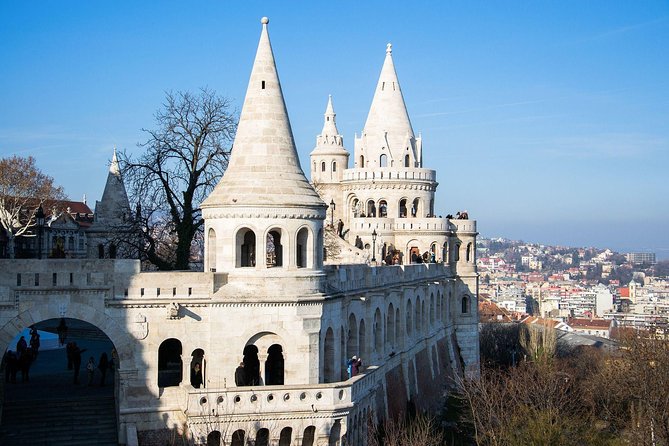
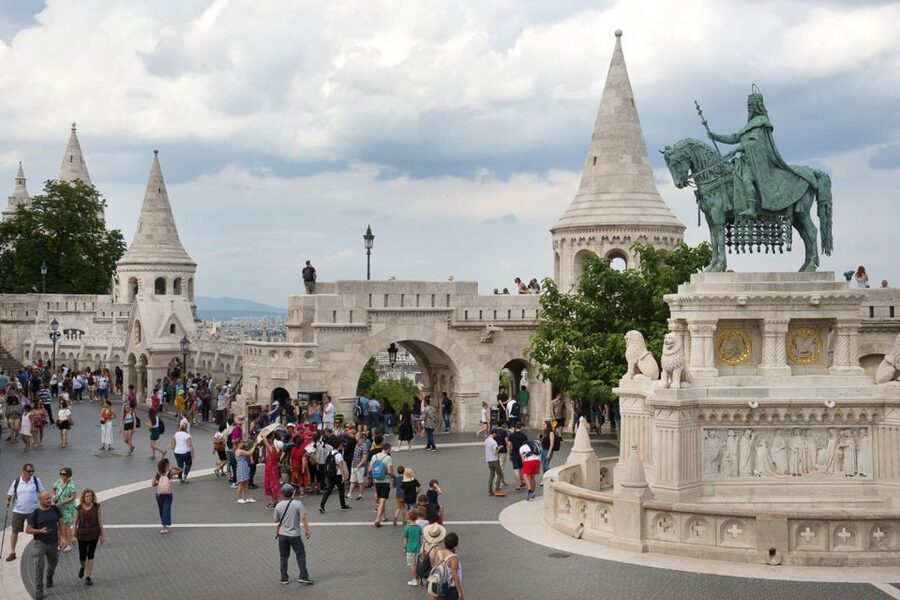
After Matthias Church, you head to Fisherman’s Bastion, an architectural fantasy created between 1895 and 1902 in neo-Gothic and neo-Romanesque styles. The seven towers represent the seven Magyar tribes that settled in the Carpathian Basin at the end of the 9th century.
Even if you know the basics, I like that the tour gives the structure a meaning. Those towers are not random decoration. They’re a visual shortcut to a foundational origin story.
The practical part is the view. The terrace is one of the most famous panoramas over the Danube, Margaret Island, Pest, and the Gellért Hill. That is why this stop is a ticketed one. It’s a viewing experience in a designed public space, so it’s normal that you pay to access fully.
Ticket fees are not included, and you’ll have about 20 minutes here. I recommend using the time like a photographer and like a tourist. Start by taking in the big skyline, then spend a minute or two looking for the bridge lines and the way the river bends. That’s when it starts to feel like a place, not a postcard.
Stop 6: Vienna Gate, plus the view toward Aquincum
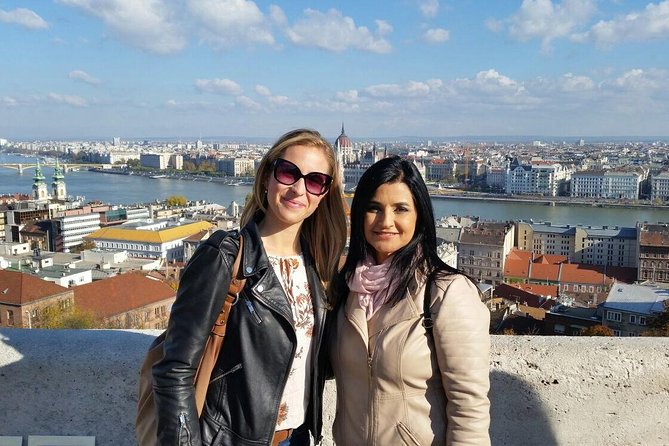
The walk ends at the Vienna Gate. The point here is the sightline. From the gate, you can see as far as Obuda (Old Buda), where the Romans founded the city called Aquincum.
This is a smart ending because it broadens your mental map. You’ve been focusing on one hill and one cluster of buildings, but the view reminds you this city sits on layers that go much deeper than medieval Hungary.
It also helps you stitch the story together. After Mongol invasion, Renaissance courts, Turkish rule, and Hapsburg eras, it’s a nice reset to remember the Romans were already here long before the names changed.
What makes the guides so important on this tour
The most consistent praise is the guide quality and the way the tour fits the group. I’d pay attention to that because Castle Hill can turn into a “see it, snap it, move on” experience if your guide is rigid.
Guides such as Peter and Kata are described as adjusting to personal interests and keeping the pace comfortable. That is exactly what you want when you’re walking on uneven ground. It also means you can ask questions and actually get answers that connect architecture to life in different eras, not just read aloud from a signboard.
Some guides also add personal local context, which is hard to fake. For example, one guide named Gergely shared stories connected to his family neighborhood, including pointing out places with personal meaning like his grandmother’s house. Another guide named Veronica used the district’s odd details, including house names like a red hedgehog building, to help the area feel specific rather than abstract.
If you get a guide like Marianna, you may also hear stories that connect the Castle District to experiences of the 20th century, including what it was like under Soviet occupation. That kind of context is valuable because it turns “history” into how people lived through it.
Tips for getting the most from the walk
A few practical moves can make your three hours feel smoother and more rewarding.
First, plan your day so you are not rushing right after the tour. Castle Hill is worth lingering, and you may want extra time for photos at Fisherman’s Bastion beyond the scheduled stop.
Second, bring a light snack or plan a meal after. The tour does not include food. If you get hungry during the walk, you will feel it more on cobbles and steps.
Third, treat Matthias Church and Fisherman’s Bastion tickets as part of the experience. If you skip those fees, you might miss the two stops that people remember most. If you are okay paying for the full experience, you’ll likely get more from the time you spend listening.
Finally, ask your guide what to look for at each stop. You’ll hear architecture explained in a way that makes it easier to notice details on your own later.
Who should book this tour, and who might want a different option
This tour is a strong fit if you:
- want a small-group Castle District walk instead of a big-bus crowd
- like architecture, but you also want the reason behind it
- are short on time and want the key sights in one loop
- enjoy panoramic views of the Danube area
It may be less ideal if you:
- expect to spend most of your time inside the palace complex itself (this walk focuses more on the district and key sites)
- want a totally ticket-free tour, since Matthias Church and Fisherman’s Bastion have entrance fees
- struggle with hills, cobbles, and stairs, because the route is not flat
If you’re traveling as a couple, with a friend, or with a small family group, this small-group format can feel like the best version of guided sightseeing.
Should you book Buda Castle Walking Tour?
Yes, if you want a smart, story-driven walk through UNESCO Castle Hill with a guide who can adapt and explain the “why” behind the buildings. The money tends to make sense because you’re paying for a real tour guide plus the time at Matthias Church and the terrace viewpoint at Fisherman’s Bastion.
I’d book it soon if you want a specific departure timing, since tours like this are often scheduled ahead. If you are the type who only likes free exteriors and hates ticket fees, you might do better picking self-guided time to wander the Castle District at your own pace. But if your goal is to leave Budapest understanding how power and faith shaped this hill, this tour is a solid choice.
FAQ
How long is the Buda Castle walking tour?
It runs for about 3 hours.
What group size should I expect?
The tour is a small-group experience with a maximum of 6 people per booking, and it can have a maximum of 8 travelers.
Is the tour offered in English?
Yes, the tour is offered in English.
Where does the tour start?
The meeting point is Budapest, Országház u. 31, 1014 Hungary.
Is there a morning or afternoon departure?
Yes. The tour has morning or afternoon departures depending on the day.
Are entrance tickets included for the major sites?
Tickets are not included for Matthias Church and Fisherman’s Bastion. Buda Castle stops are listed as admission ticket free within the tour time blocks.
Is food included during the tour?
No. Food and drinks are not included unless specified.
Can I cancel for free?
Yes. You can cancel up to 24 hours in advance for a full refund.
Recently reviewed around Budapest
- Panoramic hike around Budapest★ 5.0 · 14 reviews
- PRIVATE (7 hours) Budapest and Szentendre city tour with lunch and winetasting★ 5.0 · 4 reviews
- Original Budapest Walking Tour★ 4.0 · 39 reviews
- Budapest Highlights Self guided scavenger hunt and Walking Tour★ 5.0 · 5 reviews
- Original Budapest Alternative Street Art & Jewish Tour★ 4.5 · 14 reviews
- Hungarian Gastro Cellar: Assisted Tasting Options★ 4.5 · 5 reviews
- Bratislava, one day private trip from Budapest with guide!★ 5.0 · 4 reviews
- One hour Hen or Stag private party boat Budapest with unlimited beer and wine★ 3.5 · 6 reviews
Buda Castle Tours, compared.
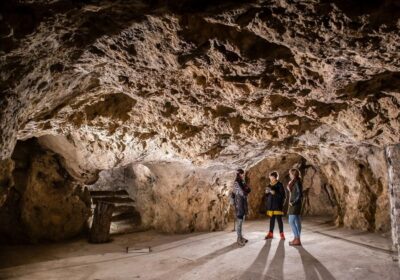

Buda Castle District Vampires and Myths Night Tour
Read our review →
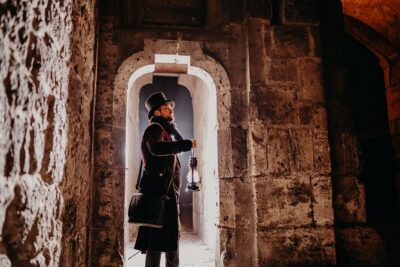
Buda Castle District Dark History, Legends and Vampire Night Tour
Read our review →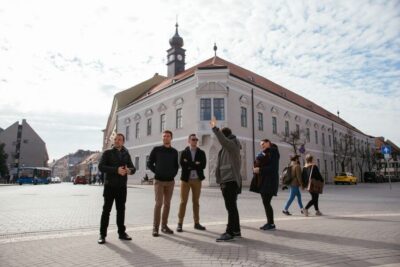
Buda Castle District Walking Tour with a Historian
Read our review →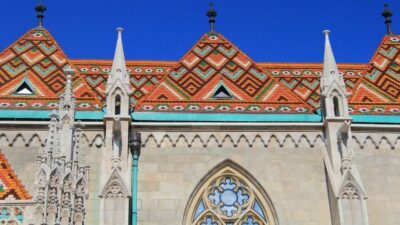

Browse the lists this tour appears in