
Reviewed · COMMUNIST HISTORY TOURS
Budapest: Communist History Tour with House of Terror Option
Budapest’s Communist past is everywhere, even when the buildings look cheerful. What makes this tour interesting is that it stitches together big public symbols, hidden Cold War details, and the human stories behind them in just 2 hours.
I especially like the way the tour starts in central sights like Hungarian Parliament and Liberty Square, so you quickly understand what Communist power meant in the real city. I also like having choices at the end, either the more playful Budapest Retro Center or the heavier House of Terror route.
One drawback to consider: the material can get intense. If you pick the House of Terror option, you should go in with your expectations clear, because the focus is on interrogation, torture, deportations, and political terror.
Key things I’d watch for on this Budapest Communist History Tour
- A Parliament-to-Liberty Square walk that places Communist monuments in context
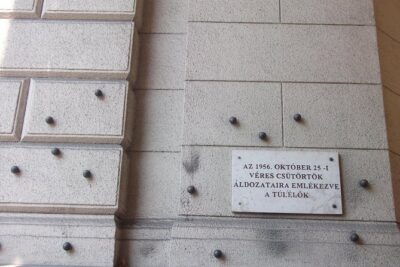
- Cardinal Mindszenty’s exile windows and other anti-Communist markers you might miss on your own
- Cold War leftovers underground, including ventilation channels from a secret nuclear bunker
- Three possible end games: Retro Center, House of Terror self-guided, or House of Terror guided
- Small group size with a limit of 10 people, which helps questions and pacing
- Strong guide presence in English, with guides often praised for clarity and engagement
Communism landmarks, from big monuments to Cold War plumbing
This tour works because it gives you structure. You are not just collecting grim facts. You are walking through the physical “map” of Soviet-aligned power in Budapest, and your guide ties each stop to what it meant for everyday life.
You start at the Hungarian Parliament area, where the tour frames the Communist period against the drama of earlier Hungarian politics. You’ll see monuments, including one commemorating victims of the red dictatorship. Then you move toward Liberty Square, where the Soviet Liberation Memorial sits in the cityscape as a reminder that Communist-era symbols did not vanish overnight.
One of my favorite parts of this kind of route is the way it teaches you how to read Budapest. Even if you are not a history nut, you start noticing meaning in details. In this walk, that includes the contrast between official memorials and anti-Communist references.
More communist-era history tours in Budapest:
- Budapest: 3-Hour Walking Tour About Communism (Small Group)
★ 4.7 · 70 reviews - Communism in Hungary with a Historian
★ 5.0 · 70 reviews - Budapest Hammer & Sickle Communist Times Tour
★ 4.5 · 68 reviews
Hungarian Parliament and the monuments that tell you who controlled the story
The Parliament area is a smart starting point because it signals the stakes. You are in the civic heart of the city, then you start hearing how regimes use public space to shape memory. The guide points out dramatic monuments, including the memorial honoring victims of the red dictatorship.
What I like here is the tone. The walk is framed as education from a local guide trained in history, so the stops feel like a timeline you can follow. And because this is a live, English-speaking guide experience, the explanation stays attached to what you are looking at.
Liberty Square, the Soviet Liberation Memorial, and what stayed behind
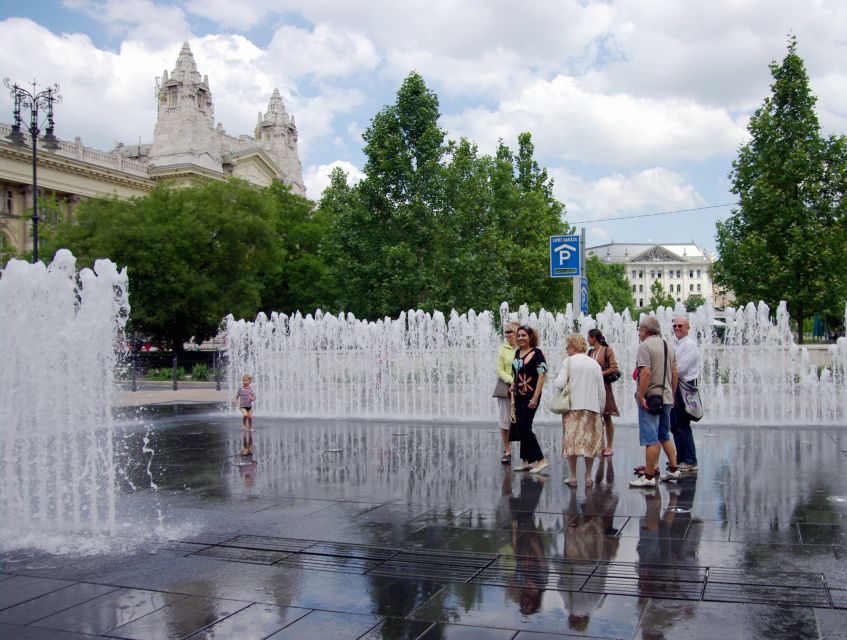
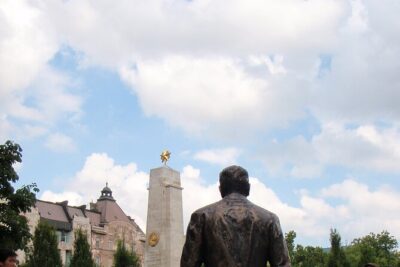
At Liberty Square, you’ll find the Soviet Liberation Memorial, described as the last Communist monument in the city kept in its original place. That single detail matters. It tells you that Communist symbolism got changed and removed in many places, but not everywhere, and not always in the same way.
This is where I think many people start to appreciate the tour’s balance. It is not only about what happened in the past. It is also about how Hungary remembers it now, and where the city still carries Communist-era marks.
If you like photo stops, this is also a good zone. The tour has time for looking and absorbing rather than racing you along like a conveyor belt.
Cardinal Mindszenty’s exile windows: anti-Communist history in plain sight
Next, you’ll explore the famed windows of Budapest, tied to Cardinal Mindszenty, who spent years in exile there. This stop is valuable because it breaks the assumption that all narratives under Communism were about the state. Here you see a major anti-Communist figure anchored to a real location you can stand in front of.
I like this kind of detail because it personalizes the era. Instead of only hearing about the machinery of repression, you also catch the signals of resistance and moral leadership that shaped Hungarian identity during Soviet occupation.
More history-led tours in Budapest:
- Budapest: Historic Cruise with Welcome Drink
★ 4.7 · 6,512 reviews - Budapest Historical Sightseeing – Free Walking Tour
★ 5.0 · 1,302 reviews - Buda Castle District Dark History, Legends and Vampire Night Tour
★ 4.5 · 1,240 reviews - BloodThirsty Hungary: Walking tour & Dark Historical Stories
★ 4.9 · 633 reviews
The secret nuclear bunker ventilation channels, Cold War fear with real hardware
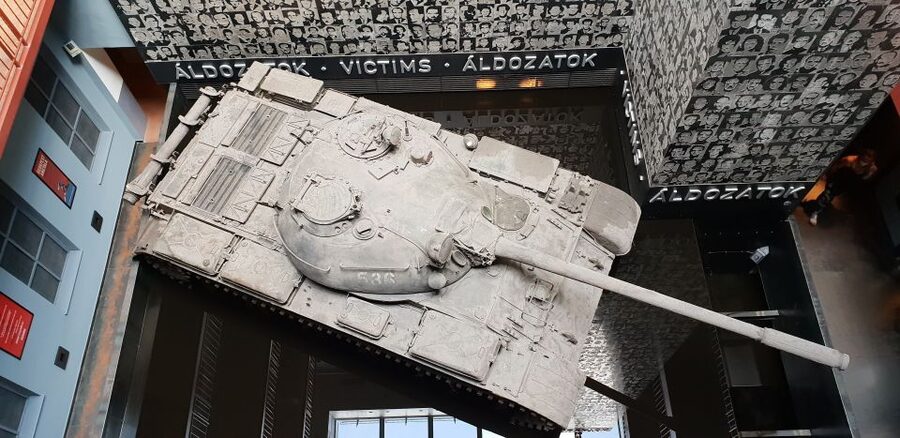
Now you get into the stuff that feels like it should be in a spy movie, but it’s grounded in the city. You’ll hear about and see ventilation channels of a secret underground nuclear bunker, built during the Cold War years.
This is one of those “how did they even think this would be hidden?” moments. And it’s exactly why the walk portion is worth doing. You are not just learning dates. You are seeing physical design that tells you what planners feared, what they expected, and what they were prepared to do.
This is also the kind of stop where good guiding really matters. If your guide explains clearly, you start to understand why this bunker mattered in a Soviet-aligned region, not just as a random relic.
1956 anti-Soviet uprising sites: the turning point you can see
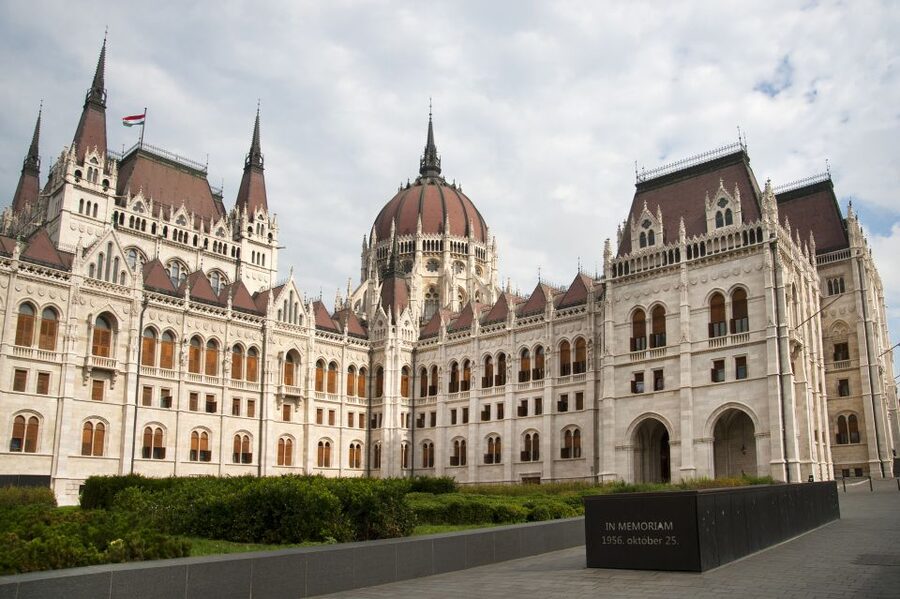
The walk covers the Hungarian anti-Soviet revolution of 1956. Your guide points out sites connected to the uprising and its consequences, so the tour does not treat 1956 like a single event in a textbook.
This part helps you connect the dots. The narrative goes from Communist consolidation under Soviet influence to the resistance that erupted and then reshaped the political future. In a city tour, that kind of context is hard to replicate on your own unless you know the story already.
Your choice after the walk: Retro Center or House of Terror
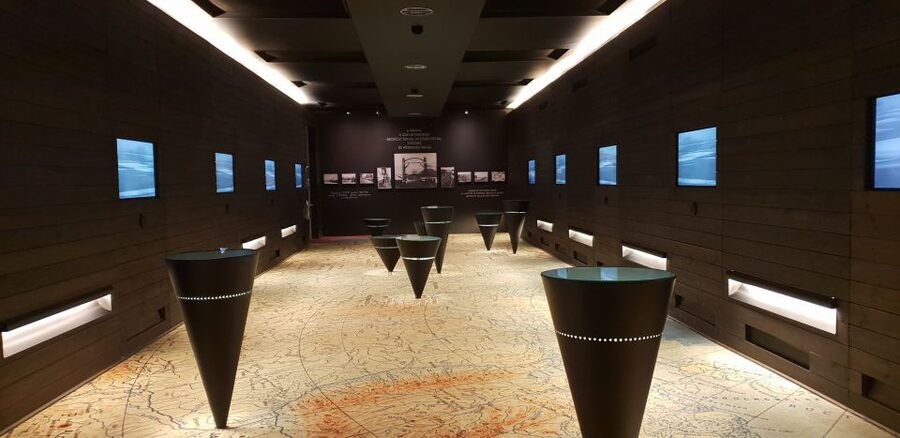
Both day plans share the same walking tour start across central Budapest. Then you choose your ending.
Option A: Morning walk plus 1-hour Budapest Retro Center
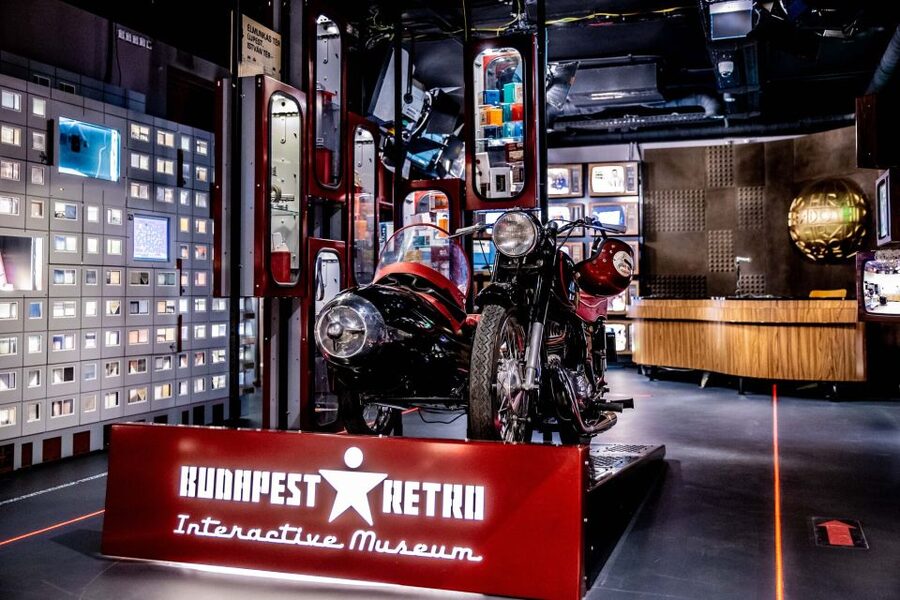
If you book the morning option, you’ll continue after the walk with an invitation to a 1-hour guided visit at the Budapest Retro Center.
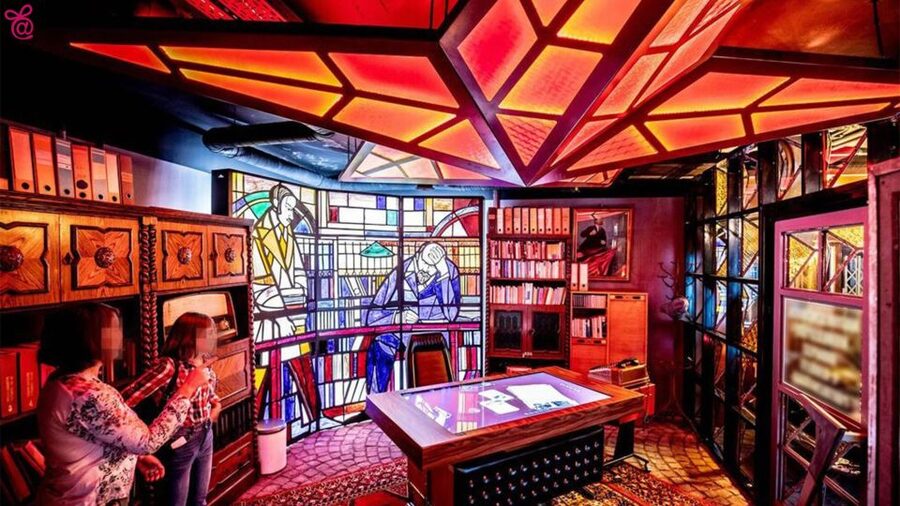
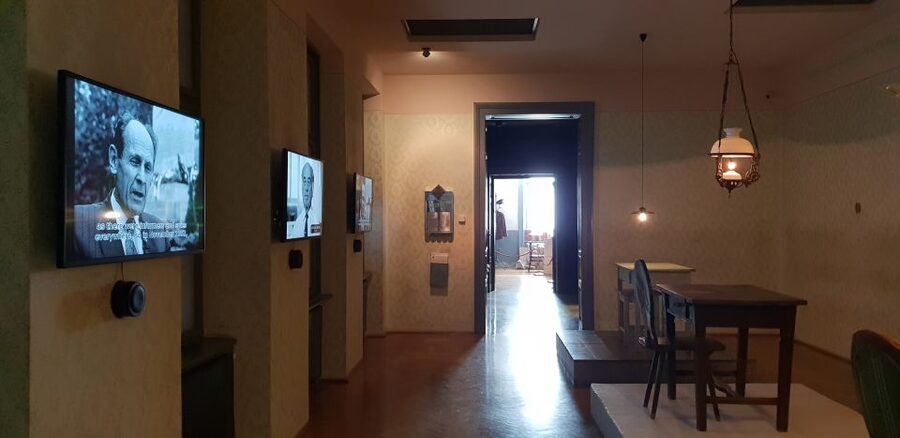
This museum is intentionally different in tone. It focuses on the 1960-1980 era through street views, typical vehicles, and real interior home designs, plus thousands of objects. You’ll also see items connected to the Soviet-Hungarian space flight, including the astronauts theme.
What I really like about pairing the Retro Center with the darker street history is that it changes your angle. You get to see how ordinary life looked in the same period that political repression shaped. And the exhibits are organized over 3 floors in a way that is described as fun and interactive.
Even if you skip the dressing-up part, the chance to wear something like a Communist comrade outfit, or try being a TV news presenter of the time, is a smart way to make the era feel less abstract. It’s a light touch, not a rewrite of history.
Option B: Afternoon walk plus House of Terror Museum ticket (self-guided)
If you choose the afternoon walking tour option, you add a ticket to the House of Terror Museum. In this version, you visit on your own after the walk.
This can be a good fit if you want control over pace. Some people like to read at their speed in a museum with heavy content. Also, because the tour includes skip-the-ticket-line help and your tour guide provides your ticket, you lose less time to logistics.
One note from real experience inside the tour ecosystem: there has been at least one case where the House of Terror was closed for renovations, and the guide adapted the tour to make things work. That tells me your guide’s job is not just to recite facts, but to keep the experience functional when plans change.
Option C: House of Terror guided tour option
For the most guided, most intense version, you can choose the guided tour within the House of Terror Museum.
This is not a surface visit. You follow your guide through Hungary from World War II through Nazi rule to Soviet Communist occupation. The guide covers 1950s life and economy, plus interrogation and torture cells, the office room of the director, and stories connected to mass deportations, labor camps, and political trials.
Then you get the part people often care about most: the 1956 revolution and its consequences, and the eventual end of Communism in 1989.
If you are the type who wants context before you walk the museum rooms, the guided option is the one that usually delivers. It also matters for museums like this, where reading alone can be overwhelming.
And if you get a guide who adds personal perspective, the experience can hit harder in a good way. Names that repeatedly show up with strong comments include Alexandra, Flora, Beata, Bea, Kati, Noémi, and Naomi, often praised for clear explanations, pacing, and patience with questions.
Why the live guide matters more than you expect
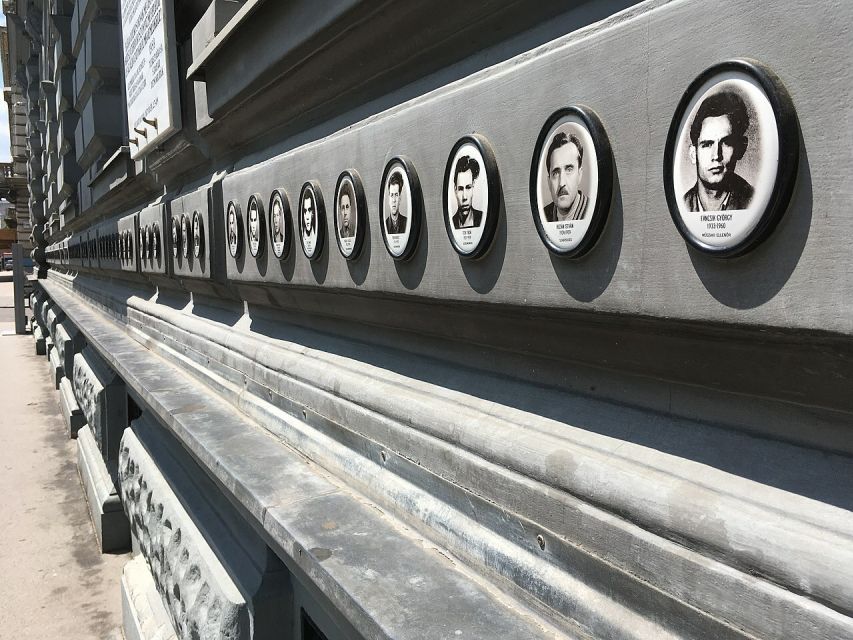
For this tour, the guide is not optional flavor. It’s the product.
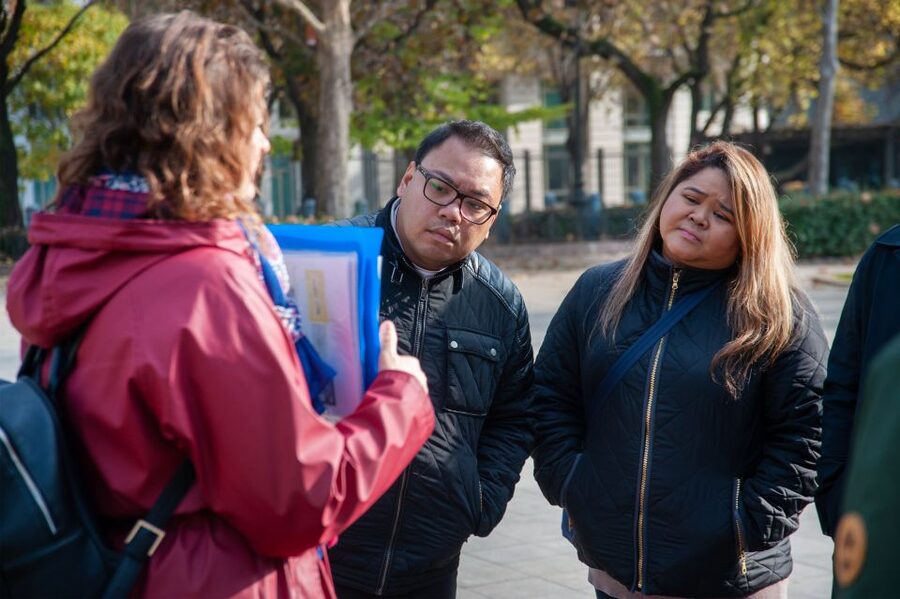
You get a live English guide, in a small group capped at 10. That makes a difference because the route covers emotionally loaded themes and complex political shifts. When the explanation is paced well, you can keep up even if you are not a Hungarian history student.
Also, the tour is run by an autonomous professional guide, not by museum staff. That can be a plus. Your guide can focus on the big story and how sites connect, instead of being limited to what the museum happens to cover in its own format.
One more practical detail: you should not look for your ticket at the ticket office. You receive it from your tour guide. That small change saves stress when you are trying to get started on a tight schedule.
Price and value: is $58 a smart spend?
At $58 per person for a 2-hour experience, the value mainly depends on what you pick at the end.
- If you choose the option that includes an entry ticket to the Budapest Retro Center, you are paying for a guided city walk plus a guided museum visit, and the museum entry is included.
- If you choose the option that includes the House of Terror Museum ticket, you are again getting the guided walk plus entry, with skip-the-ticket-line support included.
- The small group size and live English guide also count. You are not just buying access, you’re buying interpretation.
In plain terms: this price makes the most sense if you care about understanding what you see, not just checking boxes. If you are the kind of person who likes to read on your own and move fast, you might spend less by going solo. But if you want the city’s Communist layers explained in a way that sticks, this is a solid use of your time.
Who should book this tour, and who should think twice
I’d book this tour if you:
- want a guided walk that explains Communist-era Budapest through real landmarks
- like a structured timeline that connects 1940s to 1989
- are curious about both the playful everyday side of the socialist period and the darker realities
- appreciate small groups and time for questions
I’d think twice before booking if:
- you are not up for intense, emotionally heavy content, especially with the House of Terror guided option
- you expect this to be a light overview. Even the Retro Center part still sits inside a bigger historical story
If you have family ties to Hungary or personal connections to the Soviet period, it can feel especially meaningful. Many guides are noted for compassion in the way they handle emotional reactions during the experience.
Practical pacing tips for a tight 2-hour plan
Because the main walk is only part of your total time, plan to keep your schedule simple that day. Wear shoes you can walk in for a city route, and be ready to stop often enough to take pictures and absorb explanations.
Also, choose your ending based on your mood:
- Want context, and you like straight-line learning? Pick the House of Terror guided option.
- Want balance, and you like seeing how everyday life looked under socialism? Pick Budapest Retro Center.
- Want museum freedom after the walk? Pick the House of Terror self-guided ticket option.
Should you book the Budapest Communist History Tour with House of Terror option?
Yes, if you want a well-structured Budapest experience that turns landmarks into meaning fast. The walk portion does a lot of heavy lifting, especially with stops like Liberty Square, the Soviet Liberation Memorial, Mindszenty’s exile windows, and the nuclear bunker ventilation channels.
Book the House of Terror guided option if you want the strongest narrative thread and the most help making sense of interrogation spaces, deportation stories, and the 1956 revolution arc.
Book the Retro Center option if you want a sharper contrast, the kind that helps you see the era as something people lived through, not only something they suffered under.
If you can handle emotionally heavy history, this is one of the most efficient ways to understand Communist Budapest beyond postcards and street names.
FAQ
What options are included in the Budapest Communist History Tour?
You can choose a morning walk with a visit to the Budapest Retro Center, or an afternoon walking tour that includes a ticket to the House of Terror Museum. There is also an option for a guided tour inside the House of Terror Museum.
How long does the tour last?
The duration is 2 hours.
Is there a skip-the-ticket-line benefit?
Yes, you get skip-the-ticket-line support.
Is the tour guided in English?
Yes. The live tour guide language is English.
How many people are in the group?
The group is small, limited to 10 participants.
What’s included in the price?
You get a professional tour guide, the Communist-themed walking tour if that option is selected, and entry ticket to Budapest Retro Experience Center or House of Terror Museum depending on which option you choose.
Where do we meet?
The meeting point may vary depending on the option booked.
Do I need to pick up tickets at the ticket office?
No. You receive your ticket from your tour guide, and you should not look for it at the ticket office.
Is the House of Terror tour provided by museum employees?
No. The tour guide is an autonomous professional, not an employee of the museum.
Can I pay later or cancel if my plans change?
You can reserve now and pay later, and free cancellation is available up to 24 hours in advance for a full refund.
Recently reviewed around Budapest
- Panoramic hike around Budapest★ 5.0 · 14 reviews
- PRIVATE (7 hours) Budapest and Szentendre city tour with lunch and winetasting★ 5.0 · 4 reviews
- Original Budapest Walking Tour★ 4.0 · 39 reviews
- Budapest Highlights Self guided scavenger hunt and Walking Tour★ 5.0 · 5 reviews
- Hungarian Gastro Cellar: Assisted Tasting Options★ 4.5 · 5 reviews
- Original Budapest Alternative Street Art & Jewish Tour★ 4.5 · 14 reviews
- Bratislava, one day private trip from Budapest with guide!★ 5.0 · 4 reviews
- One hour Hen or Stag private party boat Budapest with unlimited beer and wine★ 3.5 · 6 reviews
Communist History Tours, compared.

3-Hour Walking Tour About Communism (Small Group)
Read our review →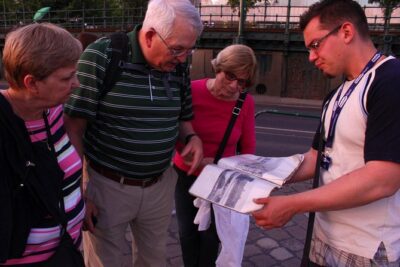
Lives of Hungarians Under Communist and Capitalist system
Read our review →


Memento Park Visit with Private Trabant Transfer
Read our review →
Browse the lists this tour appears in