
Reviewed · COMMUNIST HISTORY TOURS
Private Budapest Hammer & Sickle Communist Times Tour
If you like history that you can literally stand on, this private walking tour is interesting in a hands-on way. You walk through the streets where Nazi repression, communist power, and the pushback against both shaped everyday life and major turning points.
Two things I like a lot: the small-group limit (up to 15) that keeps the pace human and questions in-bounds, and the way the route links big events to specific places, from National Avenue to Wenceslas Square and the Letna Park Stalin statue story. The main drawback to consider is physical, since you do about two hours of continuous walking on uneven ground, high curbs, stairs, and slippery surfaces.
Key highlights at a glance
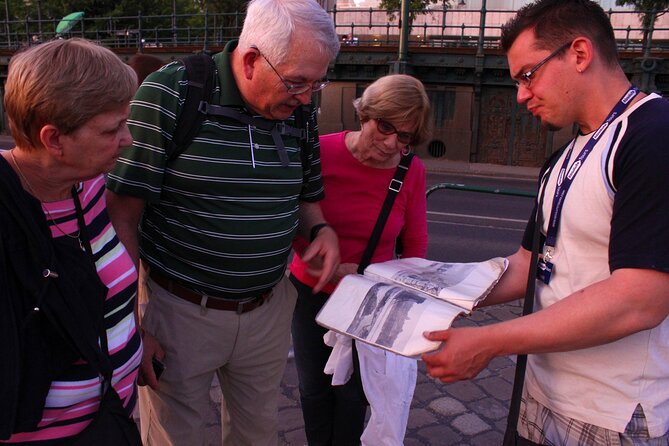
- Up to 15 people, truly private for your group, with a licensed English-speaking expert guide
- A WWII-to–Cold War route that tracks repression, protests, and regime changes street by street
- National Avenue, Wenceslas Square, and Republic Square tied to 1939 protests, the Prague Spring, and 1989 change
- Former Nazi and communist power sites connected to the Gestapo, SS, and KGB
- Letna Park and the Stalin statue built in 1955 and destroyed in 1962
- Real walking time on curbs and stairs, plus a beverage stop to regroup
Budapest in the title, Prague on the ground, double-checking matters
First, a heads-up before you fall for the theme. The tour title includes Budapest, but the named stops and places are all in Prague, including Wenceslas Square, Republic Square, Charles University, and Letna Park. So, do yourself a favor and confirm the city with the operator before you go.
If your booking is correct for Prague, this is a focused way to understand how 20th-century power played out in a city built for movement and views. You’ll be reading the past off the same streets you’d use to stroll for fun.
More communist-era history tours in Budapest:
- Budapest: Communist History Tour with House of Terror Option
★ 4.8 · 182 reviews - Budapest: 3-Hour Walking Tour About Communism (Small Group)
★ 4.7 · 70 reviews - Communism in Hungary with a Historian
★ 5.0 · 70 reviews
Price, pickup, and why the small-group limit is the real selling point
At $133.67 per person for a 3-hour to 3.5-hour experience, you’re paying for a tight group and a guide who can tailor the conversation. This isn’t a huge bus tour where you drift past landmarks while everyone reads the same brochure.
Pickup is offered, but drop-off is not included. That matters because you’ll want to plan how you’ll get back after the tour ends in central Prague. If you’re using transit, note that the meeting area is described as near public transportation.
The other practical win is the cap of 15 people. In a group that size, you can ask follow-up questions, and the guide can slow down when something clicks or you want context. That’s a big deal for a topic like this, where it helps to connect events without getting overwhelmed.
Bartolomejska Street: where the secret police story starts
Your walk begins in central Prague with a short introduction to the 20th-century timeline. Then you start along Bartolomejska Street, a place tied to a former WWII prison.
The tone here is heavy, because this was a prison once used by secret police to torture prisoners. Even if you already know the broad headlines of WWII, standing near a site like this puts human weight on the facts. It’s also a reminder that authoritarian control was physical, not just political.
If you’re sensitive to grim topics, give yourself a minute before you move on. The tour doesn’t sugarcoat, and that is part of why it works for serious history fans.
National Avenue protests in 1939 and again in 1989
From there, you head to National Avenue, a major thoroughfare that divides the Old and New Towns. It’s the kind of street where change is easy to imagine, because it’s built for crowds and movement.
Your guide connects it to student protests against the occupying Nazis in 1939. Then the story flips forward to 1989, when protests grew against Soviet rule. Seeing one avenue hold two different waves of resistance is a sharp way to understand how people carry lessons across generations.
This stop is also where you start to feel the tour’s purpose. The guide is not just listing dates. They’re showing how the same civic space becomes a stage again and again.
A few more Budapest tours worth comparing
- Private Budapest TukTuk Tour: Custom Route, Hotel Pickup
★ 5.0 · 1,307 reviews - Budapest Essentials Private Tour Highlights and Hidden Gems
★ 5.0 · 861 reviews - Budapest Private Tuk Tuk Half-Day Tour
★ 5.0 · 606 reviews - Budapest One Way Private Transfer to or from Airport
★ 4.5 · 548 reviews
Wenceslas Square: the Prague Spring memory and the 1968 tanks
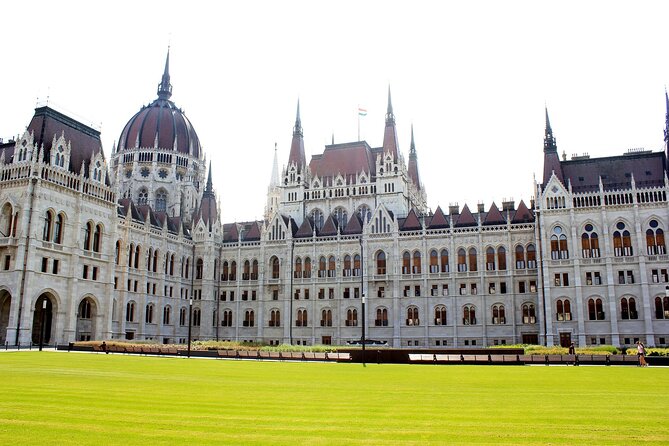
Wenceslas Square is one of the city’s best-known stages for public life, and your tour uses it that way. The square becomes a focal point for Czech struggle against foreign occupation, and the guide walks you through the feel of the moment.
You’ll be asked to imagine the square in 1968 and early 1969, when Soviet tanks rolled in to crush the Prague Spring. The Prague Spring is described here as a period of Czech liberalization that foreshadowed the kind of revolution that later took shape in 1989.
What I like about how this is presented is the shift from abstraction to atmosphere. Instead of treating Prague Spring like a textbook chapter, you’re encouraged to picture how public space looked and felt when major power met major hope.
Republic Square: 1918 independence, 1945 uprising, then communist control
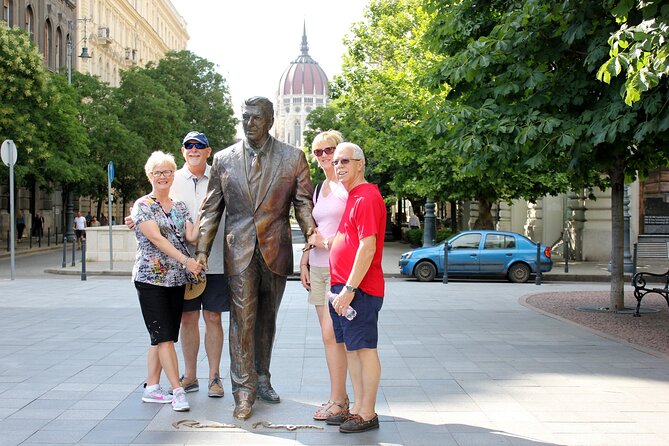
Next comes Republic Square, named after the 1918 proclamation of independent Czechoslovakia. This matters because it gives you a baseline idea of what Czech independence meant before the 20th century started swinging like a wrecking ball.
During WWII, Czech resistance used secret broadcast stations tied to the 1945 Prague Uprising. Then the timeline takes an ironic turn: just three years later, the square became home to the Communist Party.
That sequence is the tour’s strength. You see how quickly a city can move from resistance to control, and you learn not to assume that liberation automatically becomes freedom.
Gottwald’s balcony, Einstein at Charles University, and the Old Jewish Cemetery

The walk then moves through Old Town with extra landmark stops that add texture. One of the most memorable pieces is the balcony where Klement Gottwald declared the takeover of the Czech government in 1948.
You’ll also hear about Albert Einstein during his work at Charles University. The guide connects his theories to the development of the atom bomb, which is a sobering reminder of how scientific progress can collide with political violence.
Then there’s the Old Jewish Cemetery and other landmarks, including sites linked to the Nazi SS and the communist-era KGB. Even when you don’t know the details at first, the physical presence of these places gives the stories somewhere to land.
If you enjoy tours that mix political events with human settings, this part is a good reward. It turns the walk into more than a map of power.
Gestapo, SS, and the KGB, on buildings you can actually point to
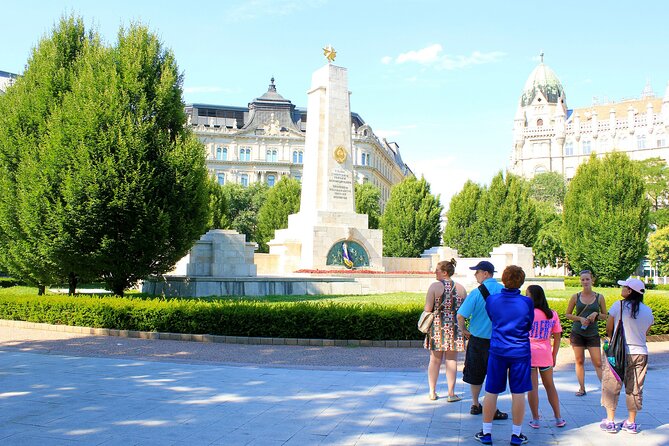
One of the core promises here is seeing the former headquarters buildings connected to major forces: the Gestapo, the Communist Party and KGB, and you’ll also encounter SS-related sites. In tours like this, those names can blur into one big historical soup.
But when you’re standing near the kinds of buildings people used to operate from, it becomes clearer. The guide helps you connect the machinery of repression to a geography you can remember later.
This is also why the tour works as an orientation experience, even if you’re not doing it on day one. It teaches you how to read Prague’s street layout through 20th-century politics, not just through medieval postcard routes.
Letna Park: Stalin’s statue story from 1955 to 1962
You cap the tour at Letna Park on the Vltava River. The riverside setting helps, because it’s a wide view where the city feels open, even while the story is about control and propaganda.
The guide explains the world’s largest statue of Stalin, built here in 1955, and then destroyed in 1962. That rise and fall is a strong final lesson: power changes shape fast, and the symbols it uses can disappear just as quickly.
If you’ve been thinking about how regimes rewrite public space, this is the payoff. You end with a physical example of how political messaging can be erased when the mood of history turns.
Guide quality, pacing quirks, and how to get the route you want
The biggest strength of this kind of tour is the guide. In the feedback you provided, people repeatedly call out guides who answer questions well and bring the era to life with personal insight.
Names that come through include Honza, Martina, Mike, Yonas, and Martin, with praise for guides who were friendly, patient, and able to connect past events to issues that still matter. A couple of guides are also described as having lived through the communist period, which is a unique kind of context you cannot get from plaques alone.
That said, there are pacing considerations. Some comments mention that the order can feel less chronological than you’d expect, or that a scheduled museum portion can take more time than you’d prefer. Others mention being able to adjust the walk on the day to match a focus like Cold War life.
So here’s what I recommend you do to improve your odds:
- Ask for a more chronological approach up front if that’s your style.
- Tell your guide what you want most, for example 1939 resistance, the Prague Spring, or 1989 change.
- Bring questions as you go, not only at the end.
Language can also be a factor. Even with an English-speaking guide, one comment notes it can be hard to understand if English is not strong. If you’re a detail listener, speak up early if you need the guide to slow down or rephrase.
Finally, one outlier experience describes waiting before the walk started and another describes unclear directions to the meeting point. That’s avoidable with a simple move: confirm the exact meeting spot and give yourself extra time.
Practical tips for a fast, sometimes slick 3 to 3.5 hour walk
The route is described as weather-friendly in the sense that it runs in all weather, so you’ll need to dress for cold or rain. One comment even notes a very cold day made the time outside less fun, so bring layers and something warm for your hands.
Most importantly, the tour includes about two hours of continuous walking on high curbs, stairs, and slippery surfaces. This is not a relaxed stroll where you stop every five minutes.
I strongly suggest sturdy shoes with traction. If you get cold easily, pack a hat or gloves. And if you have limited mobility, this is not a good fit based on the walking demands.
There’s also a note that the topic is not recommended for children under 14. That’s partly because the tour handles WWII-era and repression topics, and partly because it’s a physically demanding walk.
You will get a refreshment stop with a beverage. Plan to use it, not just tolerate it. It’s your reset before the later heavy moments and the final riverside ending.
Who this communist-era walking tour is best for
This is a strong choice if you want to connect WWII and Cold War themes to actual streets, squares, and building locations in Prague. You’ll like it if you’re the type who reads signs and then asks, why was this here, and what did people do in response?
It’s also great for history buffs who want a guide with lived-in context. When the guide brings in personal perspective from the communist period, the stories stick better because they’re not only dates and factions.
If you’re traveling as a couple or small group, the private format makes sense. With up to 15 people, you can still feel like you’re in a conversation rather than listening to a loud lecture from far away.
Should you book this Private Hammer & Sickle Communist Times Tour?
Book it if:
- You care about WWII, communism, and protest movements in Prague, and you want the route tied to well-known squares like Wenceslas Square and Republic Square.
- You like walking tours led by a strong guide who can answer questions and personalize your focus.
- You’re comfortable with a fast pace and rougher pavement, curbs, and stairs.
Skip or reconsider if:
- You have limited mobility. This tour is described as unsuitable due to continuous walking, stairs, and slippery surfaces.
- You’re traveling with kids under 14.
- You want a super chronological, museum-style day indoors with lots of sitting breaks.
If you’re on the fence, treat this as a “get the context first” tour. It makes the city’s modern identity feel less random, because you’ve seen how power, protest, and symbolism changed right in front of you.
FAQ
How long is the tour?
The tour runs about 3 hours, approximately, and is described as a 3.5-hour walking experience.
Is pickup included, and do I get drop-off?
Pickup is included. Drop-off is not included, and the tour ends in central Prague.
How big is the group?
It is limited to a small group, with numbers capped at 15. It is also a private tour, so only your group participates.
What languages are offered?
The guide is described as a licensed English-speaking expert guide.
Do I need an admission ticket?
An admission ticket is listed as free, and a mobile ticket is included.
What is included during the tour?
You get the licensed English speaking expert guide, a refreshment stop with a beverage, and pickup.
Is this tour good for children?
The topic is not recommended for children under age 14.
Is the tour accessible for people with limited mobility?
No. It involves about two hours of continuous walking on high curbs, stairs, and slippery surfaces, making it unsuitable for limited mobility.
What should I wear or plan for weather?
The tour runs in all weather. Dress appropriately, and expect time outdoors with uneven surfaces.
What is the cancellation policy?
Free cancellation is available up to 24 hours in advance for a full refund. Canceling less than 24 hours before start time does not receive a refund.
If you want, tell me your travel dates and whether you’re starting from a specific hotel area in Prague, and I’ll suggest the simplest way to plan for pickup and getting back after the walk.
Recently reviewed around Budapest
- Budapest: Vacation Photographer to collect great memories★ 5.0 · 49 reviews
- From Budapest: Guided Tour of Eger with Wine Tasting★ 4.5 · 6 reviews
- Budapest: City Bike Tour with Coffee Stop★ 5.0 · 37 reviews
- Budapest: Danube River Views Bike Ride★ 4.8 · 23 reviews
- Walk to recent and aged spiritual sanctuaries near Budapest★ 5.0 · 5 reviews
- Budapest: Guided Tour of the Parliament Building in Spanish★ 4.6 · 1,240 reviews
- Budapest: Private Walking Tour with a Local Guide★ 3.6 · 6 reviews
- Budapest: 3-Hour Trabant Sightseeing Tour★ 4.7 · 28 reviews
Communist History Tours, compared.
Communist History Tour with House of Terror Option
Read our review →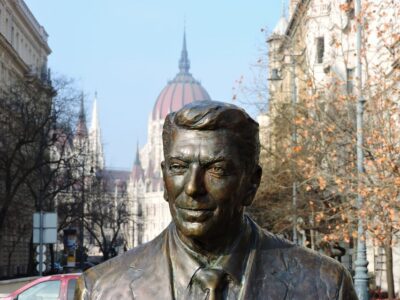
3-Hour Walking Tour About Communism (Small Group)
Read our review →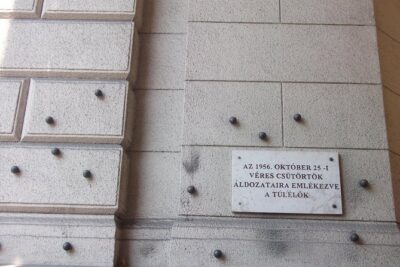
Lives of Hungarians Under Communist and Capitalist system
Read our review →
Memento Park Visit with Private Trabant Transfer
Read our review →Browse the lists this tour appears in