
Reviewed · BUDA CASTLE TOURS
Gems of the Budapest Castle District Walking Tour
This tour is interesting because it turns the Castle District into one walkable story, where religion, royal power, and wartime scars are explained right where you stand. I especially like the way the guide connects the symbols on monuments to what they meant for Hungarians, not just what they look like.
I also like the pacing. You get short stops for facts, plus a few built-in moments to slow down and take photos, especially at Fisherman’s Bastion and the castle viewpoints. One possible drawback is that it’s still a lot of walking and hill paths in about 2 hours 10 minutes, so bring good shoes and expect uneven ground.
Key highlights you will feel right away
A 3:00 pm start that catches the hilltop light for photos
All major stops are free admission on the tour plan, so you keep moving
Big sight list in a short time, capped at 45 people
Photo time at Fisherman’s Bastion plus multiple sculpture and courtyard moments
WWII siege and aftermath context mixed into the royal and religious landmarks
English guide quality is a real focus, including Antel on some departures
Castle District, explained street by street
Budapest’s Castle District can feel like a museum you have to decode. This walk does the decoding for you. You start at the Holy Trinity area, then move through churches, lookout points, statues tied to national identity, and the castle grounds themselves.
The result is that you stop treating each building as a separate postcard. Instead, you see how they connect: monarchs, national myths, and even the trauma of the siege show up again and again in different forms.
More Buda Castle and Castle District tours:
- Budapest: Buda Castle Cave Tour
★ 4.7 · 5,677 reviews - Budapest: Buda Castle District Vampires and Myths Night Tour
★ 4.6 · 3,830 reviews - Budapest: Buda Castle Walk with Saint Stephen’s Hall
★ 4.5 · 3,012 reviews
The timing and pace: 2 hours 10 minutes, lots of stops
The tour lasts about 2 hours 10 minutes, and it covers a long stretch of the hilltop area. That means you are not lingering for long inside any single place. Most stops are short, around five minutes, with a couple longer photo or story moments.
This pacing is actually part of the value. It helps you get a coherent overview fast, then gives you a clean shopping list of what to return to later on your own. If you are the type who likes to read every plaque for an hour, this may feel quick. But if you want context and a smart route, it works.
Meeting point to final stroll: from Szentháromság u. to Varkert Bazar
You meet at the Holy Trinity Statue on Szentháromság u., 1014, then you end at the Castle Garden Bazaar near Ybl Miklós tér 2-6, 1013, right by the Castle Garden and the foot of the hill.
That end location matters. Castle Garden Bazaar puts you near more walking options and food stops, and it is a natural jumping-off point to continue exploring without backtracking.
Holy Trinity Statue: symbolism you can spot in minutes
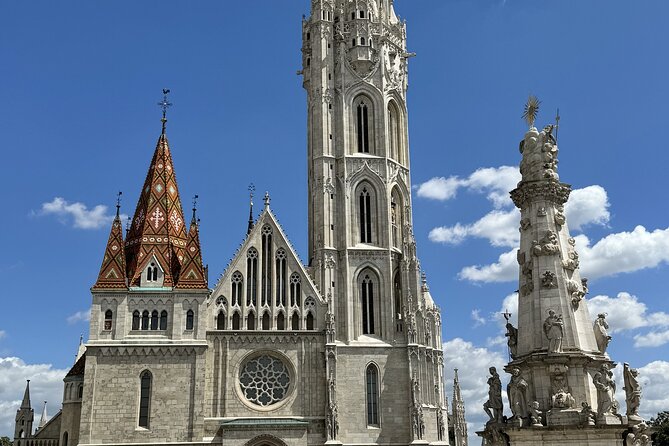
The walk begins with the Holy Trinity Statue. You will hear how it was constructed and what the figures are meant to symbolize. Even if you normally skip statuary details, this one pays off because it teaches you a way to look at the rest of the sites on the route.
The big win here is orientation. You learn the habit of asking, what is the symbol doing, and why would it matter in Hungary?
More walking tours in Budapest:
- Big Bus Budapest Hop-On Hop-Off Bus and Walking Tour
★ 3.5 · 2,206 reviews - Budapest: Buda Castle District Walking Tour
★ 4.6 · 2,108 reviews - Budapest City Landmarks Walking Tour in 2 Hours
★ 5.0 · 2,048 reviews - 3-Hour Orientation Walking Tour of Buda and Pest
★ 4.8 · 1,834 reviews
Matthias Church: the foundation story and the architectural clues
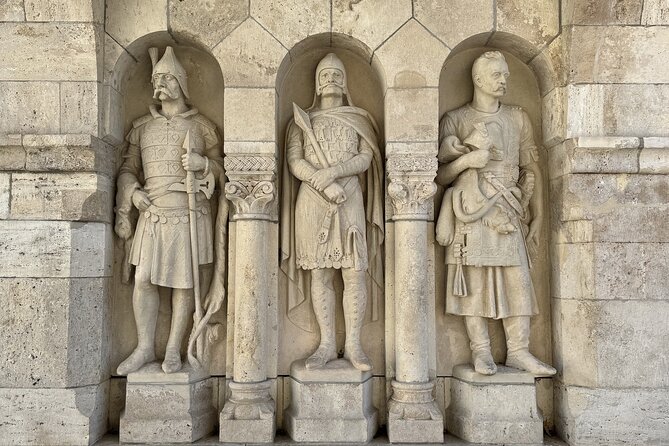
Next comes Matthias Church, with a quick story about its foundation and what to notice in the architecture. The stop is brief, but it helps you avoid the common trap of admiring a beautiful building without understanding what makes it historically significant.
When you move on, that context keeps you from treating each church stop like a repeat of the last one. You start noticing how styles and meanings shift.
Fisherman’s Bastion: statues, legends, and a real Pest view break
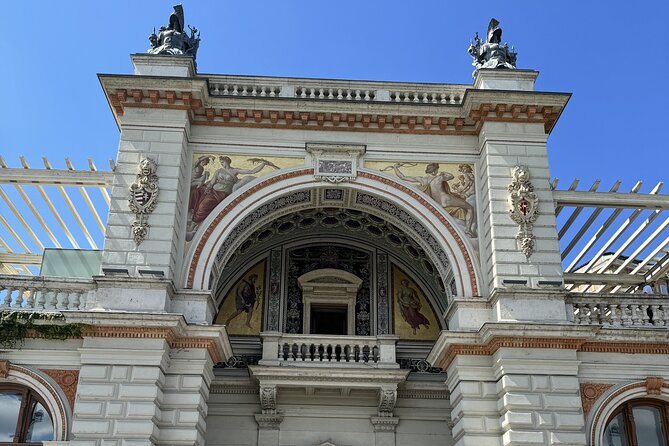
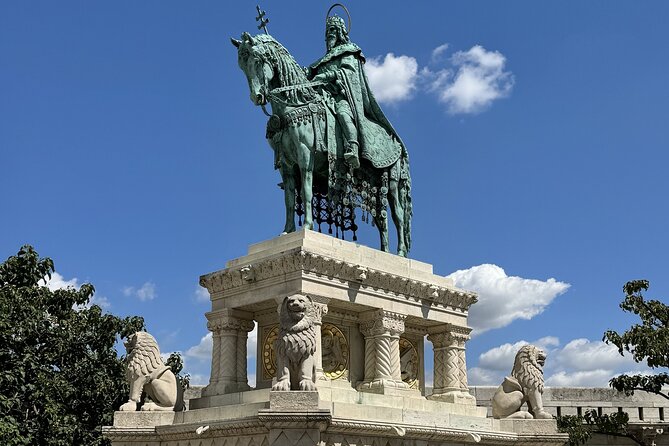
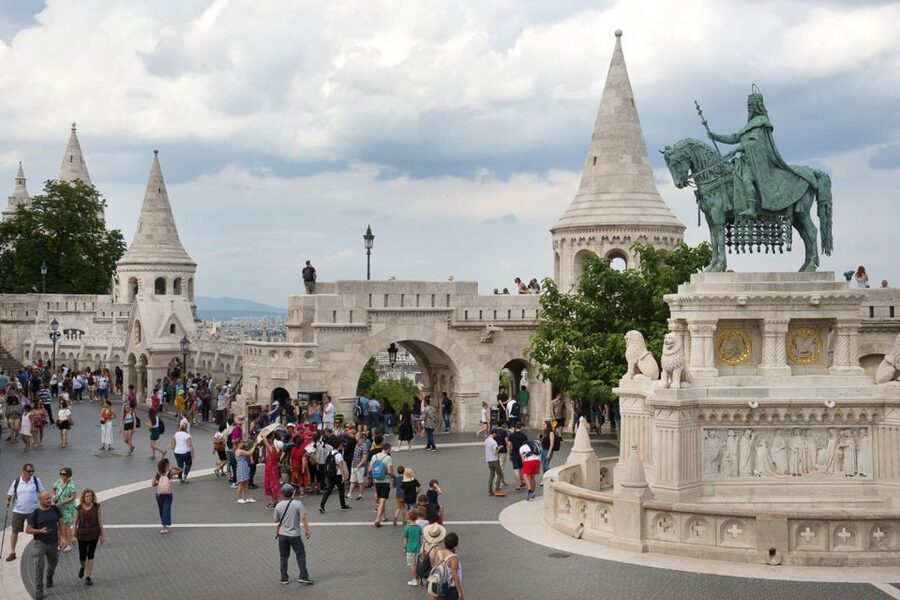
Fisherman’s Bastion is the tour’s visual payoff. You get time for interesting statues, plus an explanation of the double cross connection and how it relates to the Hungarians. You also get panoramic Pest views, which is one of those moments where the explanation and the view reinforce each other.
There is also talk of intriguing legends, so you are not just looking at stonework. The planned pause is there so you can take photos without feeling rushed.
Practical tip: bring your camera settings down to something you trust. From the Bastion viewpoints, lighting can shift quickly as clouds move over the river.
Statue stop skills: Pope, kings, and the oldest building clue
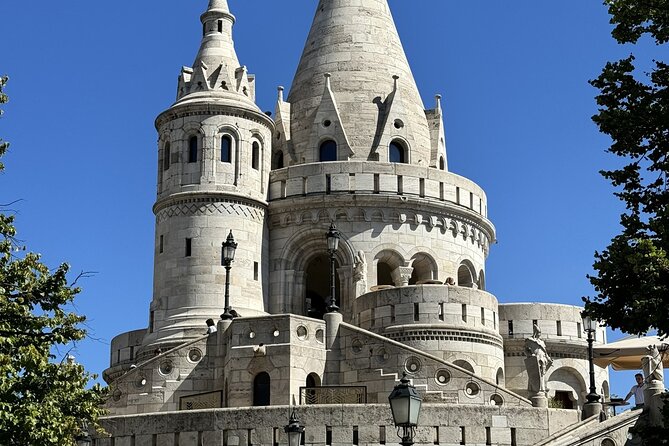
The tour then moves into another statue cluster area featuring the Statue of Pope Innocent XI, along with references to Pope Sylvester II and a coronation statue of King Matthias. You also get a pointer to the oldest building of Hungary as part of this portion.
This is a good example of what the guide does well on this route. Instead of listing names, the stop teaches you how the statues fit into the larger story of rule and legitimacy.
National Archives and the Viennese gateway feel
The National Archives stop focuses on architectural wonders and specific features you might otherwise miss. You will hear about the Vienna gate, plus golden signatures by Uri street.
Then there are nearby statues and their tales. This is one of the more detail-rich stops, and it is worth paying attention even if you are not a documents-and-archives person. Why? Because it shows how public buildings in this district were designed to project identity and authority.
Saint Mary Magdalene and the coronation mantle memory
At the Church of Saint Mary Magdalene, you will learn about the monument linked to the coronation mantle of Hungarian kings. You also get the darker layer: ruins from World War II.
That mix is important. The Castle District is often marketed as royal and romantic, but this stop reminds you it also carries scars. You see how national identity gets preserved even through destruction.
Arpad Toth Promenade (Setany): WWII markers and cannon row
Next is the Arpad Toth Promenade, also known as Setany. This section leans hard into WWII and siege history. You will learn about the first flag after World War II, the row of cannons, and how to connect what you see with what happened during the siege of Budapest.
You also get views back over the Buda hills, plus references to the Statue of the Szekely Knight. It is a strong reminder that the hilltop is not just for kings and churches. It was part of the fight, and later part of remembrance.
Mounted Andras Hadik: knight stories and a food connection
The Statue of Mounted Andras Hadik is focused on the most famous Hungarian knight in the tour narrative. You also get local trends mentioned in this stop, plus a link to the oldest Hungarian Confectionery.
This is a fun shift. After serious themes, the tour briefly reminds you that this district still lives in everyday habits, from what people snack on to how local memory shows up in small references.
The Labyrinth cave: dungeon legend and Dracula vibes
Then comes the Labyrinth, described as a natural cave that was used as a dungeon. You will also hear the Dracula or Vlad the Impaler style story associated with it.
Even if you know the popular versions of the Dracula myth, it is still a memorable stop because it is grounded in a physical place. You can look at the cave setting and understand why stories would cling to it.
Independence War statue: 1848 context and symbolism links
The Statue of Independence is tied to the Hungarian revolution of 1848. The guide connects the symbolisms of the statues to the original war, so you learn what the monument language is trying to communicate.
This portion also includes a reference to the House of Houdini. It is the kind of detail that keeps the route from feeling like straight lecture mode.
Szent György Street: power buildings and medieval ruins hints
On Szent György Street, you will see offices of the president and prime ministers. You also get hints of medieval castle ruins and some secret-story style anecdotes.
This is where the Castle District feels most like a real working area, not a frozen historic set. It helps you understand why the district has constant relevance, not just weekend tourism energy.
Buda Hill Funicular: why this ride matters even on foot
The tour passes by the Buda Hill Funicular, described as the second oldest funicular. You will also hear about a zero kilometer stone and the oldest bridge of Hungary as part of this stop.
Even if you do not plan to ride, it helps to know the mechanics behind how people historically traveled up and down this hill. It also gives you a mental map for where future shortcuts and viewpoints are.
Turul Bird Statue and the naming story behind it
The Turul Bird Statue is about Hungary’s national bird and the storyline of how the Hungarians were named. This is one of those stops where an explanation can turn an outdoor sculpture into something you actually understand.
If you like national symbols and origin myths, you will enjoy this part most. If you do not, the key is to at least take the time to read how the guide links the symbol to identity.
Fountain of King Matthias and the romantic-tragedy angle
Next is the Fountain of King Matthias, described as the prettiest fountain of Budapest, with a romantic-tragedy story behind it. The stop is short, but this is a great example of how the tour makes beauty come with a meaning.
It also helps you keep your interest level up. You are not constantly thinking history. Sometimes you get a human story.
Lions Court and the Royal Riding Hall: castle facades with character
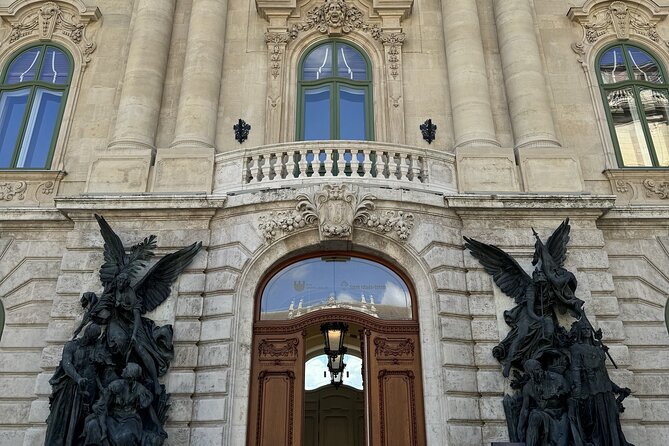
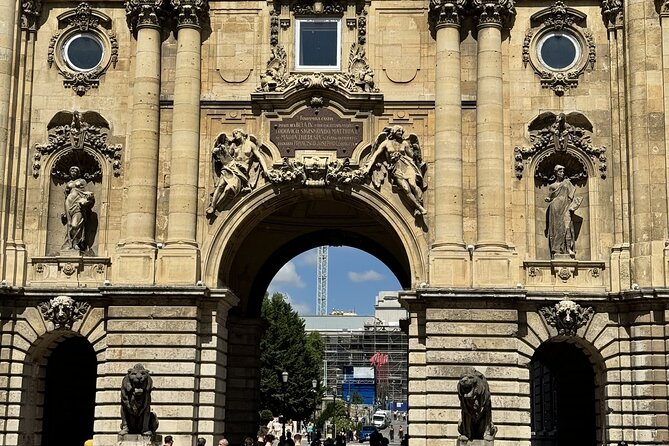
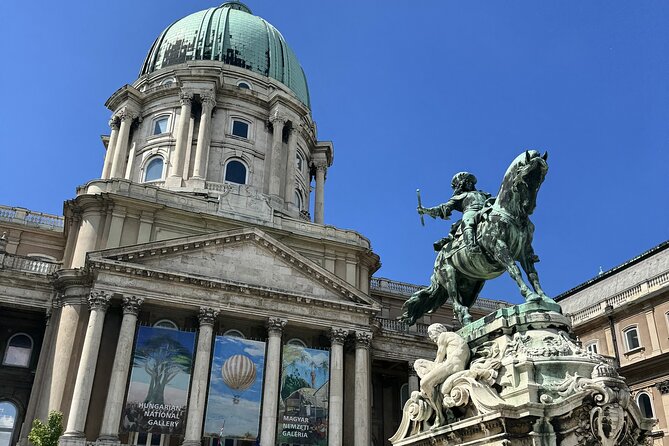
At Lions Court in Buda Castle, you will spend time in the courtyard, with mythical statues and explanations on the facade. Then you move to the Royal Riding Hall, described as the royal Hungarian stable.
Both stops are brief, but they teach you what to notice next time you visit the area. Courtyards and stable buildings often get skipped, yet they help complete the picture of court life beyond palaces.
Prince Eugene of Savoy, S. Maria Mater Dei, and the big-people monuments
The route includes Prince Eugene of Savoy’s equestrian statue, described as the biggest statue of the castle district and a liberator narrative from the Ottomans. After that, you get S. Maria Mater Dei, showing the Virgin Mother Mary and baby Jesus, plus bridges in Budapest linked to Hungarian monarchs.
Together, these stops show the district’s two major languages. One is national military story. The other is faith and dynastic symbolism.
Castle Garden and the Varkert Bazar finish
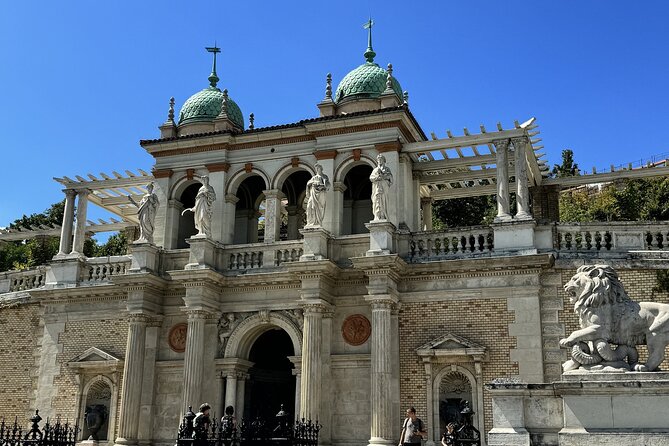
You wrap up with Castle Garden. You will see the spiral staircase tower and the Triton fountain. The final stop is Castle Garden Bazaar, with attention to the Varkert Bazar architecture and statues on the facade.
This is a satisfying ending because you get a shift from monuments and legends to garden atmosphere. Even if you only take a few minutes, it makes the walking route feel complete.
Price and value: why this $3.61 tour can still be worth your time
The price is listed at $3.61 per person, and it is hard not to smile at that. At this level, you are paying mainly for the live guide and the route design that keeps you from getting lost between meaningful stops.
The value is strongest if you do not want to spend your first afternoon figuring out what to prioritize. In about two hours, you get a guided tour of a large chunk of the district, with photo breaks and free admission ticket stops noted across the route.
Two notes to keep expectations realistic. First, the low price does not mean you will get deep time inside every building. Second, you will still be doing hill walking, so it is not effortless.
Group size and why the guide quality matters
The tour caps at 45 travelers, which helps with pacing. It is big enough to feel social, but small enough that you are usually not stuck behind a crowd the entire time.
Live guide, offered in English, is the real engine here. The route relies on explanations, not just viewing.
One guide name you may hear associated with strong English delivery is Antel. The way he is described, clear English and humor are part of the package, and he is attentive to the details that most people miss on a first Castle District visit.
Who this tour fits best
This works best for you if you want quick context and a smart route through the Castle District. It is also a good fit if you like variety: churches, national symbols, WWII markers, caves, fountains, and royal courtyard spaces all show up.
It may be less ideal if you want slow museum time, or if you dislike stairs and walking on uneven ground. Also, it runs best with good weather, since the route is outdoors.
Should you book this Budapest Castle District walking tour?
I would book it if you are visiting the Castle District for the first time and you want your bearings fast. The combination of symbol explanations, multiple viewpoints, and built-in photo time gives you a lot for a very small price.
I would skip or swap plans if you are looking for long indoor visits, or if you cannot handle steady outdoor walking on a hill. If the forecast is shaky, consider waiting for a better weather window, since this one is marked as requiring good weather to run smoothly.
If you book, pack light, wear sturdy shoes, and let the route do the decision-making for you. After this, you will know exactly what to revisit on your own time.
FAQ
How long is the Gems of the Budapest Castle District Walking Tour?
It runs for about 2 hours 10 minutes.
What language is the tour offered in?
The tour is offered in English.
Where do I meet and where does the tour end?
You start at the Holy Trinity Statue at Szentháromság u., 1014 Hungary. You finish at Castle Garden Bazaar near Ybl Miklós tér 2-6, 1013 Hungary.
Is there a mobile ticket?
Yes, the tour includes a mobile ticket.
Are there any admission costs for the stops?
Each stop on the tour plan is listed as having free admission tickets.
How large is the group?
The tour has a maximum of 45 travelers.
Is the tour affected by weather?
Yes, it requires good weather. If it is canceled due to poor weather, you will be offered a different date or a full refund.
Are tips included in the price?
No, tips and gratuities are not included.
Recently reviewed around Budapest
- Panoramic hike around Budapest★ 5.0 · 14 reviews
- PRIVATE (7 hours) Budapest and Szentendre city tour with lunch and winetasting★ 5.0 · 4 reviews
- Original Budapest Walking Tour★ 4.0 · 39 reviews
- Budapest Highlights Self guided scavenger hunt and Walking Tour★ 5.0 · 5 reviews
- Hungarian Gastro Cellar: Assisted Tasting Options★ 4.5 · 5 reviews
- Original Budapest Alternative Street Art & Jewish Tour★ 4.5 · 14 reviews
- Bratislava, one day private trip from Budapest with guide!★ 5.0 · 4 reviews
- One hour Hen or Stag private party boat Budapest with unlimited beer and wine★ 3.5 · 6 reviews
Buda Castle Tours, compared.

Buda Castle District Vampires and Myths Night Tour
Read our review →
Buda Castle District Dark History, Legends and Vampire Night Tour
Read our review →
Buda Castle District Walking Tour with a Historian
Read our review →

Browse the lists this tour appears in