
Reviewed · JEWISH HERITAGE TOURS
Budapest Jewish Heritage Tour
Budapest’s Jewish Heritage Tour stands out because it uses the streets as a map, and the landmarks as evidence. You walk, you ride a bit of public transport, and you hear the kind of context that does not show up on a quick photo stop. Expect a mix of sacred places and memorials, plus today’s culture in the Jewish quarter.
I love how the tour starts at the Great Synagogue and then keeps going in a logical flow, from big history to smaller, human details. I also really like that you travel with a professional guide, and in this case, György Rashad Salamon or another local guide leads the group with an attentive, serious tone.
One consideration is that entry tickets are not included for key stops, and you should plan for extra costs plus security time inside synagogues. Also, the memorial portion is emotionally heavy, so this is not the best match if you want only light sightseeing.
Key highlights worth your time
- Dohány Street Synagogue visits include major memorials on site, including the Wallenberg Memorial Park
- Hungarian Jewish Museum and Archives packs serious artifacts into a short stop, with standout items like an early Torah finial
- Jewish Quarter focus on local art, shops, and ruin bars helps you connect past and present
- Orthodox community stops at Kazinczy Street Synagogue and Rumbach Street Synagogue, with the latter currently under reconstruction
- Shoes on the Danube Bank gives you the story behind the famous memorial, not just the view
Why This Jewish Heritage Tour Works in Four Hours
This tour feels well paced because it balances three types of stops: major sites with formal history, smaller places that show daily life, and a memorial that forces you to slow down. The result is not just a list of places. You get the why behind the geography.
You also get a private group setup, up to 10 people, which matters in a neighborhood where it is easy to get distracted by cafés, bars, and side streets. With a guide, you stay on track, but you still have room to ask questions. One of the best parts is how guides keep the day moving without rushing the emotional parts.
And yes, there is room for light moments, too. From guide stories shared during the walk, you can get small bits of local flavor, like references to chimney cake and local everyday talk, even during solemn topics. That blend helps the history land without turning the whole outing into one long funeral mood.
More Jewish heritage and synagogue tours in Budapest:
- Budapest Jewish Heritage Memorial Walking Tour & Synagogue Entry
★ 5.0 · 568 reviews - Budapest: Jewish Heritage Guided Tour with Synagogue Ticket
★ 4.8 · 533 reviews - Walking Tour Budapest incl. the Shoes on the Danube Bank
★ 5.0 · 387 reviews
Meet Your Guide at 2:30 PM, Then Get Oriented Fast
The tour starts at 2:30 pm, and it runs about 4 hours total. You get hotel pickup offered, and the day uses a mix of walking plus public transport, so you are not stuck walking every step in heels or heavy boots.
This is one of those experiences where meeting the guide at your hotel helps. You avoid the awkward early hunt for the right metro entrance or the exact starting corner. In practice, it also makes it easier for you to settle in, because you are already in Budapest and not trying to decode transit instructions while learning history.
You will also get a mobile ticket and transportation tickets included. That sounds minor, but it cuts down on the friction that can happen when you are hopping between neighborhoods. If you want a smoother afternoon, this setup helps.
Dohány Street Synagogue and Its Memorials: The Day’s Heavy Start
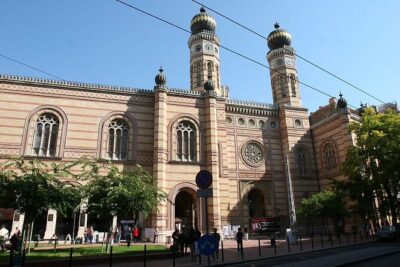
Your first stop is Great / Central Synagogue, the Nagy Zsinagoga, known as the Dohány Street Synagogue. This is billed as the world’s second largest synagogue, and it lives up to the scale in a way that is hard to capture in a single picture. When you stand inside, the sheer presence supports the historical weight of what you are learning.
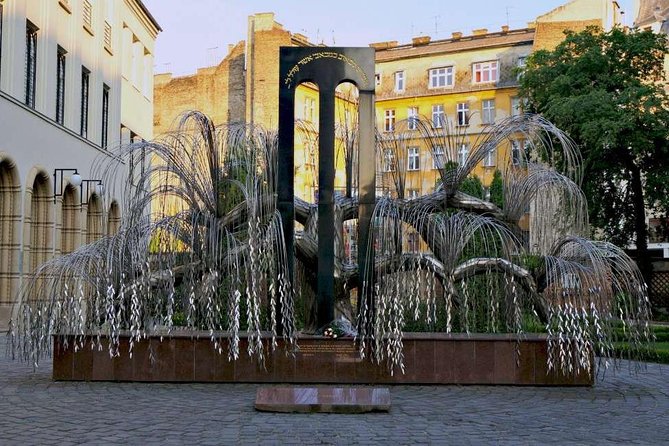
What makes this stop especially strong is the way it is paired with memorials on site. You have time to explore exhibitions and memorial spaces, including the Holocaust Memorial, the Cemetery of Heroes, and the Tree of Life with the Wallenberg Memorial Park. Instead of treating these as separate attractions, the guide ties them into the story of the community and what people lost.
The stop time is about one hour, and that is a sweet spot. Long enough to take in the major elements, short enough that you are not wiped out before you reach the next parts of the Jewish quarter.
What you should watch for
Admission is not included here, so plan on paying entry fees at your own cost. Also, expect some topics to be stark. The guides keep the narration factual and respectful, but you should still treat this as a serious visit.
More history-led tours in Budapest:
- Budapest: Historic Cruise with Welcome Drink
★ 4.7 · 6,512 reviews - Budapest Historical Sightseeing – Free Walking Tour
★ 5.0 · 1,302 reviews - Buda Castle District Dark History, Legends and Vampire Night Tour
★ 4.5 · 1,240 reviews - BloodThirsty Hungary: Walking tour & Dark Historical Stories
★ 4.9 · 633 reviews
Hungarian Jewish Museum and Archives: Small Time, Big Meaning
Next you head to the Hungarian Jewish Museum and Archives for about 30 minutes. It is not a full day museum experience, but it is a smart, focused stop. In a half-day format, a short museum visit works best when you pick the right items, and this museum is presented that way.
You can see Jewish artifacts with standout stories, including mention of the world’s oldest Torah finial. That kind of specific detail matters because it shifts the focus from general history to concrete objects. When you have seen the synagogue and its memorials, the museum helps explain how culture, religion, and community shaped daily life.
The main trade-off
You are limited to around half an hour. If you love museum time and want to read every label, you might want to come back on another day. Still, for most people, this stop gives you strong context without dragging out the schedule.
District VII and the Jewish Quarter: History on the Street, Not Just in Buildings
After the museum, you walk into District VII, often referred to as the Jewish quarter area. This is a World Heritage site, and it is easy to see why. You are not just looking at one monument. You are moving through a neighborhood where history and modern life sit side by side.
During this portion, you focus on the highlights and also on parts that are easy to overlook if you are wandering alone. The guide connects what you see to the long story of the Hungarian Jewish community, and you get a sense of how the area became one of Budapest’s most popular zones.
This is also where the tour becomes more than formal history. You pass by local art spaces, eclectic boutiques, and the area’s famous ruin bars. You might even notice how the street scene feels different from other parts of Budapest. That contrast is the point. The guide helps you read the place as both past and present.
Where this part shines for you
If you want a tour that does not end at the cemetery gate, this Jewish quarter section is key. You leave with a feel for how the neighborhood functions today, not just what happened there long ago.
Kazinczy Street Synagogue: A Quiet Look at Orthodox Daily Life
You then visit Kazinczy Street Synagogue, a smaller, more peaceful stop focused on the small orthodox community. The emphasis here is not grand architecture. It is the day-to-day customs and habits that shape community life.
You get about 20 minutes at this stop. That is brief, but it can be meaningful because you are not racing a long line or sprinting between museums. You are given time for reflection and for the guide to explain what you are seeing.
Admission is not included for this stop, so keep that in mind when you budget. Also, because it is an orthodox community space, you should expect the atmosphere to feel more restrained than the big public sites.
Rumbach Street Synagogue: Another Stop, With a Real-World Catch
The tour ends the synagogue triangle with Rumbach Street Synagogue, at about 15 minutes. This one comes with an important note: it is currently under reconstruction. That does not erase the value, but it does change the experience. You might find you spend more time on the story and less time on the full visual impact.
Still, the guide’s role here is especially helpful. When a site is partially closed or altered, narration becomes the bridge between what you can see and what the place represents.
Admission is not included here either. The short time also means this is more about understanding the network of synagogues than photographing every corner.
Shoes on the Danube Bank: The Memorial That Reshapes the Walk
The tour concludes with Shoes on the Danube Bank, a famous memorial on the riverside. You spend about 15 minutes here, but the time is used carefully. The point is to understand the story behind the landmark, not just tick off another stop.
The memorial is known for its stark idea of forced disappearances and violence, and it hits hard because it makes you think in human terms. One guide description of this section included a particularly striking explanation about the men, women, and children who were shot and thrown into the Danube, illustrated by empty shoes at the river bank.
During the transfer to the river, you might also pass by views connected with the Parliament building, since the route can include a metro ride or a transit segment that gives you sightlines toward major landmarks.
A practical reminder
This part is emotionally heavy. If you are visiting with someone who prefers light content, you may want to tell them ahead of time what the memorial covers.
Time, Transit, and What to Wear
You should think of this as a half-day tour with moderate walking and public transport. The tour notes a moderate physical fitness level, so choose shoes that work for sidewalks and stair access near transit stops.
The combination of walking and public transport is also a smart way to manage energy. It keeps you from spending the entire afternoon trudging, while still letting you see street-level details. And because the start is early afternoon, you avoid the worst morning crowds and also the heavy dinner hour rush.
If you are the kind of person who likes to take breaks, plan to use the natural pauses at sites. There is no mention of a planned restaurant stop, and food and drinks are not included. I suggest you bring water and have a snack plan so you can stay comfortable, especially because some parts of the day are serious.
Price Value: What $272.20 Per Group Gets You
The price is $272.20 per group, up to 10 people. That makes the math pretty straightforward: your per-person cost drops a lot if the group fills up, but even for small groups, the private guide format can still be worth it for the amount of context you get.
What you are really paying for is not just a route. You are paying for:
- a guide who can link the synagogue sites, the museum artifacts, and the street history into one story
- a structured pace that gets you into the right areas without guesswork
- included hotel pickup and transportation tickets, which reduces time spent figuring out transit
Also, you should expect separate entry fees for stops like the Great Synagogue, the Hungarian Jewish Museum and Archives, Kazinczy Street Synagogue, and Rumbach Street Synagogue. Shoes on the Danube Bank and the walk through the Jewish quarter segment do not list paid admission, so the day has a built-in mix of paid and free elements.
So, if you are the type of traveler who likes history but does not want to research for hours, this price can feel fair. If you are only interested in a single icon like the synagogue or just the river memorial, you might spend less by doing that one stop independently.
The Guides: Professional, Serious, and Still Human
A big reason this tour earns top marks is the guide quality. One repeat highlight is György, noted for meeting guests at the hotel lobby and then keeping the day both informative and emotionally appropriate. He is described as incredibly knowledgeable about Budapest and Jewish history, with a professional demeanor.
Another review style talked about a guide, Rashad, who connected world history to Jewish experiences and gave clear explanations of ghettos where people died from exposure, starvation, and Nazi violence. That kind of narration helps when you are learning in a place where the stories are not written in plain English on the walls.
Just as important, guides can manage the tone. Several accounts mention a serious framework with occasional light local moments, like small talk and a mention of chimney cake, which can make it easier to stay present without feeling overwhelmed.
Who Should Book This Tour
Book this tour if you want a guided, place-based history of Budapest’s Jewish heritage, including major synagogue sites plus memorial context like Shoes on the Danube Bank. It fits best if you enjoy learning in layers, big landmark first, then museum and neighborhood streets, and finally the reflective end.
It is also a great option for people who want a private setup. Up to 10 people gives enough room for flexibility, while still keeping the experience focused.
You might reconsider if you:
- want an all-happy sightseeing day with minimal emotional content
- dislike paying separate admission fees
- need very long time inside museums, since some stops are short
Should You Book It or Skip It?
I think you should book this tour if you care about history but want it explained in plain language and connected to what you see outside. The combination of synagogues, a museum stop, the Jewish quarter streets, and a structured memorial visit makes it feel more like understanding a story than collecting photos.
Skip it only if your priorities are narrow, like you only want the single most famous icon, or you cannot handle heavy subject matter. Otherwise, for a first visit to Budapest’s Jewish heritage sites, this is one of the most practical ways to do it in four hours.
FAQ
What is the duration of the Budapest Jewish Heritage Tour?
The tour lasts about 4 hours.
What time does the tour start?
The start time listed is 2:30 pm.
Is this a private tour?
Yes. It is private, and only your group participates.
What is included in the price?
The included items are a local guide, a professional guide, hotel pickup, and transportation tickets.
Are admission tickets included?
No. Admission tickets are not included for several stops, including the Great/Central Synagogue and the Hungarian Jewish Museum and Archives, and you pay entry fees at your own cost when required.
What about food and drinks?
Food and drinks are not included.
Recently reviewed around Budapest
- Panoramic hike around Budapest★ 5.0 · 14 reviews
- PRIVATE (7 hours) Budapest and Szentendre city tour with lunch and winetasting★ 5.0 · 4 reviews
- Original Budapest Walking Tour★ 4.0 · 39 reviews
- Budapest Highlights Self guided scavenger hunt and Walking Tour★ 5.0 · 5 reviews
- Original Budapest Alternative Street Art & Jewish Tour★ 4.5 · 14 reviews
- Hungarian Gastro Cellar: Assisted Tasting Options★ 4.5 · 5 reviews
- Bratislava, one day private trip from Budapest with guide!★ 5.0 · 4 reviews
- One hour Hen or Stag private party boat Budapest with unlimited beer and wine★ 3.5 · 6 reviews
Jewish Heritage Tours, compared.
Budapest Jewish Heritage Memorial Walking Tour & Synagogue Entry
Read our review →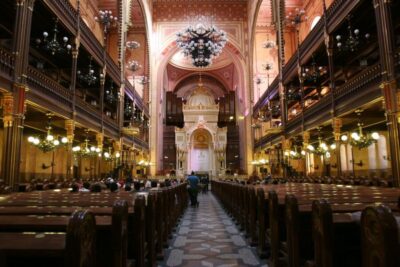
Jewish Heritage Guided Tour with Synagogue Ticket
Read our review →
Walking Tour Budapest incl. the Shoes on the Danube Bank
Read our review →
Past and Present of Budapest Jewish District Tour
Read our review →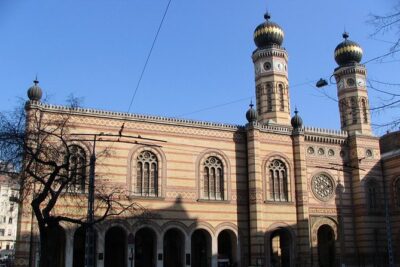
Budapest Dohany Synagogue & Hungarian Jewish Museum & free extras
Read our review →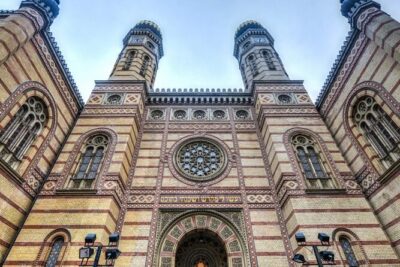
Browse the lists this tour appears in