
Reviewed · MUSEUMS
Budapest: Mika Tivadar Secret Museum Entry Ticket
This experience is interesting because it turns a walk on Kazinczy Street into a compact time-travel story, with first-class people-watching history and an onsite cocktail break. I like that it packs a lot into a 30 minute visit, and you can keep things moving at your own pace with audio on your phone.
Two things I really like: the museum is small and intimate, so the stories feel close up, and the content covers way more than one building. The big consideration is simple, it is not suitable for wheelchair users, so plan your route accordingly.
Key points before you go
Skip the ticket line so you spend more time inside the museum.
Free mobile audio in 8 languages, with voiceovers you listen on your own phone.
A specialty museum inside 140 sqm, designed for quick, high-impact storytelling.
Onsite cocktail bar and restaurant right where you explore, so you can slow down if you want.
Stories linked to multiple countries, not only Hungarian history, and packed with famous names and unexpected connections.
Wifi is free, which makes the audio setup easier.
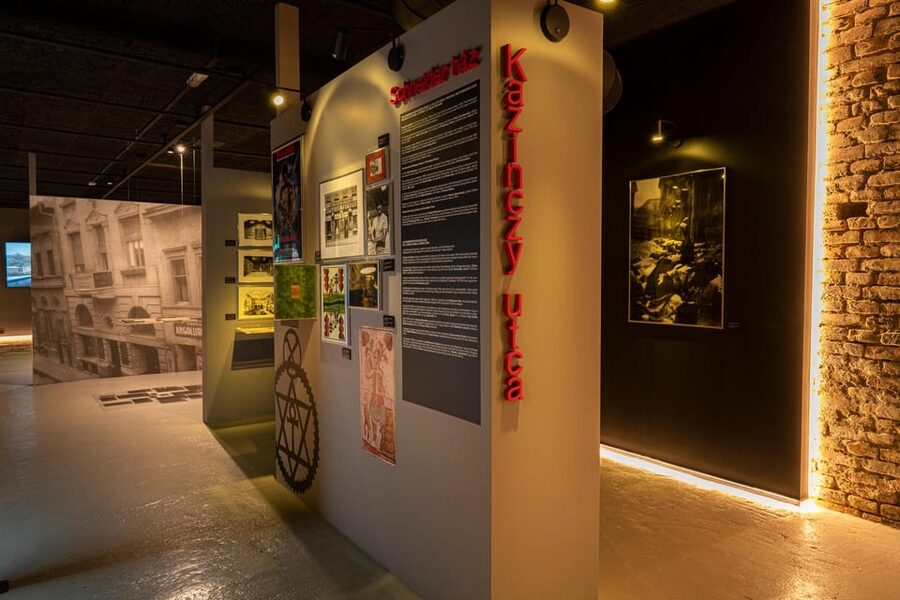
A 140 sqm time capsule on Kazinczy Street
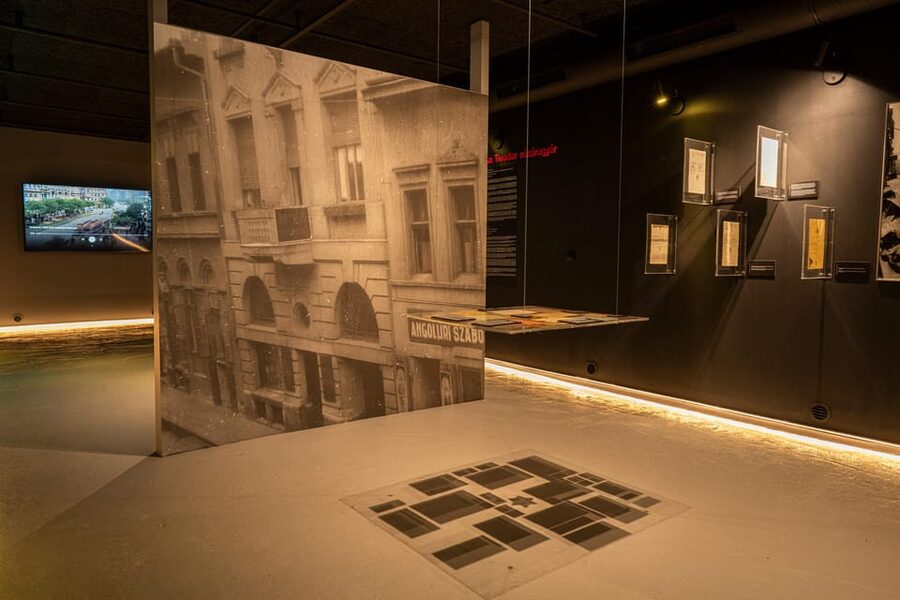
I love museum stops that feel like they are built for real people with real time, and this one fits that bill. You are in and out in about 30 minutes, but it still gives you a full sense of how Kazinczy Street looked and sounded from the late 19th century through the years between the two world wars.
The museum does something clever: it is a house museum, but it also points outward to the neighborhood. That means you are not just staring at artifacts, you are learning how the street itself grew into the city’s party district and cultural crossroads.
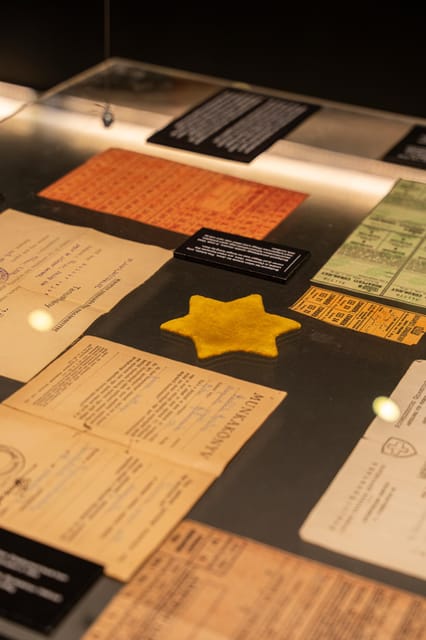
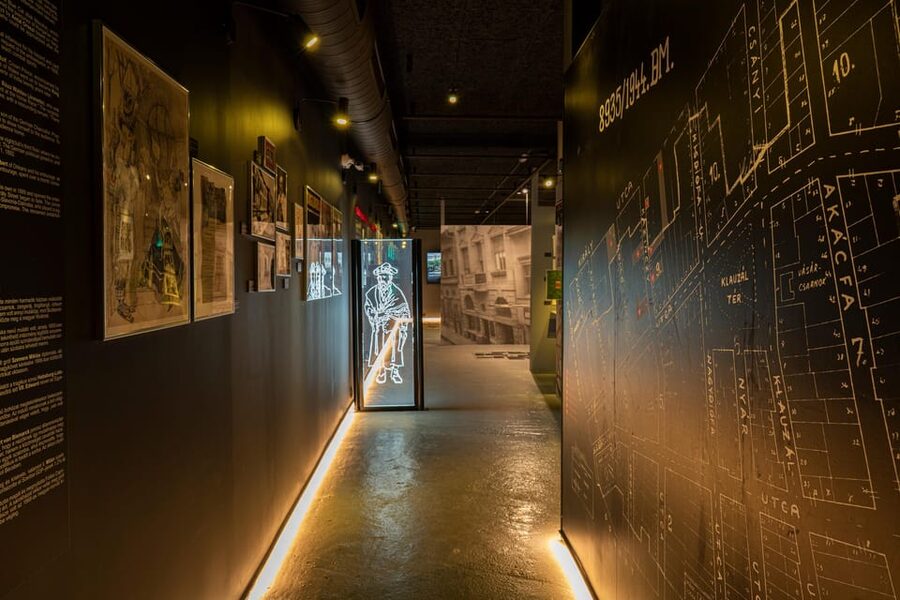
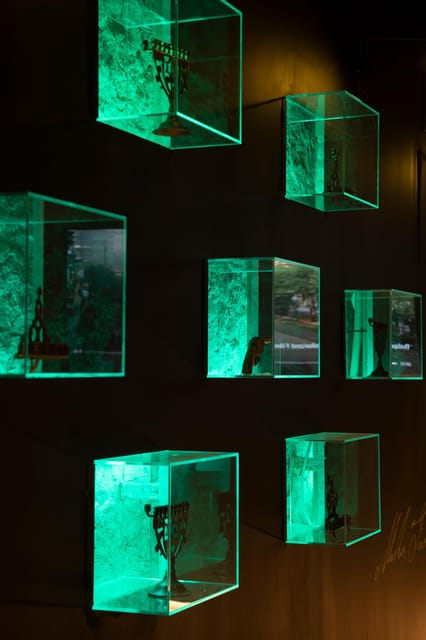
Inside, you will see authentic installations, plus photographs and written narratives that put the era into context. Expect the vibe of a specialty museum, where each room tries to answer a simple question: what was life like here, and who shaped it?
More museums and galleries in Budapest:
- Budapest: Cat Museum Budapest Entry Ticket
★ 4.4 · 2,210 reviews - Budapest: Light Art Museum – Immersive New Media Experience
★ 3.9 · 1,269 reviews - Budapest: Budapest Retro Interactive Museum Ticket
★ 4.4 · 373 reviews
Fast entry at Hotel Mika Downtown Reception
You meet at Hotel Mika Downtown Reception, and the process is straightforward. You get greeted, you receive a printed flyer, and you get a brief orientation on what you are about to explore.
The ticket experience is built for speed too. The entry setup helps you skip the ticket line, which matters in a popular district where waiting can eat into your time. If you are doing a day full of sights, this is one of those stops that does not bully your schedule.
The museum is self-paced, so once you start, you are free to move through the chapters in the order that fits you. I like this approach because you can spend longer on what grabs you and skim the rest without losing your place.
How the mobile audio works (and why it helps)
Here is the key practical detail. You do not get a museum guide or a dedicated tour guide. Instead, you use your own phone to access the audio chapters.
You will want a charged smartphone. Audio is accessible on your mobile, and the museum provides free wifi. That combination makes it easy to scan and start, rather than hunting for connectivity on the walk over.
Once you are inside, the audio adds voiceovers and sound effects that set the mood while you read the exhibits. More than one visit vibe seems to come down to atmosphere: there are tunes in the background while you take in the stories, so it feels like the museum is doing part of the theater work for you.
This also means the museum fits different reading speeds. If you are a quick skimmer, you can still keep moving. If you like to take it slow and absorb details, you can pause when something lands.
The house museum plus the Kazinczy Street connections
This is not a museum that only stays inside one doorway. It uses the story of its own building to open a bigger window onto Kazinczy Street and the surrounding architecture.
I like that approach because it helps you understand Budapest as more than postcard stops. The museum is effectively teaching you how a street becomes a social map, with different scenes overlapping across decades.
In the content, you will see links to iconic local life: changes in the area, major cultural venues, and how people lived, worked, and played in that tight space. Even the way the museum is laid out supports that street-level thinking, because the chapters keep returning you to the idea that these events happened here, not somewhere far away.
One review highlight that matches the overall experience: this place also leans into the story of the city’s party district and related entertainment history. If that interests you, plan to give the audio a chance, because the audio is what stitches those themes together.
A few more Budapest tours worth comparing
- Budapest: Széchenyi Spa Day Ticket with Optional Upgrades
★ 4.3 · 23,911 reviews - Budapest: Parliament Building Entry Ticket and Audio Guide
★ 4.5 · 3,844 reviews - Budapest: Full-Day Gellért Spa Ticket
★ 4.2 · 3,340 reviews - Budapest: Cinema Mystica Entry Ticket
★ 4.3 · 3,103 reviews
Late 19th century to interwar years: what you learn in 30 minutes
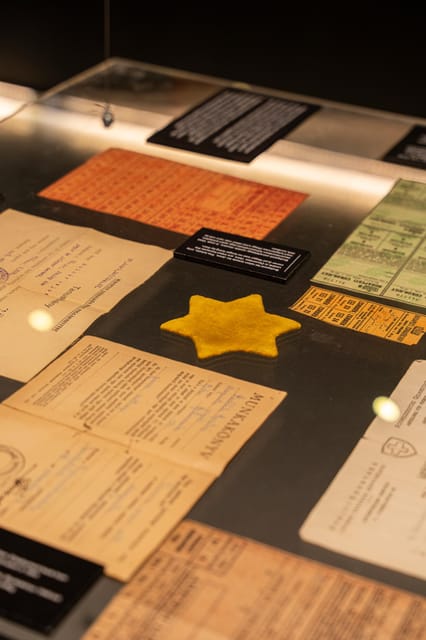
The timeline is part of the magic. You are guided through a stretch from the late 1800s into the interwar period, when Budapest was a city of shifting borders, competing empires, and fast-moving culture.
What makes that timeframe work in such a small 140 sqm museum is the way it uses specific scenes and characters. You are not asked to memorize everything. You are shown key moments, then given the human side of what those moments meant.
A few of the most memorable threads you will run into include:
- Legendary guests who once walked these halls, such as King Edward VII, Otto von Bismarck, and Milan I of Serbia
- The idea that European power politics and local life were tangled together, not separate worlds
- The role of different ethnic communities in Hungary, with a curatorial focus on making the stories feel relatable to international visitors
That last point is practical. When a museum explains history only through one national lens, it can feel like a closed book. Here, the emphasis is on multiple communities, so you are more likely to find personal hooks in the material.
Famous names, cabaret history, and film facts you will actually remember
This is the kind of museum where you catch yourself smiling at the unlikely connections. The exhibits bring in famous names and then tie them back to the setting you are standing in.
One big cultural anchor is entertainment. The museum references the Blue Cat cabaret, which once operated here, and it also connects the story to the earliest days of cinema in Hungary.
You will also hear about Michael Curtiz, the Oscar-winning director behind Casablanca, and how his film career began on this spot. Even if you are not a film nerd, the fact that the museum links such a major name to this small district stop gives you a very Budapest kind of payoff.
Then there are the fun-to-remember oddities. The museum includes a surprising connection involving Sylvester Stallone and Arnold Schwarzenegger, tied to a tiny house on Kazinczy Street. You may not expect Hollywood trivia to show up in an interwar-history museum, but that is part of why the stop feels lively.
Finally, it gets even broader. There is a connection between veterans of the 1848 to 1849 Hungarian Revolution and their role in the Mexican Civil War. That’s a reminder that these stories do not live in a museum bubble. People and ideas traveled, even when borders looked immovable on maps.
The Budapest ghetto and other local stories you may not expect
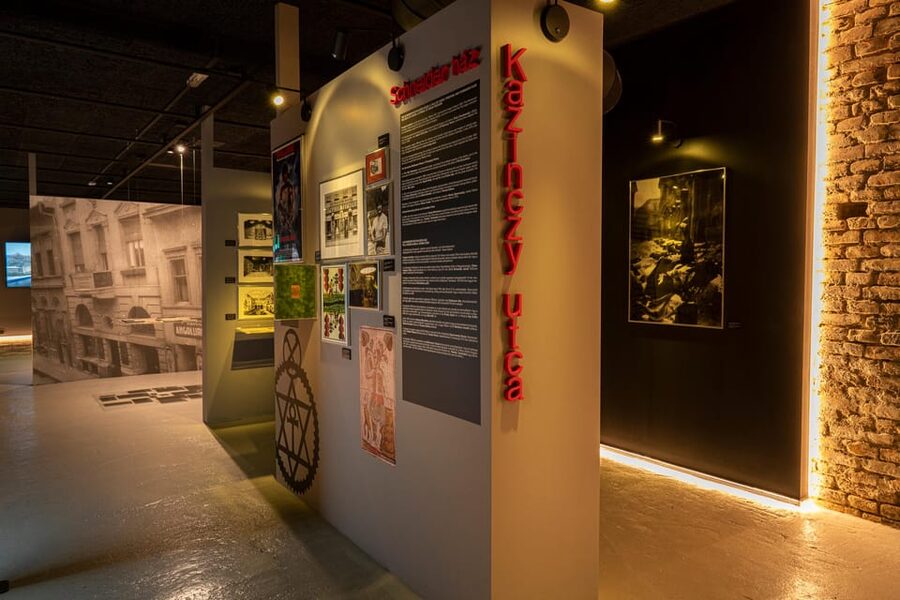
Even though this ticket is short, it does not feel shallow. Part of the reason is that it covers multiple layers of the neighborhood’s past, including themes tied to the Budapest Ghetto.
You may also come across local details that explain why the district developed the way it did. One example is the story of the Hungarian first steam bath, which used to be where you are now and later became part of the modern hotel area.
This layering is valuable. If you are only passing through District VII quickly, you can miss how much change happened here across decades. The museum gives you that change in compact form, so your later walks around the district make more sense.
That onsite cocktail bar is not just a bonus
This museum does not push you to rush. The onsite cocktail bar and restaurant is open during the visit, and it changes the feel of the experience.
In practical terms, it makes sense: you are spending time reading and listening, so having a place nearby to take a break is a real advantage. If you want a drink while you explore the area around the museum, you can build that into your visit without turning it into a separate plan.
One detail that stood out from the vibe on-site is that the space has a strong sense of transformation. A review mentioned that a copper shop during World War II is now used as the setting for the bar and restaurant. That kind of reuse makes the whole place feel coherent, like the museum and the drinking spot are telling the same neighborhood story from different angles.
If you are a brunch-and-cocktails person, plan some extra time in District VII so you do not feel like you must choose between museum time and food time.
Price and value for a short, story-packed stop
At about $5 per person, this ticket is priced like an easy add-on, not a major commitment. I like it for one reason: it respects your time. You are not buying an all-day excursion, you are buying a focused cultural stop that fits into a day of walking.
You also get real value in the delivery method. Since there is no guide fee included, the museum relies on audio, chapters, and atmosphere to do the teaching. For me, that is a good trade, because it means you can go at your own speed and revisit the bits that matter to you on the spot.
Add in the practical extras, 8-language audio, free wifi, plus the fact that the entry setup helps you avoid line time. The result is a museum visit that feels efficient without feeling like a squeeze.
Who should book this ticket (and who might skip it)
This works best if you like:
- Small museums with short, strong storytelling
- Self-guided experiences where you control your pace
- History that connects famous European figures and big cultural trends to real places on the map
- A visit that includes a social break, since the cocktail bar is on site
I would especially recommend it if you are curious about District VII’s heritage and you want a compact way to understand why the area became what it is today.
It is less ideal if you need wheelchair access, because it is not suitable for wheelchair users. Also, if you hate using your phone for audio, you will feel the lack of a live guide more strongly, since the museum relies on mobile audio for the chapter-by-chapter experience.
Practical visit tips I’d use
Bring a charged smartphone and try to keep it charged through the museum. You will be using it for the audio experience.
Start with the included flyer and the brief orientation at reception. It is short, but it helps you understand how the chapters fit together.
Give yourself a little buffer time before or after. Because the bar and restaurant are on site, you might end up lingering longer than you planned, and that is usually a good sign.
If you love stories that mix the official and the unexpected, this is your kind of stop. The content includes royal and political names, but it also brings in cabaret culture, early cinema, and surprising cross-continental connections.
Should you book this secret museum ticket?
Yes, I think you should book it if you want a high value, low time history hit in Budapest. For a small museum space, you get a lot of chapters, and the mobile audio approach makes the experience feel personal instead of lecture-like.
Skip it only if mobile audio does not work for you or you need wheelchair access. If neither is a problem, this is a smart District VII add-on that makes your later street walks richer, because you will recognize the cultural layers you just learned.
FAQ
Where is the meeting point?
You meet at Hotel Mika Downtown Reception.
How long does the museum visit take?
The duration is listed as 30 minutes.
What is the price?
The ticket price is $5 per person.
Is there a museum guide included?
No. You are greeted at the reception, given a printed flyer, and guided briefly on what you can discover. The chapter content is delivered via mobile audio.
Do I need a smartphone?
Yes. You should bring a charged smartphone because the audioguides are accessible on your mobile.
Is there free wifi?
Yes. Wifi is free.
How many languages are available?
Audio is available in 8 languages.
Is it wheelchair accessible?
No. It is not suitable for wheelchair users.
Recently reviewed around Budapest
- Panoramic hike around Budapest★ 5.0 · 14 reviews
- Budapest Highlights Self guided scavenger hunt and Walking Tour★ 5.0 · 5 reviews
- PRIVATE (7 hours) Budapest and Szentendre city tour with lunch and winetasting★ 5.0 · 4 reviews
- Original Budapest Walking Tour★ 4.0 · 39 reviews
- Hungarian Gastro Cellar: Assisted Tasting Options★ 4.5 · 5 reviews
- Original Budapest Alternative Street Art & Jewish Tour★ 4.5 · 14 reviews
- Bratislava, one day private trip from Budapest with guide!★ 5.0 · 4 reviews
- One hour Hen or Stag private party boat Budapest with unlimited beer and wine★ 3.5 · 6 reviews
Museums, compared.


Light Art Museum – Immersive New Media Experience
Read our review →


Budapest Card: Free Public Transport, Spa & Museums with Delivery
Read our review →
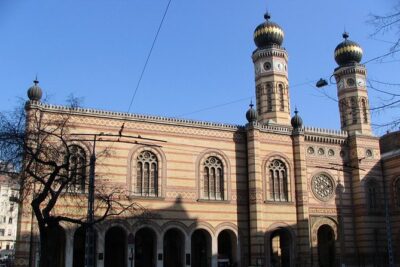
Budapest Dohany Synagogue & Hungarian Jewish Museum & free extras
Read our review →
Travelling Galaxy Star Wars Interactive Exhibition
Read our review →Browse the lists this tour appears in