Reviewed · GUIDED
Budapest: Guided Tour of the House of Music, Hungary
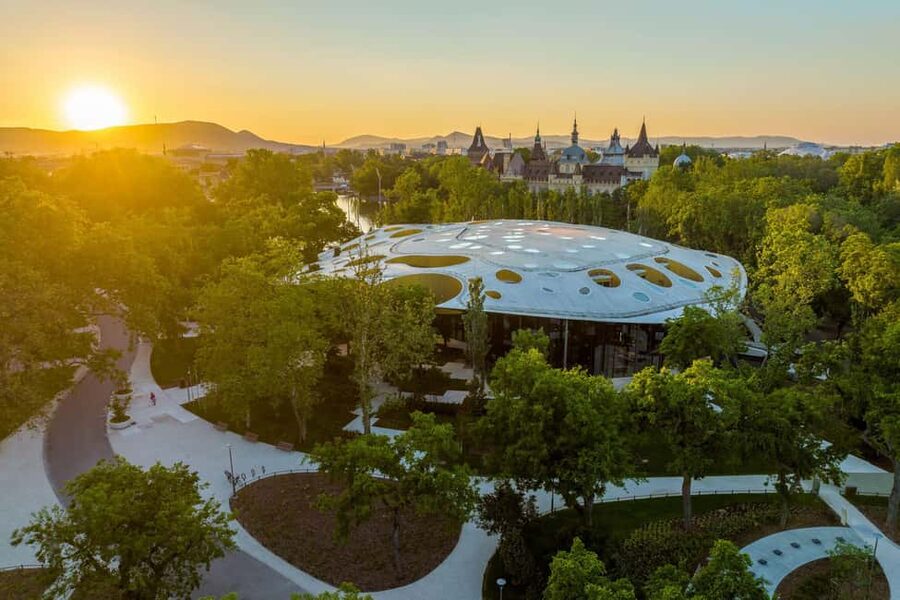
The House of Music in Budapest is interesting because it feels like a piece of City Park that learned how to shelter sound, with Sou Fujimoto’s undulating roof and lots of glass. Even before you go inside, the building’s shape grabs your attention.
I especially like tours led by a guide such as Dora, who keeps the story clear and makes it fun to ask questions. I also love the focus on the spiral staircase, not just as architecture, but as a design choice that supports how the building feels and performs.
One drawback to plan around: this tour does not include entry to the exhibitions, the Sound dome, or the Creative sound space.
Key Things to Know Before You Go
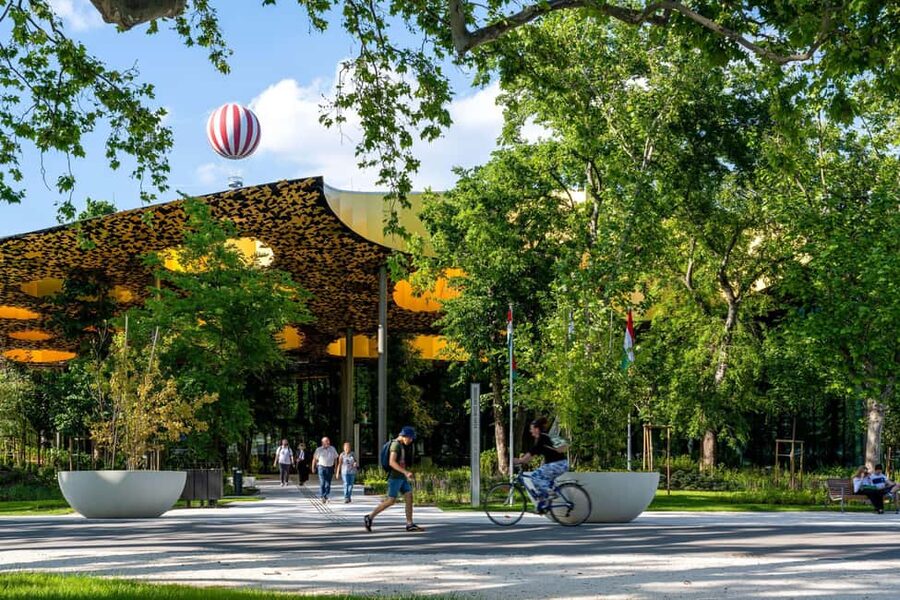
- Leaf-like metal roof canopy: Thousands of elements create a visual rhythm and help with natural light and acoustics.
- Sou Fujimoto’s organic approach: The building is designed as a continuation of the park, blurring inside and outside.
- Spiral staircase as a centerpiece: Expect this to be one of the most photographed and explained parts of the visit.
- City Park viewpoints: The location gives you open-air perspective and a calmer setting than a typical indoor museum run.
- What the guide covers without exhibits: You’ll tour major spaces and get the story behind performance sound, even without a show.
City Park Location, a Building You Notice First
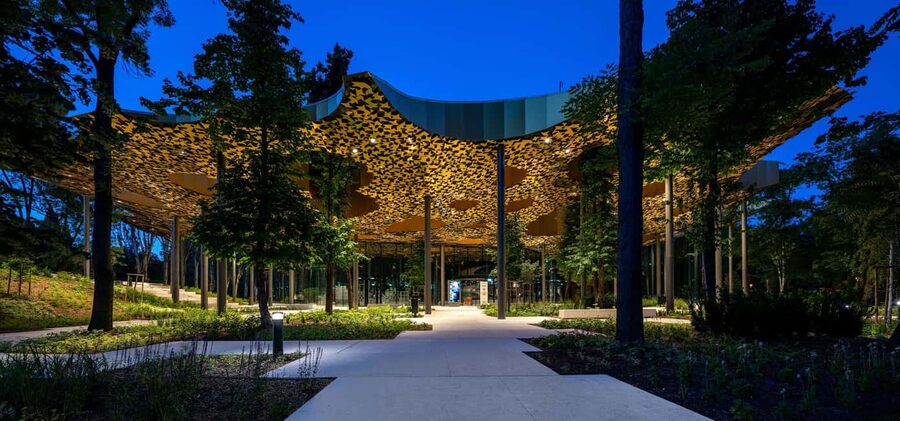
If you like architecture that actually lives in its surroundings, this is a strong pick. The House of Music sits in Budapest’s City Park, so the experience starts in the open air, with the building framed by trees and pathways. You get the sense that the structure is part of the park’s walking routes, not something walled off from them.
The exterior is the headliner. The roof ripples across the top in a way that looks almost grown from the landscape. Guides typically point out the unusual circular openings and the roof’s construction, including how the metal elements resemble leaf forms. That visual idea matters once you’re inside, because the same design logic shapes how the building brings in light and controls sound.
There’s also a practical upside to the City Park setting. You can take your time on the walk in, then focus your attention when you hit the foyer. It’s a more relaxed start than places that feel like pure ticket lines and fluorescent interiors.
A few more Budapest tours worth comparing
- Budapest: Parliament Building Entry Ticket and Audio Guide
★ 4.5 · 3,844 reviews - Budapest: Opera House Guided Tour
★ 4.6 · 1,533 reviews - Budapest Small-Group Guided Tour on MonsteRoller e-Scooter
★ 5.0 · 1,517 reviews
Start in the Foyer, Then Follow the Guide’s Architecture Map
Your tour begins inside the foyer, which is a good way to get your bearings fast. The space is described as spacious, and it works as a transition zone between park and building. A lot of the experience is about understanding how the structure is organized, so beginning in an open indoor area helps you read the whole layout.
You’ll also have a chance to get oriented before you move into the more dramatic spaces. If you want coffee or a quick pause, the foyer and café area is often a natural spot to do that before the tour starts going vertical and architectural.
From there, the guide’s approach is usually the key. A good guide turns details into meaning. That’s exactly what you want here, because this isn’t just sightseeing. The tour focuses on how the building’s form affects daily experience, from light through glass to how spaces feel for community music learning.
The Undulating Leaf Roof: Light and Acoustics in One Shape
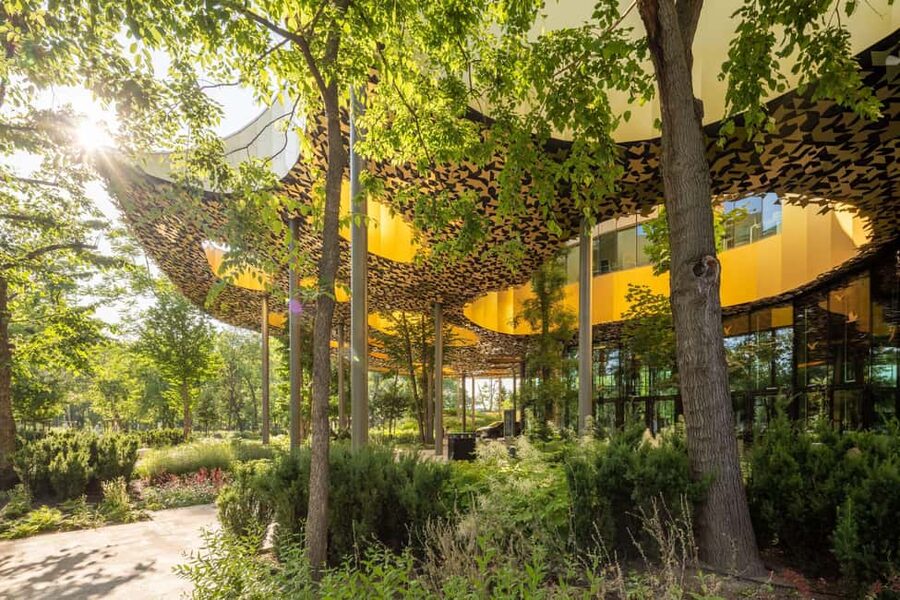
The first big exterior stop is the roof, and it’s not just for photos. This canopy is made up of thousands of leaf-like metal elements, and guides explain why that form is there beyond looks. The roof is tied to natural lighting, so the building does not rely on artificial light as heavily as you might expect.
It also has a role in acoustics. Even if you never get a performance during the tour, you can still understand the sound thinking behind the design. The building’s shape, materials, and roof structure were planned to optimize sound quality across performance spaces and public areas.
Look closely at the circular openings, too. They add visual rhythm outside, but they also help the guide explain how light and air move through the building’s layered levels. If you’re the type who gets satisfaction from cause and effect, this is where you’ll feel it most.
City Park keeps the exterior calmer than an urban street scene. That makes the roof even more striking, because you’re not competing with traffic noise or crowds.
Glass Walls and Exposed Structure: Warm Inside, Park Outside
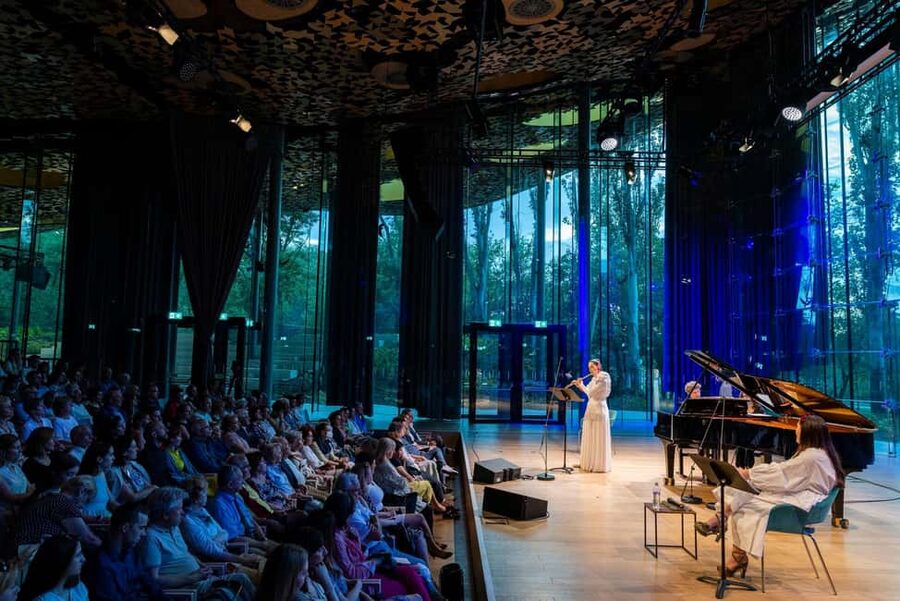
Once you step inside, the tour shifts from spectacle to structure. Expect lots of glass, and the effect is immediate. Daylight fills the interior spaces, which reinforces that blurred boundary between the park and the building.
Guides also highlight the exposed concrete surfaces and the wooden elements. That combination matters for mood. Concrete can feel cold in some buildings, but pairing it with warm wood tones makes the interior feel inviting rather than purely industrial. It’s one of those design choices that makes the tour feel comfortable to walk through, even though you’re surrounded by strong architectural lines.
The glass does more than brighten the room. It connects you back to the outside. You’re constantly aware of where you are relative to the park, which supports the theme of continuity. This helps the building feel like a place you might return to, not a one-time photo stop.
A different way to spend a day in Budapest:
- Budapest: City Highlights Cruise with Welcome Drink
★ 4.6 · 35,610 reviews - Budapest: Unlimited Prosecco, Beer and Aperol Spritz Cruise
★ 4.8 · 25,310 reviews - Budapest: Széchenyi Spa Day Ticket with Optional Upgrades
★ 4.3 · 23,911 reviews - Budapest: Nighttime or Daytime Sightseeing Cruise
★ 4.2 · 21,062 reviews
Levels, Open Spaces, and Community Music Learning
A useful part of this tour is the explanation that the building is set up for music education and community use, not just performances. Guides typically point out different levels and open spaces meant for public engagement. That’s a major part of why the House of Music feels civic rather than elitist.
Even without access to exhibitions, you can still understand how the building is meant to serve people. You’ll hear the design described as a continuation of the park, and you’ll see how circulation and gathering spots are built into the architecture.
If you’re coming with friends or family, this section is also where the tour becomes easier to enjoy together. It gives people something to talk about beyond facts, like how the building encourages people to linger, gather, and learn.
Spiral Staircase: The Art Piece You’ll Keep Coming Back To
The spiral staircase is a standout feature, and this is where the tour’s emphasis pays off. Instead of treating stairs as a necessary route, the guide frames the staircase as a work of art. The curvature, the materials, and the way it threads through the building are all part of the story.
This is also where you’ll see how design becomes experience. A spiral layout changes your sightlines as you climb. You’re not moving in a single, flat corridor. You’re rotating through space, getting different angles on glass, open levels, and the building’s texture.
If you like architecture that you can read with your feet, not just your eyes, this is the moment. It’s also practical: you’ll understand the building’s vertical logic instead of getting lost in it.
Concert Hall, Library, and Archives, Plus Outdoor Time
The tour includes a look at the concert hall, the library and archives, and beautiful outdoor spaces. It’s a smart mix. Many tours of cultural buildings focus only on the dramatic exterior or only on one interior room. Here, you get multiple categories of space, which helps you understand the building’s full purpose.
The concert hall stop is important even without attending a performance. The guide ties what you see to the acoustics plan. You might not hear music during your visit, but you’ll understand why the design choices matter for sound quality.
The library and archives also add a different angle. You’re seeing how the building supports music knowledge, not just music events. That makes the visit feel more complete, especially if you’re the kind of traveler who likes structure, learning spaces, and behind-the-scenes context.
The outdoor spaces are more than a break. They reinforce the idea that the building was designed to keep working with the park rather than fighting it. It’s a chance to step back, get more panoramic views, and watch how daylight changes the building’s look.
One planning note: this tour does not include the exhibitions, so don’t expect an exhibit hall walkthrough. It also does not include the Sound dome or the Creative sound space. If those are your priority, you’ll want to plan those separately.
Acoustics Talk Without a Show: Why the Tour Still Works
Here’s the clever part. Even though you don’t experience a performance on the tour, you still get a guided explanation of how the building handles sound. The guide connects acoustics to the building’s shape, materials, and roof structure, explaining how the design supports sound quality in performance spaces and public areas.
This approach works for two kinds of people. If you’re a music fan, it gives you respect for the engineering behind the experience. If you’re an architecture nerd, it gives you a framework for seeing how form and function connect.
When guides explain acoustic intent as you move through the building, it changes how you perceive the rooms. You start noticing geometry and surfaces rather than only taking pictures. The tour becomes a guided way to look at architecture like an instrument.
Sustainability Touches, Geothermal and Rainwater
The tour also includes sustainability features, specifically geothermal energy and rainwater harvesting. You might not be seeing high-tech screens or interactive meters, but the guides bring up these choices so you understand what’s behind the building’s modern design.
This matters because it shows the architecture is not only aesthetic. The same forward-thinking mindset that shapes the roof and glass is also applied to energy and water use. If you like your architecture with practical intent, you’ll feel good about paying for an explained tour rather than a quick walk-by.
Price and Value for a 1-Hour Guided Architectural Hit
At about $13 per person, this tour is priced like a short, focused introduction rather than a full-day museum commitment. That’s good value if you want clarity without spending hours bouncing between exhibit areas.
You do get a guided look at major spaces, including the concert hall, library and archives, outdoor areas, and the gift shop. Plus, the guide puts attention on the roof design, the glass and open interior planning, the spiral staircase, and the acoustics concept. For architecture and sound-design fans, that kind of guided interpretation is often the real value, not just access to rooms.
The tradeoff is time and access. It’s only one hour, and the tour does not include the exhibitions, Sound dome, or Creative sound space. So if you want hands-on content, you may need to add other tickets or activities.
Still, for a first visit to the House of Music, this tour gives you the building’s story in a tight format, and you can decide afterward whether you want deeper exhibition time.
Who This Tour Fits Best (And Who Might Skip)
This is best for you if you:
- Love architecture, especially buildings that use unusual shapes and materials
- Enjoy learning why spaces are designed the way they are, especially for sound
- Want an efficient 1-hour introduction that still takes you through several key areas
It’s not a match if you’re looking specifically for the exhibitions, the Sound dome, or the Creative sound space. Also, it is not suitable for children under 15.
If you’re traveling with someone who thinks museums are too quiet or too rigid, this tour has a better chance. It’s structured, but the building design gives you plenty to see and plenty to talk about.
Should You Book This House of Music Guided Tour?
I’d book it if you like architecture and you want a guide to explain how the design works. The price is reasonable, the tour is short, and you still get the big building moments: City Park setting, leaf-like roof canopy, glass and concrete interior design, the spiral staircase, plus acoustics talk tied to spaces like the concert hall.
I would not book it as your only plan if your main goal is the exhibitions or the Sound dome-type experiences. This tour is about understanding the building itself and the music-centered design behind it.
If your time in Budapest is limited, this one-hour format is a practical way to add something genuinely different from the usual city sightseeing. And if you’re lucky enough to get a strong guide, the experience becomes less about facts and more about learning how the building was built to shape sound and community life.
FAQ
How long is the guided tour of the House of Music in Budapest?
The tour lasts 1 hour.
Is the tour offered in English?
Yes. The live tour guide speaks English.
Is the House of Music tour wheelchair accessible?
Yes, the tour is wheelchair accessible.
What is not included in this guided tour?
Entry to the exhibitions, the Sound dome, and the Creative sound space are not included.
Is the tour suitable for children?
No. It is not suitable for children under 15.
Are pets allowed during the tour?
Pets are not allowed, but assistance dogs are allowed.
Recently reviewed around Budapest
- Panoramic hike around Budapest★ 5.0 · 14 reviews
- PRIVATE (7 hours) Budapest and Szentendre city tour with lunch and winetasting★ 5.0 · 4 reviews
- Original Budapest Walking Tour★ 4.0 · 39 reviews
- Budapest Highlights Self guided scavenger hunt and Walking Tour★ 5.0 · 5 reviews
- Hungarian Gastro Cellar: Assisted Tasting Options★ 4.5 · 5 reviews
- Original Budapest Alternative Street Art & Jewish Tour★ 4.5 · 14 reviews
- Bratislava, one day private trip from Budapest with guide!★ 5.0 · 4 reviews
- One hour Hen or Stag private party boat Budapest with unlimited beer and wine★ 3.5 · 6 reviews
Guided, compared.

Parliament Building Entry Ticket and Audio Guide
Read our review →
Budapest Small-Group Guided Tour on MonsteRoller e-Scooter
Read our review →

Budapest Danube Cruise with Drink, Audio Guide, Margaret Island
Read our review →
Danube River Sightseeing Cruise with Audio Guide
Read our review →