
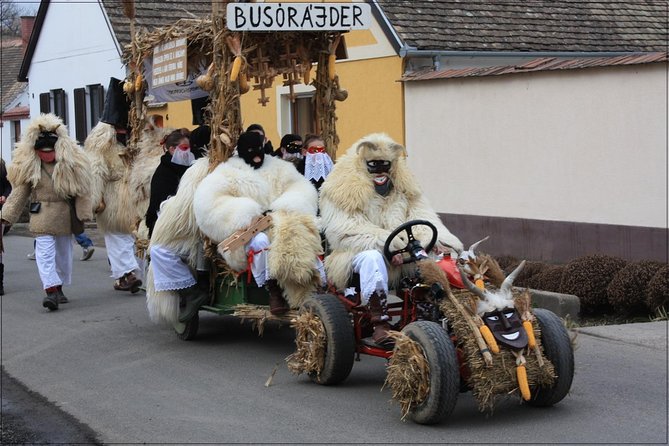
Reviewed · HUNGARIAN FOLKLORE SHOWS
BUSÓJÁRÁS Unesco Heritage Folklore Carnival in Mohács
Busójárás in Mohács is one of those rare festivals where folk myth turns into something you can literally see and hear. It is also listed by UNESCO as an Intangible Cultural Heritage tradition, so you are not watching a staged show, you are stepping into a living rite that has been handed down for generations. I especially like that this plan includes private transportation, which helps you skip the hassle of crowded public transit on a busy carnival day.
My other favorite part is the focus on the festival’s core visuals and sounds. You will see the woolly sheepskin Busó cloaks, carved masks, and hear the big ritual rattles and clapper bells that match the meaning of the event. One consideration: on-site food can be expensive, and if you end up parking away from the center, you may have a short walk before the fun starts.
Key highlights at a glance
- UNESCO Intangible Cultural Heritage: a living tradition, not a museum display
- Private vehicle from Budapest: fewer logistics headaches than public transport
- Flexible timing: your day is shaped around the festival, not a rigid parade clock
- Busó masks and woolly cloaks: the recognizable look behind the legend
- Rattlers and clapper bells: part of the ritual, not just background noise
- A welcoming host vibe: some groups have been greeted by a host named Richard
Busójárás in Mohács: why this UNESCO carnival feels different
Busójárás is an end-of-winter carnival from southern Hungary, tied to the moment spring starts to push back. The tradition is built around older ideas of protection, fertility, and warding off bad luck. In Mohács, the story gets explained through legend, including the idea that masked locals helped scare the Turks away. That myth is one reason the costumes look so fierce, and why the whole festival leans into that ritual energy.
The UNESCO angle matters because it signals the tradition is still practiced as culture, not only performed for tourists. When a tradition is officially recognized as intangible heritage, you are more likely to encounter the “why” behind the costume and the behavior, not just the costume itself. That said, you still should expect a carnival atmosphere. This is fun, loud, and visual, with a lot of people dressed in the Busó style.
Also, the festival has a wide cultural echo. The Busó festivities share similarities with carnivals in other parts of Europe, like Rio and Venice, in the sense that masking and mischief are part of the ritual calendar. At the same time, Mohács frames the practice through its local legend and historical imagination.
More folklore shows and folk concerts in Budapest:
- Budapest: Dinner Cruise with Live Music and Folk Dance Show
★ 4.4 · 2,090 reviews - Budapest: Hungarian Folk Dance & Concert with Dinner Option
★ 4.5 · 543 reviews - 4 Course Dinner Cruise with Operetta, Folk Show and Welcome Drink
★ 4.0 · 272 reviews
The 10-hour private ride from Budapest, and why it is worth it
This is roughly a 10-hour day, and a big chunk of that time is the trip south and back. That sounds like a lot until you see what private transport solves.
Here is the practical win: public transport can be a headache around big seasonal events. With a private, air-conditioned vehicle and door-to-door pickup, you start the day with less friction. You do not have to figure out which train or bus to take, and you are not stuck in the wrong place when crowds surge. Your group is also kept together as one unit, so the day stays smooth.
The other logistical plus is flexibility. There is no fixed schedule in the way you might expect with a more rigid tour. A private transfer means your timing can stay flexible, which is a huge advantage when you do not want to waste your energy waiting around on the edge of a festival.
One more small but helpful detail: you get a mobile ticket. That cuts down on paper fuss, especially when you are bouncing between vehicle, town center, and whatever gathering area the day’s rhythm uses.
Getting to the festival: your door-to-door plan
You start with hotel pickup and end with hotel drop-off. That matters in Budapest, where the “easy” travel option can still involve transfers, stairs, and time lost when you are moving with a group.
Because the plan is door-to-door, you can also prep smarter. You can pack a day bag, bring whatever you need for changing weather, and keep things like water and snacks within reach before you reach Mohács. And when the festival energy peaks, you are not worrying about how to get back to a far-away meeting point.
In short: this is the kind of trip where saving time on logistics buys you more time for the actual reason you came.
Mohácsi Busójárás: what you will actually see on the ground
The main experience is the Busó carnival in Mohács, an end-of-winter celebration with roots that are explained as more than 300 years old. The point of Busójárás is not subtle. People dress in traditional Busó outfits, and they do it to change the mood of the season.
Here is what to expect in the most concrete terms.
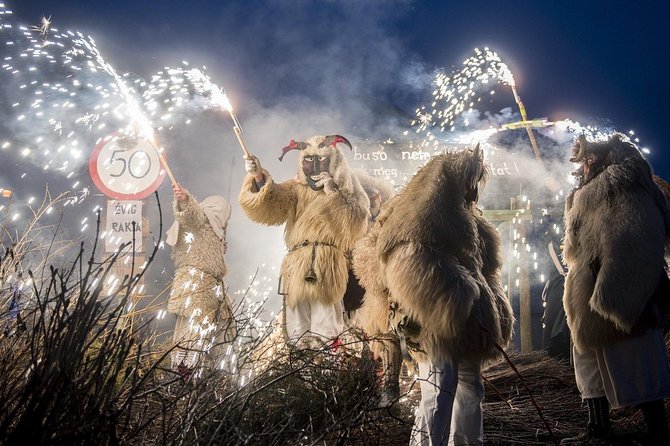
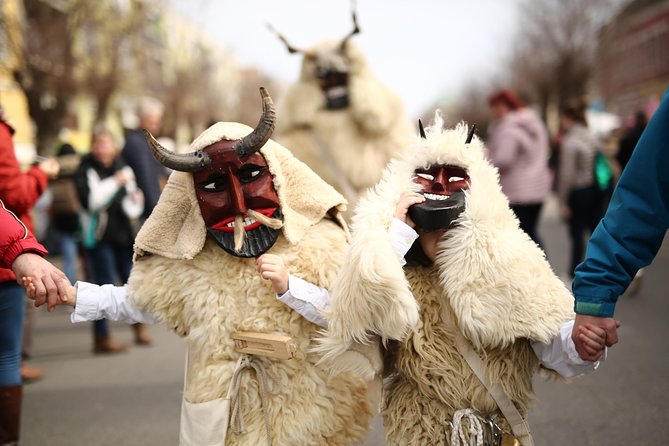
You will see Busó people dressed for the role. Adults wear woolly sheepskin cloaks and matching trousers filled with hay, plus carved masks. Their stockings are decorated as part of the overall costume look. You will also notice the ritual tools: large loud rattlers and clapper bells. Those sounds are not just for effect. They are part of the ceremonial language of the event.
The festival’s “plot” is also tied to the legend. In the story, tricky ancestors took refuge from Turkish occupation on the so-called Mohács Island, which is on the other side of the Danube. They dressed in disguise and returned across the river to scare the Turks, who panicked and fled when they saw the masked men. Whether you take the legend literally or as a cultural memory, you can feel how it shaped the costume choices: scary masks, heavy noise, and the sense of a ritual return from the dangerous darkness of winter toward spring.
In practice, that means the festival energy is active. You are not just watching people pass by. You are in the same world where the masked Busó are part of the celebration.
More history-led tours in Budapest:
- Budapest: Historic Cruise with Welcome Drink
★ 4.7 · 6,512 reviews - Budapest Historical Sightseeing – Free Walking Tour
★ 5.0 · 1,302 reviews - Buda Castle District Dark History, Legends and Vampire Night Tour
★ 4.5 · 1,240 reviews - BloodThirsty Hungary: Walking tour & Dark Historical Stories
★ 4.9 · 633 reviews
The sounds and costumes: how the ritual shows up in everyday detail
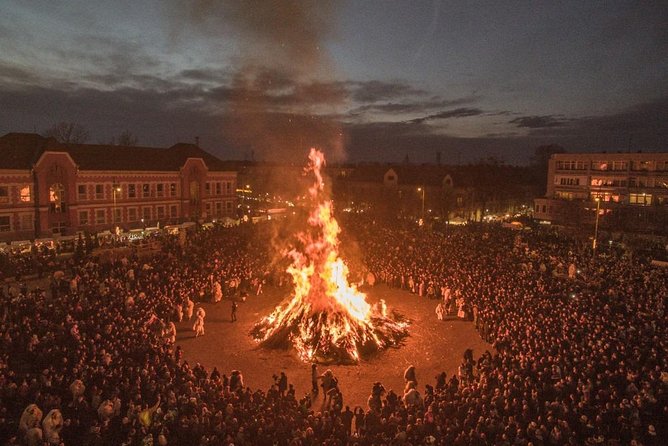
If you like festivals where costumes are tied to meaning, Busójárás is a strong pick. A lot of carnival traditions around Europe use masks, but Busójárás leans into a specific look and a specific sound.
The masks are carved and dramatic, meant to transform the wearer into something other than everyday life. The woolly sheepskin cloaks create texture and volume that looks almost sculptural in photos, but up close you get the practical effect too: the heavy outfit reads as “winter proof” and “season changing” at the same time.
Then there are the rattlers and clapper bells. You will feel how sound is used as a tool. It is hard to tune it out, which is exactly the point. The festival uses noise to mark a shift in the calendar. You are hearing the ritual, not only seeing it.
One more detail that I think matters for your planning: the festival is a major folklore event in Hungary, and that typically means it is big. Plan for crowds, bring patience, and expect to move with the flow rather than against it.
Timing at the festival: plan for a few key hours, not a whole day of wandering
Your full tour day is about 10 hours, but the festival part is shorter in practice. A good rule of thumb is to plan on around two hours for the main action on-site, then you can use the remaining time for travel, buffer, and whatever breaks you need.
Because your transfer is private and flexible, you are not stuck at a single rigid time slot. That flexibility helps you avoid the most annoying scenario: arriving too early when the main parade energy has not fully started, or arriving too late when you miss the core moment.
If you are aiming for photos, use the flexible schedule to your advantage. Arrive with enough time to settle in, then move with the crowd to catch different angles as the Busó presence shifts around the festival area.
Food, pálinka, and the reality check on festival spending
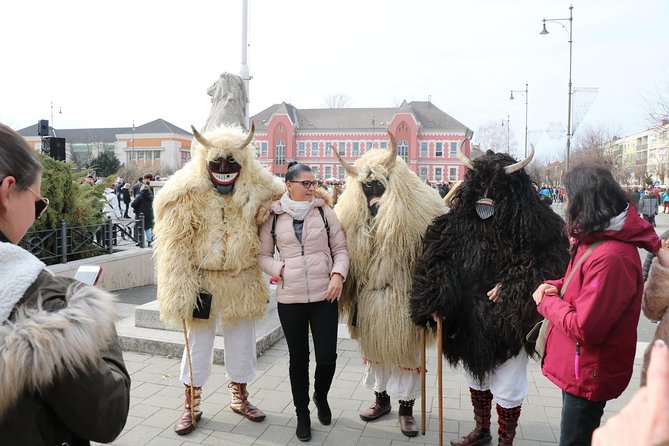
Carnivals are fun, but they can be expensive where food is concerned. One practical note you should take seriously: festival eateries can feel pricy, especially if you are hungry after a day of travel and noise.
I recommend you think about this like locals do for big events. Bring a simple buffer strategy so you are not forced to buy everything on-site. Even if you end up eating there, a bottle of water and a snack plan keeps the day more comfortable.
On the positive side, this festival comes with a reputation for plenty of pálinka. Expect alcohol culture to be part of the experience. If you are driving later, drinking is obviously a personal choice, but do plan responsibly, especially on a long ride back to Budapest.
Who this Busójárás day trip is best for
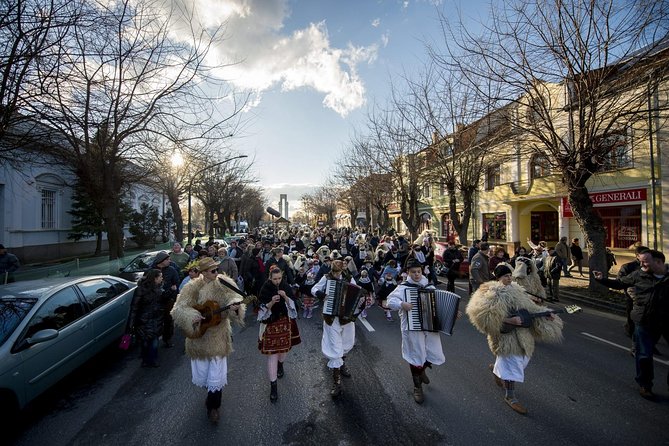
This tour fits best if you want a folk tradition with real atmosphere, and you also value comfort on the travel day.
You will probably enjoy it if:
- You like cultural festivals where costumes and sounds carry meaning
- You prefer private logistics over figuring out public transport during a busy event
- You want flexibility, since carnival schedules on the ground can shift
You might not love it if you hate crowds or if you are trying to keep festival spending ultra-low. The food reality plus a long day can add up. But even then, Busójárás has a strong chance of being a memorable cultural highlight.
Price and value: what you pay for at $250 per person
The price is $250 per person, with a duration of about 10 hours. That sounds like a lot until you break it down by what is included.
Your money goes mainly toward:
- Private transportation in an air-conditioned vehicle
- Door-to-door pickup and drop-off
- A private setup where only your group participates
- An English-language experience
Admission to the festival is listed as free, which matters. You are not paying entry fees on top. You are paying for the day to run smoothly from Budapest, and for the time you save by avoiding public transport friction.
Is it the cheapest way to go? Probably not. But it is often the smartest way if you care about comfort, schedule flexibility, and reducing the “where do we go next” stress on a day when everyone else is also trying to get to Mohács.
Also, there are group discounts. If you can travel with friends or family, the per-person value tends to improve fast.
Practical notes so your day goes smoothly
A few small points can make a big difference.
- Dress for winter-to-spring mood swings. End-of-winter festivals can still be chilly, and you will be outdoors while the Busó presence moves around.
- Expect walking if parking is not right next to the festival core. One visitor described parking about 2 km away and walking in. I would plan for at least some walking, even if your exact route differs.
- Bring cash and a card mindset for food. Since prices on-site can run high, having payment options avoids the stress of hunting for change.
- If you meet a host named Richard, lean into the welcoming energy. Some groups have singled him out for a warm, friendly approach, and that can help you feel at ease fast in a lively setting.
Should you book this Busójárás private trip?
If you want a serious dose of Hungarian folk carnival without the day getting eaten by transport headaches, I think you should book it.
I would book when:
- You want private pickup and a comfortable ride out of Budapest
- You want the flexible timing that comes with a private transfer
- You care about the real festival elements, masks, woolly cloaks, and ritual noise, not a quick photo stop
I would pause if:
- You are on a strict budget and food prices would stress you out
- You strongly dislike crowds or long days
Bottom line: Busójárás is one of those traditions that rewards your attention. With private transport and hotel-to-hotel convenience, you get to spend your energy on the actual event, not the logistics around it.
FAQ
How long is the Busójárás tour from Budapest?
The experience runs for about 10 hours.
Do I need to pay for festival admission?
Admission is listed as free.
Will I have hotel pickup and drop-off?
Yes. This is a door-to-door tour, with pickup and drop-off at your hotel.
Is the tour schedule fixed?
No fixed schedule is mentioned. With a private transfer, the timing can be flexible.
Is this a private tour?
Yes. It is private, meaning only your group participates.
What language is the tour offered in?
The tour is offered in English.
Can I cancel for a full refund?
Yes. You can cancel for free up to 24 hours in advance of the experience start time for a full refund.
Recently reviewed around Budapest
- Panoramic hike around Budapest★ 5.0 · 14 reviews
- PRIVATE (7 hours) Budapest and Szentendre city tour with lunch and winetasting★ 5.0 · 4 reviews
- Original Budapest Walking Tour★ 4.0 · 39 reviews
- Budapest Highlights Self guided scavenger hunt and Walking Tour★ 5.0 · 5 reviews
- Original Budapest Alternative Street Art & Jewish Tour★ 4.5 · 14 reviews
- Hungarian Gastro Cellar: Assisted Tasting Options★ 4.5 · 5 reviews
- Bratislava, one day private trip from Budapest with guide!★ 5.0 · 4 reviews
- One hour Hen or Stag private party boat Budapest with unlimited beer and wine★ 3.5 · 6 reviews
Hungarian Folklore Shows, compared.

Dinner Cruise with Live Music and Folk Dance Show
Read our review →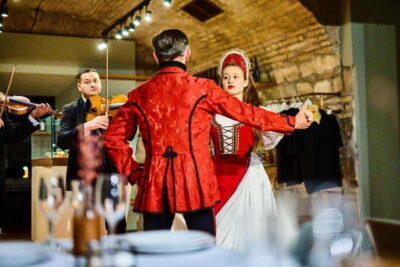
Hungarian Folk Dance & Concert with Dinner Option
Read our review →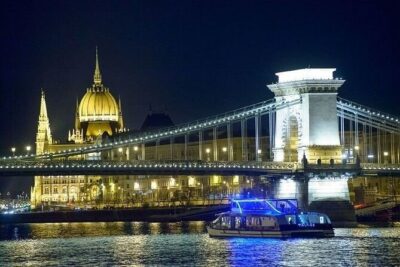
4 Course Dinner Cruise with Operetta, Folk Show and Welcome Drink
Read our review →
Hungarian Folklore Dance Performance & Concert Ticket
Read our review →Browse the lists this tour appears in