
Reviewed · BUDAPEST
Pest side stories with a Historian
Budapest’s Pest side can feel like a mix of eras layered on top of each other. This tour is interesting because you’re not just walking between sights, you’re getting the stories that explain how the city got built, reshaped, and renamed along the way. I like the small group format capped at 10, and I love that you get practical extras like metro tickets and refreshments, not just a lecture. One drawback to plan for, you’ll cover a lot of ground on foot in about 3 hours.
I also like that the historian guides bring the places to life with named storytelling styles you can feel right away, including praised guides like Steven the Tall, Andrew, and Greg. And because the route starts at Kempinski Hotel Corvinus and runs through central Pest, it works well as a get-your-bearings afternoon.
One more practical note: entry into St. Stephen’s Basilica depends on the group’s interest. If you want indoor time, come ready to be flexible and go with the group decision.
Key things you’ll like about Pest Side Stories with a Historian
- Max 10 guests means you get more back-and-forth than big bus tours
- Historian-led storytelling turns statues, squares, and boulevards into real context
- Free-to-enter major stops keep you focused on sights, not ticket logistics
- Metro tickets + refreshments make the walking feel more manageable
- A route through central Pest gives you a concentrated, walkable overview of the city
- Millennium Underground brings transit history into the same conversation as monuments
Why this historian-led Pest walk feels different than a bus tour
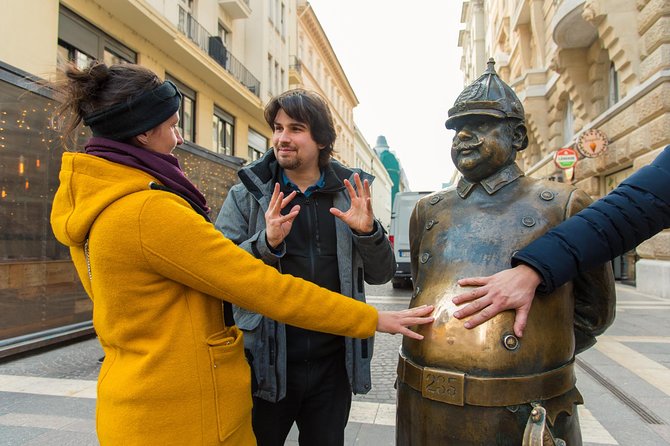
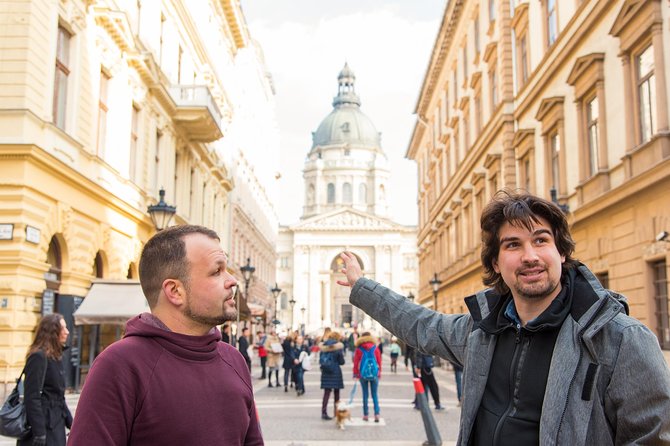
This is the kind of tour that helps you see Budapest in chapters instead of as random landmarks. The focus stays on Pest, the older, city-center side where politics, transport, and civic pride all show up in the streetscape.
The small group size matters more than it sounds. With a cap of 10, the guide can keep an easy pace and still answer questions without losing the thread. That is exactly what you want if you are trying to understand the Hungarian story across centuries, from public monuments to everyday spaces.
You’ll also notice the tour is set up for comfort. You get refreshments, and you are provided metro tickets, so the experience does not rely only on long stretches of walking. Add in a mobile ticket and a start time of 2:00 pm, and it is designed for real-life touring, not just checklists.
Other things people book in Budapest:
- Budapest: City Highlights Cruise with Welcome Drink
★ 4.6 · 35,610 reviews - Budapest: Unlimited Prosecco, Beer and Aperol Spritz Cruise
★ 4.8 · 25,310 reviews - Budapest: Széchenyi Spa Day Ticket with Optional Upgrades
★ 4.3 · 23,911 reviews
Starting at Kempinski Corvinus and ending near St. Stephen’s Basilica
The meeting point is Kempinski Hotel Corvinus Budapest, right by Erzsébet tér (Erzsébet tér 7-8, 1051). That’s a central spot, so it’s easy to arrive by public transportation. The route also makes geographic sense because it moves through key central areas of Pest without forcing you to cross the city.
The tour end point is St. Stephen’s Basilica (Szent István tér 1, 1051). One practical twist: the operator notes the tour might end at another central point close to the start. So if you have a later plan, keep a little buffer around your schedule.
Because it lasts about 3 hours and includes multiple stops, you should think of this as an afternoon anchor. It pairs well with a dinner reservation later, or with a flexible plan to explore on your own once the city clicks into place.
Elizabeth Square: how one place can wear multiple political identities
Your first stop is Elizabeth Square. It’s described as a former market square, a former Stalin square, and even a former bus station. Today, it is known for a more youthful, party-oriented atmosphere, but the point of being there early is that you can see how quickly a city repurposes public space.
This is one of those stops where a historian guide really earns their keep. You’re not just looking at statues and corners, you’re learning how the meaning of a square can shift with power, ideology, and everyday use. It helps you understand why Budapest often feels like it is talking to you in layers.
If you like street-level history, you’ll probably enjoy the mix here: the square’s modern vibe, plus the historical weight embedded in what replaced what. The time is about 20 minutes, so you’ll get the key story beats without dragging on.
St. Stephen’s Basilica: the biggest church in Budapest, and your choice to go in
Next up is St. Stephen’s Basilica (Szent Istvan Bazilika), the largest church in Budapest. The tour gives you a choice: the group can enter if they’re interested.
That matters, because it changes what your time feels like. If you choose to go inside, you’ll get a closer look at why the building holds such civic importance. If the group stays outside, you’ll still learn the context around the church and why it fits into the city’s broader narrative of national identity and public life.
At around 20 minutes, this stop is long enough to make a difference but short enough to keep the tour moving. Wear comfortable shoes and plan to stand and walk a bit, since this is a central, high-traffic area.
A different way to spend a day in Budapest:
- Budapest: Nighttime or Daytime Sightseeing Cruise
★ 4.2 · 21,062 reviews - Budapest: 1-Hour Evening Sightseeing Cruise with Drink
★ 4.5 · 8,330 reviews - Budapest Danube Cruise and Dinner Options, Live Music and Dance
★ 4.5 · 7,428 reviews - Budapest: Historic Cruise with Welcome Drink
★ 4.7 · 6,512 reviews
Heroes’ Square: a fast way to understand over 1,100 years of Hungarian history
Heroes’ Square is one of those stops that feels like a history lesson even when you do nothing but look around. The tour frames it as an introduction to more than 1,100 years of Hungarian history, and you’ll see why that claim makes sense.
This is where public monuments do heavy lifting. You’re likely to spend about 30 minutes here, which is a good amount of time for a guided explanation plus a chance to take in the big architecture and sculpture from different angles.
A practical tip: Heroes’ Square can be busy, depending on your day and the time of day. Give yourself permission to slow down for the big picture first, then let the details come from the guide’s story. When you understand the message behind the monuments, the square stops being just a photo spot.
Vajdahunyad Castle: medieval-looking, built in 1896, and explained step by step
Then you head to Vajdahunyad Castle, which the tour positions as lesser-visited and very interesting. It’s a medieval-looking castle built in 1896, and the guide’s job is to explain why it looks the way it does and how it came to be.
That combination is a big part of the tour’s appeal. Budapest has plenty of places that are old in a straightforward way, but this one is “old-looking” in a designed, intentional way. That is exactly the kind of detail that makes a historian tour feel worthwhile, because you start noticing how cities create certain images of themselves.
Expect about 30 minutes at this stop. It is long enough for photos and for the story to land. Also, it’s a nice change of scenery after the grandeur of Heroes’ Square, because it feels more playful and visual.
Andrássy Avenue: UNESCO status plus the city’s pride in stone and streetscape
Andrássy Avenue is often described as the pride of Budapestians, and it’s a UNESCO World Heritage site since 2002. In practical terms, this means you’re looking at a carefully protected, highly significant urban boulevard, not a random street on a map.
The tour gives you about 30 minutes here, and the value is in noticing the way grand boulevards shape how people move and gather. You’ll walk parts of the avenue and get the context behind its importance, including why it became a symbol of the city’s status.
If you like architecture and “how cities present themselves,” you’re going to enjoy this part. It is also a good moment to reset your brain before you hit the busier commercial square.
Vörösmarty Square: central Pest, where commerce and historic style meet
Next is Vörösmarty Square (Vörösmarty tér). The tour describes it as iconic and focused on commerce, including high-end products in the heart of historical Pest.
At about 15 minutes, this is not a long stop, but it gives you a snapshot of what Pest does well: it mixes civic history with everyday urban life. This is the kind of location where you can look around and see how “heritage” can exist next to shopping, street life, and modern city rhythms.
A quick practical approach: don’t try to read every storefront. Instead, watch the flow of people and street layout, then connect it to what your guide told you about earlier parts of the tour. That way Vörösmarty feels like a chapter, not just a pit stop.
Millennium Underground: Europe’s oldest underground ride in history form
The final stop is Millennium Underground, described as the oldest underground on the European continent. It’s about 30 minutes, and the idea is that you get transit history as part of the same story as monuments and squares.
This is one of the best places in a Pest walking tour for a “wait, that’s cool” moment. Budapest is not only about famous buildings, it is also about how it moved people. When you learn that the city’s underground transit story is that old, you start understanding why Budapest feels so anchored in everyday routines.
Because this tour includes metro tickets and refreshment, the underground stop fits the experience style. You are not just looking at history, you are learning how the city functions like a living machine.
Pace, comfort, and what to bring for a 3-hour walk
The itinerary totals roughly 3 hours and you’ll do a lot of walking across central Pest. In hot weather, it’s the kind of route where you’ll feel the sunshine even if every stop is brief.
So I’d plan like this:
- Wear walking shoes you trust for uneven pavement and lots of steps
- Bring water, especially for late afternoon heat
- Expect frequent stops for explanation, then quick transitions
The praised guides you’ll hear about, including Andrew and Greg, were specifically noted for keeping an easy pace while still covering a wide area. That balance is what turns a “lots of walking” tour into a “worth it” tour.
Also, the tour is offered in English. Service animals are allowed, and it runs near public transportation, so you have options if you need a quick break.
Price value at about $58.94: what you’re really paying for
At $58.94 per person for around 3 hours, this isn’t a budget-only deal. But it also is not priced like a private history lesson with a single guide.
Here’s where the value shows up:
- A small group capped at 10, which reduces the “everyone gets ignored” feeling
- A historian guide, with a story-first approach rather than a photo-stop script
- Refreshments included, which is rare for city walks
- Metro tickets included, which cuts your own transport costs and stress
- Major sights on the route have admission listed as free for this experience
If you’re comparing it to large group tours that follow a strict route with little flexibility, the math usually favors this kind of format. It is closer to a guided walk with time to absorb what you see, not a rush-through program.
And since St. Stephen’s Basilica entry depends on group interest, the tour keeps a little flexibility while still giving you a clear structure.
Who should book this tour, and who might skip it
This tour is a strong fit if you:
- Want a guided way to connect Pest’s squares and streets to the bigger story
- Prefer small groups over crowds and busloads
- Like political and civic history told in human terms, not just dates
- Want practical add-ons like metro tickets and refreshments
You might choose something else if you:
- Can’t handle a lot of walking in one afternoon
- Want a strictly museum-style itinerary with guaranteed indoor time everywhere
If your goal is to understand central Pest fast, and then wander with better context, this is built for that.
Should you book Pest Side Stories with a Historian?
Yes, I think you should book it if you want your Pest sightseeing to feel like it has a spine. The combination of a historian guide, a small group up to 10, and the practical inclusions like refreshments and metro tickets makes it a good value for a 2:00 pm afternoon.
I would book especially if you enjoy learning how cities change meaning over time, like the way Elizabeth Square’s identity shifts with history. And if you can keep your expectations flexible about entering St. Stephen’s Basilica, you’re likely to leave with a much clearer sense of how Pest works.
If you want, tell me your travel dates and what time you plan to do other activities. I can help you pair this with a smart next stop for dinner or evening views.
FAQ
How long is the Pest Side Stories with a Historian tour?
It lasts approximately 3 hours.
How much does the tour cost?
The price is $58.94 per person.
What time does the tour start?
It starts at 2:00 pm.
Where does the tour meet?
The meeting point is Kempinski Hotel Corvinus Budapest, Budapest, Erzsébet tér 7-8, 1051 Hungary.
Where does the tour end?
It ends at St. Stephen’s Basilica, Budapest, Szent István tér 1, 1051 Hungary. The tour may end at another central point of Pest close to the starting area.
Is the tour offered in English?
Yes, it is offered in English.
What is included with the tour?
You get a historian guide, refreshments, metro tickets, and a mobile ticket.
Are there admission fees for the stops?
Admission is listed as free for the stops on the itinerary, including Heroes’ Square, Vajdahunyad Castle, and the other listed locations. Entry into St. Stephen’s Basilica depends on whether the group is interested.
Is the group small?
Yes. The tour has a maximum of 10 travelers.
Can I get a full refund if my plans change?
Free cancellation is available, and you can cancel up to 24 hours in advance for a full refund.
Recently reviewed around Budapest
- Budapest: Vacation Photographer to collect great memories★ 5.0 · 49 reviews
- From Budapest: Guided Tour of Eger with Wine Tasting★ 4.5 · 6 reviews
- Budapest: City Bike Tour with Coffee Stop★ 5.0 · 37 reviews
- Budapest: Danube River Views Bike Ride★ 4.8 · 23 reviews
- Walk to recent and aged spiritual sanctuaries near Budapest★ 5.0 · 5 reviews
- Budapest: Guided Tour of the Parliament Building in Spanish★ 4.6 · 1,240 reviews
- Budapest: Private Walking Tour with a Local Guide★ 3.6 · 6 reviews
- Budapest: 3-Hour Trabant Sightseeing Tour★ 4.7 · 28 reviews